Showing posts with label Philosophy. Show all posts

Sunday, December 16, 2018

Aurelius' Razor?

For years, I have been quietly advancing the notion that the world would be a better place if everyone looked out for the common good. But sharing what seems to be an obvious idea has been an unexpectedly bumpy road--mostly because my words lacked the clarity of an ancient philosopher king.

Today, I stumbled upon the words 
I can now only wish I had chosen myself.


Photo by Eric Gaba
Wikimedia Commons user Sting, CC BY-SA 3.0


"Let every action aim solely at the common good."

--Marcus Aurelius


The reason my heart stopped when I read the above quote was that I had been trying to say the same thing for years, but my attempts lacked clarity and punch.

Inspired by Occam's Razor, my first attempt states that, when choosing between two courses of action, pick the one that has the best social outcome. With uncharacteristic hubris. I dubbed this idea Doane's Razor and waited for the royalty checks to come pouring in...

But of course, I never really thought Doane's Razor was sufficient. It's too vague. Actions come down to individual predictions of future outcomes, and under that "razor" nearly anything can be justified.

The next iteration came along with my re-reading of Robert Pirsig's classic, Zen and the Art of Motorcycle Maintenance. I read it as a teenaged cyclist and rediscovered it as a motorcyclist, many years and many miles later.


"The place to improve the world is first
in one's own heart and head and hands,
and then work outward from there."  

--Robert M. Pirsig


Somehow when I was 17 I overlooked Pirsig's pearl of wisdom. But with the benefit of experience, the value of the approach became clear. If you desire to make the world a better place, start with examining your personal values. Make plans that are consistent with those values. And then spend time doing the things that will make your values come to life. The things you do and say reflect your thoughts and plans, and ultimately reveal your values.

It's my opinion that Marcus Aurelius captured the meat of this idea more succinctly than I ever did. Using the law of parsimony, I hereby suspend Doane's Razor in favor of a new, superior one which I now dub Aurelius' Razor.

"Let every action aim solely at the common good."

--Marcus Aurelius

Does this make sense to you? Are you willing to give it a try in your personal life? Share thoughts in comments!

We can learn much from the writings of the likes of a Roman soldier, statesman, orator, emperor, and Stoic philosopher named Marcus Aurelius Antoninus Augustus (26 April 121 – 17 March 180 AD). Here is a link to a previous post featuring his timeless wisdom.

Enjoy!


Thursday, June 15, 2017

A Week in the Life of Deve

I'm working on a personal philosophy of life. The book is tentatively titled, The Tao of Deve. This is obviously a riff on the movie titled The Tao of Steve, with the name modified to a nickname I sometimes use.

That being said, this past seven days has been rather, um, "interesting." Pull up a stool, sit a spell, and hear tell about A Week in the Life of Deve. Have you ever had a week like this?

  • Last Thursday, a person I did not know committed suicide in the parking garage under the building in which I work. Crime scene tape went up, and we are all left wondering what happened to this poor soul to cause this irreversible outcome?
  • Friday, while riding home from work on my motorcycle, I came upon a fatal accident involving a fellow motorcyclist and a truck. The collision had occurred moments before I arrived at the intersection between Richmond Highway and the street that goes to my house. The biker was traveling at a high rate of speed and the impact with the turning truck was so violent as to require life-flights for the driver and the two passengers... of the truck. Let's just say out of respect for the dead that life-flight was not required for the biker, who obviously died on impact. More crime scene tape, and hundreds of stunned neighbors. Saturday, Sunday, and Monday, at the fateful intersection, family and friends held nightly vigils for the motorcyclist.
  • Wednesday morning, a gunman started shooting at people practicing for the Congressional baseball game. This national news occurred minutes after I rode my motorcycle right by the Alexandria park on my way to the office. The camera crews were still there at noon when I went home for lunch. Five people were injured and the gunman, who shot some 50 rounds from his rifle before Park Police and Special Agents protecting Congress-persons stopped him, is dead. More crime scene tape. More questions.
  • Wednesday, continued. While driving my daughter to pick up her car over our lunch break, we witnessed a driver in the lane to our left swerve to his right, over-correct to the left, lose control of his car, and sideswipe the Jersey barrier separating inner and outer loop of Beltway traffic. His side airbag deployed and we watched him safely slow his vehicle to a stop in the breakdown lane. Thankfully, no other vehicles were involved. What-if questions abound. What if he had completely lost control? What if there had been no Jersey barrier and the driver went head-on into opposing traffic? What if he were injured by the impact with the barrier--would we have be competent to render aid? What if there had been more traffic--and more cars involved in a pile-up? Lastly and most hauntingly--what if he had careened into our car?

I share these four vignettes to express my grateful heart and to encourage others to find things to be grateful for amidst the occasionally terrifying events around us. Yes, sometimes we must look a little harder to find the good, but it is always possible and always worth the effort.

Life is stochastic. I personally believe in something I call God-authored randomness. In other words, the Universe is intentionally and deliberately uncertain--by design. I don't believe that there is no plan. Rather, I believe that the plan is to allow random forces to work. If nothing else, this keeps us on our toes. But it also explains why good things happen to bad people.

The effect on me of being in close proximity to any one of these four recent events? I feel lucky. Nothing more. I do not feel protected by the hand of God, though I appeal to God for protection and believe that such appeals have a positive effect. I am only vaguely aware of how often I've dodged bullets like these. I am grateful to be alive in terrifyingly interesting times.

The effect of all four of these events in a week? I take a step back. I get a bit philosophical. I realize I must pay attention to my surroundings. I vow to never take a single day for granted. We should all consider that fate is fickle. Life is good, even when it seems chaotic, unfair, or tragic.

Speaking of chaotic, I had a friend ask me if my concept of God-authored randomness wasn't just a new name for Chaos Theory. Not really, not in my humble opinion anyway. Chaos theory states that underlying the apparent chaos is an unseen order. The oft-cited example is the butterfly flapping its wings in Brazil and causing a a tornado in Texas--"causing" being the key word. Chaos theory depends on the inter-connected-ness of all things. Unbroken chains of events only appear to be chaotic but are actually predictable.

Perhaps God is the Master Watch Maker and the Universe is an inconceivably complex watch, as Chaos Theory implies. But it is simpler and saner (IMHO) to imagine God as an all-powerful but somewhat laissez faire Creator who unleashed the life force and who delights in all its many manifestations as it struggles, adapts, and overcomes all obstacles in seeking its Source. The God-authored randomness theory states that life happens according to the biological imperative (which could be seen as a Divine charter) and the circumstances of daily living are completely random--no underlying order can or should be inferred.

Believe it or not: we are where we're meant to be. Some of us are more successful, some less so. Every moment is a gift. The wind is at our backs. The sun is in our faces. Rain falls gently on our fields. Storms do come and go--some wreaking devastation and leaving destruction in their wake. That's part of the deal. None of us knows what will happen tomorrow, but we can all know that, come what may, life is good. Bad things happen to good people, yet we must strive to be good, just, and compassionate. I am happy, and grateful to be alive.

It's been a rather interesting week in the Life of Deve.

Saturday, May 30, 2015

What is a Metaphysician?

ISO a better understanding of what it means to be a "Metaphysician."


Metaphysics is Facts plus Hypotheses raised to the power of Intuition, Faith, and Reason


According to Google (hmmmm... is their search algorithm "meta" enough?), a metaphysician is either:
  • a philosopher whose area of expertise is the study of the fundamental nature of reality and existence, or 
  • more esoterically, a practicing healer/adviser that changes physical reality by working with the principles and powers and ‘things’ that underlie it, and especially the mind or psyche, or
  • both 

Many writers write about subjects in which they have recognized expertise. Most writers probably want to tell a story from a position of competence. In my case, in this instance, I want to write about metaphysics precisely because I am clueless on the topic. I write as a means to discovery and understanding.

My motives:

  • I just had a friend remind me that she and her husband have become metaphysicians, and I do not want to have to ask her what she meant by that
  • I am wrestling with the inadequacies of religion and philosophy in view of staggering personal losses
  • I am searching for meaning, that I might understand how to discern my place and purpose in the universe, and to share my process of gaining understanding
  • I am thinking about pursuing a degree in metaphysics. I am only half-joking. OK, I am only half-serious. 

Basically, friends from my church left, joined a metaphysical chapel, and became metaphysicians. They have mentioned this fact in passing ("that is why we became metaphysicians") a couple of times recently, and I finally got curious enough to check into what they were talking about.

I learned that: (a) There is a Metaphysics Chapel just a few miles from my home; and (b) There is an accredited, degree-granting institution which offers a PhD in Metaphysical Humanistic Science


Institute for Metaphysical Humanistic Science


Why change?


  • I am constantly seeking to know myself better, to ensure that I am honest, authentic, and transparent in my attempts to make my corner of the world a little better. But "making" the world better leads to conflict when values collide. What if simply being better and showing others how to be better is the answer? 
  • I am committed to a life of service to others. But are my efforts addressing core issues or just superficial ones? Am I having the greatest possible impact as an individual and a group member? 
  • I love my church, and its focus on social justice. But are churches able to do enough? Are they doing enough? Are all the churches together eliminating poverty, disease, ignorance, and hunger? If not, would a different approach work any better? If I thought a different approach would work better, would I not be obligated to try?

Despite these ongoing efforts in self-awareness, service orientation, and community focus, I can't help but wonder if maybe there isn't an even better way for me to align my talents, aspirations and goals with the most intractable problems facing the human race. I look at the types of things that I write about on PhilosFX, and I see a lot more in common with Metaphysics than business process re-engineering, statistical analysis, or other traditional operations research analyst topics.

Though I love my current job and am proud of my career, I do see problems with traditional analytical approaches to problem-solving:
  • corporate money controlling research and politics, and 
  • the defense industrial complex essentially manufacturing wars, and 
  • traditional churches failing to adequately address social justice issues.
My years-long pursuit of a PhD in Applied Management and Decision Sciences, specializing in Operations Research is on hold. Progress stalled for a wide range of reasons. I suppose there is an important distinction to make between reasons and excuses. What if some of my "reasons" were related to a growing suspicion that I was on the wrong path? The will finds a way...

We don't need more optimization. We don't need more data. We don't need more pontification. We don't need more greedy algorithms or policy wonks. We need more healing. We need more insight. We need more understanding, empathy, compassion, and love.

The will finds a way...


Resources
  • What is a metaphysician? HERE
  • What does a metaphysician do? HERE
  • What else does a metaphysician do? HERE
  • Where is the nearest metaphysical chapel? HERE
  • How does the dictionary define metaphysics? HERE
  • Who were or are some notable metaphysicians? HERE
  • How does one become a metaphysician (initially)? HERE
  • How does one become a metaphysician (advanced)? HERE


met·a·phys·ics

  (mĕt′ə-fĭz′ĭks)
n.
1. (used with a sing. verb) Philosophy The branch of philosophy that examines the nature of reality, including the relationship between mind and matter, substance and attribute, fact and value.
2. (used with a pl. verb) The theoretical or first principles of a particular discipline: the metaphysics of law.
3. (used with a sing. verb) priori speculation upon questions that are unanswerable to scientific observation, analysis, or experiment.
4. (used with a sing. verb) Excessively subtle or recondite reasoning.


Friday, March 6, 2015

The Day of the Dude


Today. March 6th, is the day we celebrate The Day of the Dude, for it was on this date in 1998 that one of the best movies of all time (and one of the 5 best Coen brothers movies) was released. I refer, of course, to The Big Lebowski.


Perhaps you will celebrate in one of the following ways (as suggested in The Dudespaper):
  1. Get together with like-minded Dudeists, drink white Russians, watch the sacred film, and go bowling.
  2. Spend it alone in your private residence by taking a bath with candles and tapes of whale sounds.
  3. Go to the beach (or the river, or the lake, or the swimming pool) with some pals and symbolically scatter the ashes of the previous year (suggestion: the ash from some naturally-occurring herbal substance will do).
  4. Get dressed up in your robes, shorts, sunglasses and sandals and pass out the Take it Easy Manifesto at your local shopping mall. 
  5. Organize a full-on Jackie-Treehorn style garden party.
  6. Set up a stand in a public area and ordain people into the Church of the Latter-Day Dude. Yes! If you’re ordained as a Dudeist Priest you have that power! You only have to get their name and their email address and email us the list. Or, even better – set up a laptop and a printer and do it for them right there on the website, then give them a free printout of the online certificate. People will definitely dig your style.

  7. Drive around while listening to Credence or the movie soundtrack and enjoy the occasional acid flashback.
  8. Make some strongly commendable Dudeist art and send scans of them to us for our online gallery.
  9. Go for a long walk and don’t answer your phone all day.
  10. Get a discussion group together to discuss The Big Lebowski, Great Dudes in History, Dudeist Philosophy, etc.
  11. Engage in a natural, zesty enterprise with a willing partner. Then tell each other about yourselves over cocktails and what-have-you.
  12. Go to In-N-Out Burger, or make your own.
Here at PhilosFX, we are simply going to offer a gallery of Dude-related art and memes for your perusal, interlaced among links to past posts. 


The 20th anniversary of this movie's release is only 3 short years away. What sort of creative celebrations do you suppose we could come up with in that amount of time? 

Tuesday, January 6, 2015

On This Most Auspicious Date and Time, 1.6 18:03...

Today, January 6th, 2015, is a momentous day for me. And, I am willing to bet that by the time you read today's post, you will also have a few reasons to respect and revere January 6th.

Faith, Art, and Love

Confidence in things unseen

Today is important because of Faith. Today is Epiphany, the day Christians believe the 3 Magi found the Christ-child Jesus, after responding to an Angel's instructions and following a bright star which led them to the manger in Bethlehem. The Magi worshiped the infant as their King, and presented Him with gifts of gold, frankincense, and myrrh. To this day, approximately 2015 years later, Christians still celebrate this day, the Twelfth day of the Christmas Season, with gifts and special food and drink with loved ones.


Firmness, commodity, and delight

Today is also important because of Art. January 6th at 6:03 pm can be written as 1/6 18:03, and this series of numbers (more specifically 1.61803)  has been a very significant number in art and architecture since the time of ancient Greece. As a student of Architecture, I learned about the "ideal proportion" of 1.61803 to 1. This proportion has been called the Golden Ratio, the Golden Section, and the Golden Mean.

The Golden Ratio is often symbolized using the 21st letter of the Greek alphabet, phi, a circle with a vertical slash. The letter is similar to theta, a circle with an horizontal slash. Our words for Philosophy (philo-sophy or love of wisdom) and Theology (theo-logy or the study of God) come from Greek. People often use the Greek letters phi and theta to represent the subjects of Philosophy and Theology. If you look closely, you will probably find a letter phi on this page. It's part of my blog's name!

Love conquers all

Finally, today is important because of Love. January 6th, 2015 marks the one month anniversary of my brother's death. I miss him very much--so much so, that my emotions are still very close to the surface. My grief and sense of loss has been compounded by the holiday season and the expectation of Joy, Hope, Peace, and Love that crash hard against the stark reality of loves lost.

The great Christian apologist, C.S. Lewis remarked in the journal he wrote as he cared for his dying wife, A Grief Observed, that love is a form of torture for humans. He finally found the love of his life, only to have her taken away by a fatal disease. The depth of his profound grief was a testament to the heights of his magical love. He got a glimmer of ideal love, only to have it snatched away. December 2014 was rough like that for me, too.

Of course, our human attempts at the perfect love often fall short of ideal, even short of the proxy described by C.S. Lewis. We are casual when we should be closer, and we cling when we should give slack. Jealousy and disappointment occur when our egos get involved. Ideally, love transcends these human limitations. And by "ideally," I mean both the ideal we can imagine in our dreams, and the ideal that actually exists beyond human comprehension.

I do not see perfect love as a mutually exclusive, one-or-the-other, all-or-nothing deal. I am not threatened or diminished if the people who love me also love others--even if they love the others more than they love me. Similarly, I do not expect to find only one target for all of my expressions of love. When we are in a state of perfect love (i.e., when I see Todd again, as I promised him I would every time we said goodbye) I do not imagine there will be any quibbling or petty jealousy. Now that Todd is gone from this earth I will not see him again until I meet him in perfect love.

Lean into the mystery

Until then, the task of the living is to lean into each moment with openness to the possibilities and awareness of the eternal and universal power of Faith, Art, and Love. Dear reader, may you find that blend of Philosophy and Special Effects that transforms the ordinary into the extraordinary--and having found it, may you hold it, if only briefly, and having held it may you treasure it.

And so may we all.

January 6th, at 1803 (6:03 pm) is a most auspicious moment. Thank you for sharing it with me and helping me keep it sacred.


If you enjoyed this, please have a look at these related posts:
Comments are always welcome. 


Monday, May 5, 2014

Criticize with Kindness

How to Criticize with Kindness: 
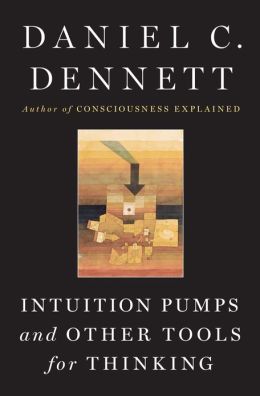
Philosopher Daniel Dennett on the Four Steps to Arguing Intelligently


Dennett synthesizes the steps:
How to compose a successful critical commentary:
  1. You should attempt to re-express your target’s position so clearly, vividly, and fairly that your target says, “Thanks, I wish I’d thought of putting it that way.
  2. You should list any points of agreement (especially if they are not matters of general or widespread agreement).
  3. You should mention anything you have learned from your target.
  4. Only then are you permitted to say so much as a word of rebuttal or criticism.
If only the same code of conduct could be applied to critical commentary online, particularly to the indelible inferno of comments from anonymous hoi polloi.


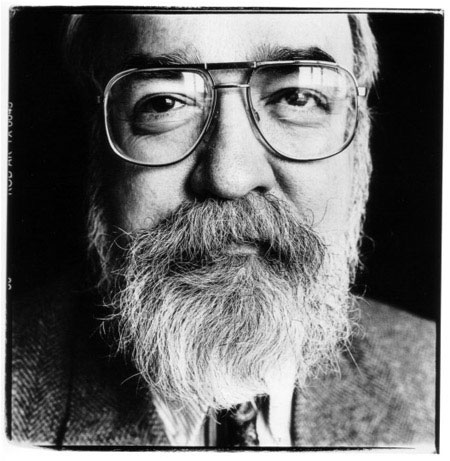
Daniel C. Dennett, b. 1942