Ikigai, pronounced "ee-key-guy," is a Japanese word literally meaning the realization of what one hopes for and expects from life. This is akin to the Western concept of raison d'etre or one's useful purpose or reason for being.
 |
| Figure 1. Conceptual model of ikigai |
The illustration shows four overlapping components to ikigai. To fulfill one's purpose and find happiness, one must find an activity at the intersection of:
- What one loves
- What one is good at
- What the world needs
- What the world will pay for
There are two internal or personal factors (what you love and what you are good at) and two external or corporate factors (what the world needs and what others will pay you for).
A natural progression from the most personal to the most corporate might look like this: Do what you love and you will get good at doing it. If the world needs and values the thing you are good at, you can earn a decent living doing it. If all is working well, you will love your activity even more and the virtuous cycle repeats and expands.
 |
| Figure 2. Although the four components work concurrently, not linearly, it may be helpful to imagine a progressive path, beginning with the most personal (what you love) and advancing through to the most external (what you can be paid for). |
The four factors are weighted equally, hence the same-sized circles. Their relationship to one another is captured in a Venn diagram, implying that simultaneous outcomes are achieved through cyclic, iterative, interconnected, and mutually reinforcing factors. The factors are shown in a balanced state. All the circles and overlaps are uniform in size. However, the implication is that the relationship can become distorted if a factor grows or shrinks relative to the others. The "Love" circle can get bigger or smaller over time, and any change within that factor will distort the overall image.
The combination of what you love to do and what you are good at generates passion for your actions. If you can apply that passion to meet a need in the market, you are performing a mission. If customers are willing to pay you for the goods or services you bring to the market, your actions are consistent with your calling or vocation. And finally, if the thing you are getting paid for is also the thing you are good at relative to others, then you have found your profession.
The maximum reward is gained at the overlap of all four circles. The rewards you earn for meeting a need by doing well something that you love include the summation of:
- Delight and fulfillment (12 o'clock),
- Excitement and usefulness (3 o'clock),
- Wealth and comfort (6 o'clock), and
- Satisfaction and certainty (9 o'clock).
The rewards will be diminished if you are missing one or more of the four components. For example:
- If you are doing what you love but are not getting paid, you may experience delight and fullness but no wealth (12 o'clock)
- If you are doing what the world needs but you are not particularly good at it, you may experience excitement and complacency, but also a sense of uncertainty (3 o'clock)
- If you are getting paid but you don't love what you are doing, you may be comfortable but experience a feeling of emptiness (6 o'clock)
- If you are doing what you are good at but the world doesn't need it, you may feel satisfaction but also a sense of uselessness (9 o'clock)
Similarly, an imbalance in the four components can diminish the rewards of
ikigai. For example, imagine a passion project that you love but no one is paying for. The abundance of love may allow you to continue with the project but the imbalance causes an increase in the passion and mission areas at the expense of critical profession and vocation areas. Notice also that the area of the overlap between the components--that area that represents
ikigai--is smaller.
 |
| Figure 3. Imbalance stresses the factors and reduces ikigai |
The secret to happiness according to the concept of
ikigai is to do what you love, especially if: you are relatively good at it; there is a need for it; and you can earn a decent living doing it. The amount of happiness you achieve is a function of (and perhaps a measure of) your ability to translate your love into quality goods and services, then meet market needs with the quality product, then collect payment from satisfied customers.
In theory, if you are not happy and fulfilled, look at all four factors for reasons. Look at the factors separately and together (love + skill = passion). Identify the gaps, and set out to make improvements.
- Are you doing what you love?
- Are you good at the thing you are doing?
- Does your product meet a specific need in the market?
- Are you getting paid enough to cover your expenses and provide comfort?
If the answer to any one of these questions is not a resounding YES, then perhaps there is some room for improvement--or maybe even a requirement for radical change. If love is lacking, then either figure out how to bring more love into the activity or find a different activity you love even more. This process is personal. Life is too short to entrust your personal happiness--your
ikigai--to anyone else.
Life is short: nurture ikigai.
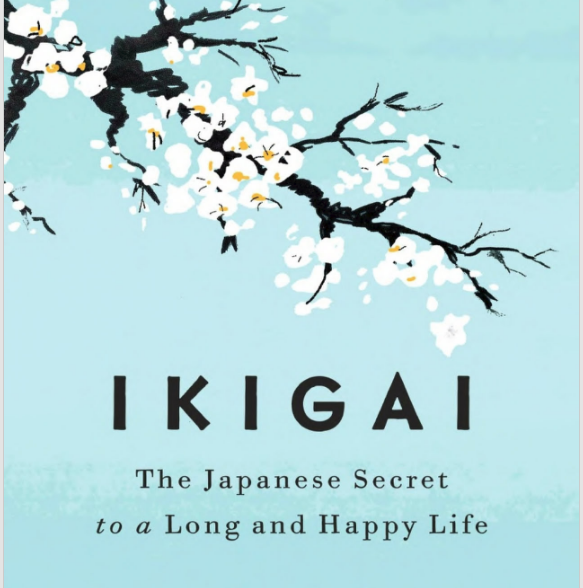
In their new book, Ikigai: The Japanese Secret to a Long and Happy Life,
Héctor García, and
Francesc Miralles define
ikigai as the happiness of always being busy. But happiness is the goal, not merely being busy. We all know someone who is busy and miserable! And many of us have experienced that situation. I prefer the definition I laid out at the beginning of this post:
Ikigai is the realization of what one hopes for and expects from life. This realization is achieved through discovering, revealing, curating, and perfecting one's useful purpose or reason for being.
I'd like to conclude with an abrupt left turn and a challenge for readers. Is
ikigai the best prescription for happiness? How could it be improved? My friend
Scott Nestler has this
Kelly Corrigan quote hanging on his office wall:
"Make yourself useful, doing something hard, with good people."
This motto picks up a theme that appears missing from ikigai: teamwork. I'd like to ask readers to compare and contrast Corrigan's quote with the concept of ikigai in the comments. Which do you prefer, and why? Is anything else missing from ikigai? Do you have a different model or motto that you prefer? My intent is that the interaction which follows in comments will spark a future post.
As always, thank you for reading PhilosFX. Thoughtful comments are welcome. Stay (intellectually) thirsty, my friends!