
Showing posts with label Purpose. Show all posts
Showing posts with label Purpose. Show all posts
Thursday, October 19, 2023


Thursday, December 16, 2021
Advice to my Current Self from my Future, (Presumably) Wiser Self
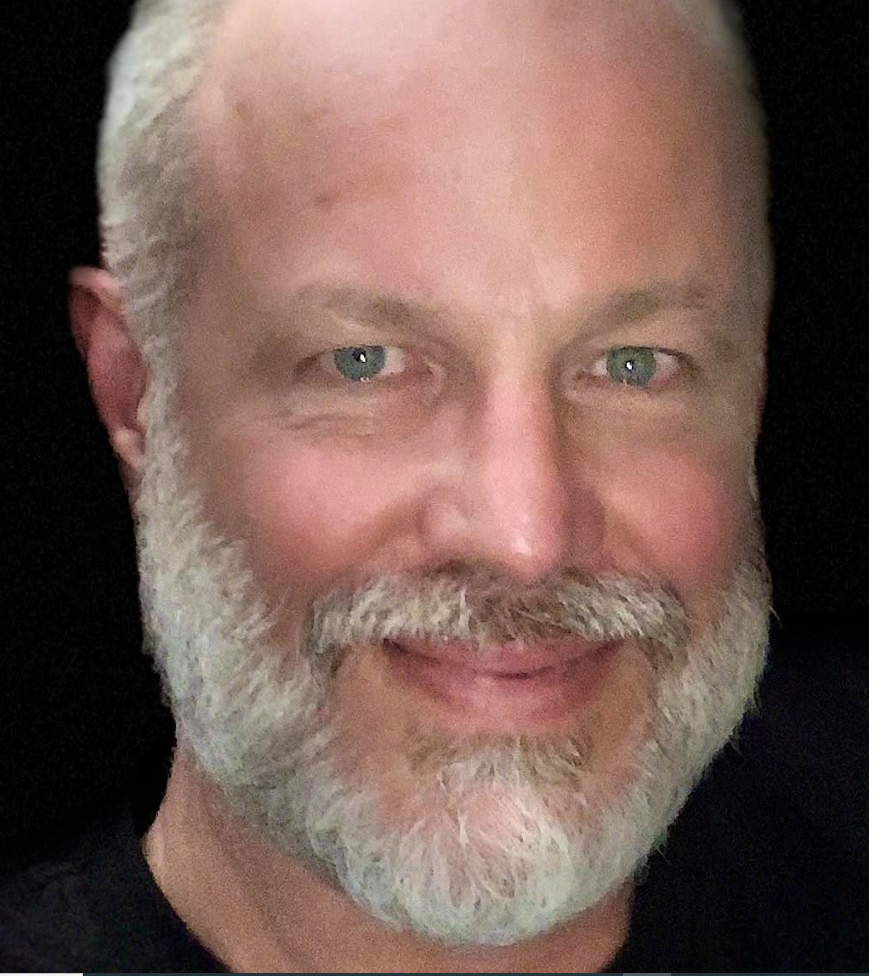 |
| Fig 1. Hello, from my 59.999-year-old self to YOU! |
My favorite author, interviewer, and podcaster, Tim Ferriss, will often ask this provocative question of a successful person now in mid-life:
"What advice would you give to your 20- or 30-year-old self?"
Our mid-20s. That is the time when many of us are starting our working lives. The choices we make then shape our options going forward. By mid-life, we have a few projects and relationships under our belts. We have experienced some of life's finest peaks and valleys. We can look back on those early days with the benefit of hindsight, and offer advice on how to make better choices.
There are any number of truly great and inspirational commencement addresses available if you should ever desire some examples to help you craft a perfect response to this question. Age does not always confer wisdom, but I suppose it is fine to examine our own experience and see the ways in which time has improved our outlook and awareness.
This leads me to wonder: Is it a safe bet that wisdom will continue to increase as we age? If our current selves are wiser than our much younger selves, will our future selves be wiser still? If so, what might we learn from our future selves?
Introduction
Today I would like to do something completely different and uncommon. Rather than offer advice to twenty-somethings, or to my own 20- or 30-year old self, I want to turn this question around and upside down. I am going to project my consciousness to life's end, and give my current self some much needed and welcome advice!
I'm 59.999 years old, but let's just call it middle-aged. According to actuarial tables, a white American male having attained the age of 59+ has a remaining life expectancy of about 23 years. So if you will indulge me, today I am going to ask my actuarial 83-year-old self this question:
"What advice would you give to your (almost) 60-year-old self?"
Obviously, I hope you, Dear Reader, will enjoy this exercise and decide to try to adapt it for yourself. To add some realism, you may wish to use an app such as "Age My Photo" to make yourself look older. I tried this and made myself look 83 in the photo in figure 2 below. I printed that picture and posted it above my work station. Now, my future me is looking down, checking on me, and standing by to give advice. Now and then, I ask myself, "What would my future self do in this situation?"
 |
| Fig 2. This is how I might look in 23 years, according to the "Age My Photo" app. |
Advice to my Current Self from my Future, (Presumably) Wiser Self
Dave,
Hey there, youngster! I'll bet you don't hear 'youngster' much anymore. Haha! Enjoy it while you can!
Listen, I am glad I made it to the ripe old age of 83, and I welcome the opportunity to pass along some advice while you are still an impressionable youth--relatively speaking! Take it from me, we never stop learning. So lean into learning and look for ways to expand, grow, and improve. I'm still learning and I aspire to live into the triple digits, but let's face it: the odds are what they are. So let me take time now share some thoughts to guide you through the next 20, 30, maybe 40, maybe even 60 years. Can you (we?) make it to 120?
Time will tell...
As your future self, I can tell you that some of your choices in mid-life were better than others! Let's map out a plan to find the most beneficial habits, avoid the wasteful or harmful choices, and generate the motivation and discipline to stay the course.
For starters, do not look at me as an old man with one foot in the grave, but as someone you care for deeply. Appreciate that time goes by quickly and trust me when I say that you will actually be 83 before you know it. So do your best to make better choices now. You'll be glad you did tomorrow! Any chance I have to break the century barrier starts with the choices you make today.
Before we get into specifics, Dave, I want to suggest a framework for the discussion. When I was your age, Tony Robbins was an enormously successful lifestyle coach. Time has gone by and other lifestyle coaches have come and gone, but we still refer to the same timeless ideas that Tony popularized in your time. Tony did a great job of channeling timeless wisdom and extending ideas for his audience to embrace. Tony describes six core human needs that will sound familiar to you whether you are 20, 40, 60, 80, 100, or beyond.
The Six Core Human Needs
 |
| Fig 3. The Six Core Human Needs |
The Four Needs of Personality:
- Certainty - safety, stability, security, comfort, order, predictability, control, and consistency
- Variety - surprise, challenges, excitement, difference, chaos, adventure, change, and novelty
- Significance - the need to have meaning, pride, needed, wanted, accepted, loved, listened to, sense of importance and worth, worthy of love.
- Love and connection - a partnership of two souls, family love, friend love, unified, approval, attachment; cherished, adored, to feel intimacy and love with another human being
The Two Needs of Spirit:
- Growth - Evolution is the reason why we were born, why we learn while we live, the need for constant emotional, intellectual, and spiritual development. The reason why our souls are given numerous lives to live and evolve into our best version; to grow and evolve towards divinity.
- Contribution - the need to give beyond ourselves, give, care, protect, aid, and serve others
Keeping the six core human needs in mind, there are two additional dimensions that we can visualize as surrounding and enable the fulfillment of our six basic human needs. Tony did not describe these extra dimensions, but we can agree that a wholistic model of human flourishing should include environmental factors such as the element of time, and our changing needs, motives, and abilities around self-care.
The Two Dimensions of Human Flourishing
 |
| Fig. 4. Two Dimensions of Human Flourishing |
Time Horizon
The first point is the idea of time horizon and the associated changes in risk tolerance over time. What you worry about changes as you get older. Bear in mind that what seems important to an octogenarian is different from what matters to a 20-something. At 59.999, you already realize that this ride doesn't go on forever. At my age, I have an even more intimate relationship with each passing moment. When I was 20 I could recover from a mistake quickly. At 80, I'd rather not make a mistake in the first place.
Self Care
How well you are able to cope with challenges and setbacks reflects your personal preparation and resilience. As time goes by, proactive self-care becomes increasingly important. When we were 20, we could skip a work out or a meal or maybe over exert ourselves or over indulge. The consequences for such self-abuse were negligible, because recovery was nearly instantaneous. I am much less able to recover now, and so I need you to start pushing the self-care--for my sake!
Putting the Framework into Action
Let's now leverage the modified Tony Robbins framework to visualize a lifestyle that will help you get the most out of life, one day at a time. We'll walk through the two dimensions and the six core human needs.
Notice that the dimensions and the needs exist in tension. For example, humans need both:
- prudent risk-taking and proactive self-care
- predictability and new challenges
- to stand out from the crowd and to be a valued partner, family member, and team mate
- to grow, but also to contribute
This tension is normal and it continues into old age. Expect it. But notice that the balance point changes as time goes by. Perhaps you can imagine two friends on a teeter-totter. If the friends of prudent risk taking and proactive self-care weigh the same, then the teeter-totter's fulcrum is right in the center. In youth, when the time horizon seems so far away, the need to take risks is exaggerated and the requirement for self-care is diminished. The tension between the two exists, but the fulcrum slides to the left for balance. Later in life, the fulcrum slides to the right to reflect risk aversion and more health concerns.
The point is that we don't beat the reaper by living longer, Dave. We beat the reaper by living more fully. We are human beings, not human doings. I want you to focus less on achievements and more on fulfillment. Concentrate on timeless and enduring values. Get the values right, or the plans don't matter. Get the plans right, or the results don't matter. Once the results align with those essential values, then and only then does it make sense to scale up and out.
“The place to improve the world is first in one's own heart and head and hands, and then work outward from there.” ― Zen and the Art of Motorcycle Maintenance: An Inquiry Into Values
Time Horizon and Self-Care
I want you to continue to take prudent risks. But now that you are almost 60, I want you to consider the impacts of actions on others more explicitly. I will view the results of your actions--because they can impact me, and we don't have time to recover from mistakes. Now that you are almost 60, I want you to get more disciplined about what you eat, how often you get exercise, and how well you sleep.
Certainty and Variety
It's natural to crave variety when you are young and certainty when you are old. You are at the cross-roads now. Continue to seek variety, but be a bit more selective in where you go to find it. At my age, I don't want to eat the same food every day and I don't want to read the same books over and over. But I am aware that I have fewer months remaining and so I will not read a popular book until I have read more of the classics. Start developing that mentality now.
Significance and Love and Connection
Of course we all want to love and be loved in return. What brings me joy in my age is not the achievements of my working life but the love and connections I've made and continue to make and nurture. At your age, you still want to land the big contract, leave your mark on the world, make the big nest egg that will secure your comfort and provide for your legacy. That is good and noble and just. I want you to think about balancing the tension, though.
Growth and Contribution
Searching is good. Learning is good. But balance the growth with contribution. Don't spin your wheels. Don't be "busy." Do less in order to be more. Remember the words on your W.I.S.H. list: Earn the respect, esteem, and affection of the important people in my world.
Right now, Dave, you are struggling to make sense of how best to navigate the second half of life. You are looking at many aspects, such as
Health & Fitness
- Intellectual
- Emotional
- Character
- Spiritual
- Love Relationship
- Parenting
- Social
- Career
- Financial
- Quality of Life
- Life Vision
You are seeking wisdom to improve in these areas from many sources, such as
- Your parents and ancestors
- Your faith traditions and the wisdom embedded in major world religions
- Philosophers and psychologists
- Self-help authors and lifestyle designers
- Your closest friends and confidants
The thing is, Dave, you will one day realize that you are 83 years old and either you will still be searching, chasing and trying to keep up with the latest, or you will recognize, nurture, and share the truth that has always existed within yourself.
Conclusion
Think about the impact your actions today will have on me, your 83-year old self. Are you treating yourself today as someone you love and respect? Are you treating yourself today as you would want your older self treated? Is your self-talk and self-care similar to the kinds of things you say to and do for your parents or your children? If not, why not?
I love you, Dave, and I care about you. I want nothing but the best for you in the future. Do you care about your own future? Will you treat yourself with love and respect? Will you consume only the food and beverages and sounds and images and ideas that will benefit me, your future self? If so, we'll both be happier, and your example will be a better one for others to follow.
Love,
Me (You)
Epilogue
The exercise of projecting one's consciousness to life's end yields an interesting thought experiment. I recommend it. However, I also offer two parting comments. These comments may very well be the basis for future blog posts.
Firstly, there is no practical way for one to actually anticipate life's lessons in advance. I realize it might be seen as pretentious to try. Still, we all forecast things all the time. We use the information at hand to make all manner of projections and prognostications. Perhaps thinking about the future can help us contemplate what matters most, and manifest a better reality.
Secondly, don't forget to seek out real, living mentors. Imagining an ideal future is instructive, but taking counsel from one's self alone is foolish. Talk to some 80- and 100-year-olds. Ask them what advice they would give their 60-year-old selves. And here's another twist. Put yourself in listening mode and ask some 20- or 30-year-olds for some advice. If you don't have a younger mentor, you are missing out on a valuable perspective.
Wednesday, December 5, 2018
A Kinder and Gentler Nation

"Prosperity with a purpose means taking your idealism and making it concrete."
--George H. W. Bush, in accepting his party's nomination as their candidate for the Presidency, August 18, 1988
On this national day of mourning, I offer a tribute to President George H. W. Bush. With hope for our great county, and inspired by today's solemn Google Doodle, let us search for a kinder, gentler Nation.
Friday, March 16, 2018
Saturday, March 5, 2016
Joey Feek: A Life Well-Loved

Joey Marie Martin Feek
September 9, 1975 – March 4, 2016
First, watch the Overstock.com commercial to remind yourself of of where it is that you remember Joey Feek. Sweet, pure, loving, simple, caring, country Joey and her husband Rory, along with their dog Rufus made one of the endearingly enduring commercials I've seen.
I am not one who follows country music closely, so I'll admit, Joey's death was a surprise to me. But after I heard the news, I spent the whole morning reading Rory's journal, This story is just so heart-wrenching. These days, all of us know someone who has battled cancer. Many of you have battled cancer and so have I. Many of us know someone close to us who has lost that fight, such as my brother. Cancer is such a scourge. Cancer takes way too many of us too soon.
Please read about Joey and her courageous battle. Send some support to Indy, her daughter with Rory, and Rory's older daughters as this shattered family tries to make sense of a senseless and devastating loss. Think about what you might be willing and able to do to improve cancer research, diagnosis, treatment, and care.
For those not familiar with Joey, this Wikipedia article describes her rise to fame, her cancer diagnosis, the birth of her daughter, and the resurgence of the cancer that claimed her life at the age of 40.
This Country Rebel blog is a source of so much information about Joey's life and death. I started here and got lost for hours and hours.
Saturday, May 30, 2015
What is a Metaphysician?
ISO a better understanding of what it means to be a "Metaphysician."
 |
| Metaphysics is Facts plus Hypotheses raised to the power of Intuition, Faith, and Reason |
According to Google (hmmmm... is their search algorithm "meta" enough?), a metaphysician is either:
- a philosopher whose area of expertise is the study of the fundamental nature of reality and existence, or
- more esoterically, a practicing healer/adviser that changes physical reality by working with the principles and powers and ‘things’ that underlie it, and especially the mind or psyche, or
- both
Many writers write about subjects in which they have recognized expertise. Most writers probably want to tell a story from a position of competence. In my case, in this instance, I want to write about metaphysics precisely because I am clueless on the topic. I write as a means to discovery and understanding.
My motives:
- I just had a friend remind me that she and her husband have become metaphysicians, and I do not want to have to ask her what she meant by that
- I am wrestling with the inadequacies of religion and philosophy in view of staggering personal losses
- I am searching for meaning, that I might understand how to discern my place and purpose in the universe, and to share my process of gaining understanding
- I am thinking about pursuing a degree in metaphysics. I am only half-joking. OK, I am only half-serious.
Basically, friends from my church left, joined a metaphysical chapel, and became metaphysicians. They have mentioned this fact in passing ("that is why we became metaphysicians") a couple of times recently, and I finally got curious enough to check into what they were talking about.
I learned that: (a) There is a Metaphysics Chapel just a few miles from my home; and (b) There is an accredited, degree-granting institution which offers a PhD in Metaphysical Humanistic Science
 |
| Institute for Metaphysical Humanistic Science |
Why change?
- I am constantly seeking to know myself better, to ensure that I am honest, authentic, and transparent in my attempts to make my corner of the world a little better. But "making" the world better leads to conflict when values collide. What if simply being better and showing others how to be better is the answer?
- I am committed to a life of service to others. But are my efforts addressing core issues or just superficial ones? Am I having the greatest possible impact as an individual and a group member?
- I love my church, and its focus on social justice. But are churches able to do enough? Are they doing enough? Are all the churches together eliminating poverty, disease, ignorance, and hunger? If not, would a different approach work any better? If I thought a different approach would work better, would I not be obligated to try?
Despite these ongoing efforts in self-awareness, service orientation, and community focus, I can't help but wonder if maybe there isn't an even better way for me to align my talents, aspirations and goals with the most intractable problems facing the human race. I look at the types of things that I write about on PhilosFX, and I see a lot more in common with Metaphysics than business process re-engineering, statistical analysis, or other traditional operations research analyst topics.
Though I love my current job and am proud of my career, I do see problems with traditional analytical approaches to problem-solving:
We don't need more optimization. We don't need more data. We don't need more pontification. We don't need more greedy algorithms or policy wonks. We need more healing. We need more insight. We need more understanding, empathy, compassion, and love.
The will finds a way...
Resources
(mĕt′ə-fĭz′ĭks)
- corporate money controlling research and politics, and
- the defense industrial complex essentially manufacturing wars, and
- traditional churches failing to adequately address social justice issues.
We don't need more optimization. We don't need more data. We don't need more pontification. We don't need more greedy algorithms or policy wonks. We need more healing. We need more insight. We need more understanding, empathy, compassion, and love.
The will finds a way...
Resources
- What is a metaphysician? HERE
- What does a metaphysician do? HERE
- What else does a metaphysician do? HERE
- Where is the nearest metaphysical chapel? HERE
- How does the dictionary define metaphysics? HERE
- Who were or are some notable metaphysicians? HERE
- How does one become a metaphysician (initially)? HERE
- How does one become a metaphysician (advanced)? HERE
met·a·phys·ics
(mĕt′ə-fĭz′ĭks)Thursday, March 26, 2015
Your Purpose: Good Things Come to Those Who Hustle and Grind

This Venn diagram has captured my imagination today. Does it speak to you? Look closer. Does its message apply equally to all people? Or might some people be inspired, while others feel even more marginalized than before?
I feel I am living in that sweet spot at the center of passion, mission, vocation, and profession. Yet I am mindful of how very fortunate I am to even be able to claim this! A great many people live in despair. And there are many others who are equally able to fulfill their purpose, but whose values are at odds with mine.
This drawing feeds my Venn diagram fetish, but it leaves me feeling somewhat concerned at what is not shown: Values. Not everyone is both willing and able. Not everyone who is both willing and able is pointed in the right direction.

Sunday, February 8, 2015
800!!008

Bit of a milestone here on PhilosFX.

Can you guess what it is?

You are looking at the 800th post published on this blog.

The first of 800 posts here on PhilosFX was published 1,645 days ago. Since then, new posts have been published at the rate of one every other day, garnering an average of 200 views each (range is 0 to 25,250) for a total of 164,000 views, or about 100 views per day (range is 0 to 400).
I have 75 posts in draft right now and an seemingly endless supply of topics to write about. Thanks for reading along and encouraging me with comments and suggestions,
On to 1000!
Friday, February 6, 2015
Reasoning with Atheists

I have met many people who call themselves atheists. It's sort of an occupational hazard, as I am a skeptic by trade.
When someone asks me, "How can you believe in God?" they usually mean, "How can you believe that there is an old man with a long, flowing beard and a big white robe sitting on the throne in heaven, deciding which child to save and which city to destroy?" I usually counter, "How can you disbelieve in God?" Before the inquirer assumes I also believe the Heavenly Father prefers Diet Coke, I hasten to add, "I am not sure what God looks like, but that is a separate question from whether there is an Ultimate." Said another way, I do not rely on anthropomorphic depictions of the deity to defend my faith.
It's a whole lot easier to believe in God than to disbelieve. God can easily be something far beyond our human capacity to comprehend. On what basis of fact can any thinking person possibly know that God does not and can not possibly exist?
To be an atheist, one must believe without proof that there is no God.
(H/TMichelle)
Sunday, August 17, 2014
The Finish Line? Reflections from the Scene of the Boston Marathon Bombing
 |
| Tax Dash |
When you hear "April 15th"in the USA, your first thought is probably: ugh, Tax Day. In 2013, this annual "Internal Revenue Service (IRS) Appreciation Day" happened to land on the third Monday of April, which in New England is also known as Patriots' Day in honor of the Battles at Lexington and Concorde.
Patriots' Day in New England should not be confused with the National Patriot Day commemoration held annually on 9/11. The more recent Patriot Day (9/11) marks another moment that changed the arc of history. But that has been, is, and will be a story for a different blog post....
As it happened in 2013, this auspicious mid-April day was also the day for the running of the now infamous 116th annual Boston Marathon--the one that was marred by an inhuman tragedy.
"At 2:49 pm EDT, two pressure cooker bombs exploded during the Boston Marathon about 12 seconds and 210 yards apart, near the finish line on Boylston Street. Three people were killed and an estimated 264 other runners and onlookers were injured.
"The bombing victims were identified as 29-year-old Krystle Campbell, 8-year-old Martin Richard, and 23-year-old Lu Lingzi. Additionally at approximately 10:30 pm on April 18, MIT officer Sean Collier was killed in a related incident, for a total of four fatalities."
--various Internet resources including Wikipedia
Recently, I made a pilgrimage to the scene of the carnage, and this is my report in words and pictures.
 |
| Make-shift memorial honors Sean, Krystle, Lu Lingzi, and Martin. The new addition to the Boston Library appears in the background. |
The Finish Line?
Reflections from the Scene of the Boston Marathon Bombing
When news of the bombing hit the airwaves, my reaction was intense.
- I wanted the perpetrators caught and harshly punished to dissuade copycats. Medieval torture techniques such as the withdrawal of entrails or boiling in oil seemed perfectly appropriate.
- I wanted the victims and first responders honored and healed, no expenses spared.
- I wanted the families and friends of the dead and injured consoled through the application of healing care, swift justice, and fair compensation.
- And, more than anything else, I wanted to promote a National sense of unity--through defiance. Defiance in the form of a giant bony finger thrust in the chest of every would-be terrorist. Defiance that states clearly and unambiguously, "this shall not stand!"
The best way to express unity through defiance, I argued, would be for Boston to come back stronger than ever for the 2014 race, and beyond that, for every able-bodied American to get out and run. I wanted the 2014 Boston Marathon to be the biggest and the best ever. Moreover, I wanted to flood the streets of every town in the Nation with pissed-off runners--not afraid, not really angry, but determined and defiant.
Run for personal health and fitness.
Run for those who are not able.
Run to honor those who fell.
Run to teach the terrorists
that they cannot prevail.
Run to conquer fear.
Run with purpose.
Run for America.
Run, Forrest
R-u-n !
Run, Forrest
R-u-n !

In May, I signed up for my first-ever marathon, and, with the help of Team in Training I did something I now consider quite remarkable: a mere 6 months after the Boston Marathon Bombing, I crossed the start line of the Marine Corps Marathon.
 |
| A view of the Finish Line with the library in the background |
 |
| Interesting word cloud map of Boston found in the Boston Library |
 |
| A mix of architectural styles along the marathon route |
At the pre-race dinner, I had an epiphany. The speaker talked about all the money we raised for LLS, and how that money was going directly to cancer research and care for cancer patients and their families. This realization took me out of myself, out of "me" world and into "we" world.
Then an experienced marathoner addressed the first-timers. And I was not alone, not by a long shot. There were several hundred of first-time marathoners in the MCM, and dozens in the banquet hall that night. This speaker said that we could let go of our pre-race anxiety because all we had to do was show up for the starting gun and put a footprint on the race track and we'd be marathoners.
Just hours before the race, I realized that all those questions which had plagued me were immaterial. I was not running for me. I was running for them. The starting gun sounded. I was on the course. One foot was steadily going in front of the other. Nothing else mattered. I was in a sea of runners, ans we had made it!
As I floated, plodded, and waddled my way over 26.2 miles, I thought about the shock and horror experienced at 2:49 EDT on Boylston Street six months earlier. I thought of all the people who had supported me and Team in Training to raise needed funds for cancer research. And mostly I thought about my brother, fighting cancer, to whom I had dedicated my run. I often chanted his name in rhythm with my footfalls. These thoughts of others kept me in the "we" world, and helped me ignore any discomfort.
 |
| At the Finish Line, where--for me--it all began. |
VICTORY
- I felt so happy and so relieved when I charged up the hill to the finish line at the Iwo Jima Memorial.
- In December, I re-lived that sense of hard-fought victory when my brother survived his second cancer surgery.
- And then in April, I was overjoyed when American Meb Keflezighi, a three-time Olympian who ran at UCLA, won the men's race in 2:08:37 and became the first American male runner to win the Boston Marathon since 1983.
 |
| Meb has his name and winning time inscribed at this Copley Square monument |
While the Boston Marathon would certainly be a stretch goal for me personally, I know that with the right motivation and sufficient time, I could accomplish that or any other goal I put my mind to achieving. As the saying goes, there is nothing that one cannot do, given sufficient quantities of coffee.
 |
| Java IV, stat! |
Fear and anger got me off the couch, into my running togs, and onto the training track. Defiance motivated me to action and helped me motivate others to join the just cause. But there was an emotion even more powerful than my hatred for the despicable Tsarnaev brothers who carried out the attack against us. That more powerful emotion was the love I felt for the fallen and the wounded and for people who, like my brother, are fighting cancer. I ran not to win or avoid defeat, but simply to show care and concern for those unable to run.
Fear got me moving, but everything changed in the moment when I realized the night before the race that the marathon was not about "me." Had I focused on me and my goals and fears, I may not have finished. Instead, I focused on what I could do for others. That is the moment that love took over from fear--and that feeling of love is what enabled me to finish.
That, and plenty of coffee.
So it was no small event for me, my recent pilgrimage to Boylston Street. And it has been a pleasure to share my reflections in words and pictures. What happened at the Finish line in 2013 was really more of a beginning in many ways--for me, at least, and maybe for many others.
 |
| Street art found at the scene: In Pursuit of Magic |
Epilogue
In addition to my photos and personal reflections, I have a thought challenge to share with you. What is your motivation? What is your equivalent Boston Marathon Bombing moment? What ignites your passion? If a person close to you is fighting for survival, what are you doing to channel your fears, concerns, hopes, and prayers into something positive, something helpful, maybe even something "unifyingly defiant"? How do you poke a bony finger in death's chest? How do you express the opposite of fear, darkness, grief, and death? How do you express love?
I suppose every marathoner considers running in the grand-daddy of all marathons. Begun in 1897, inspired by the success of the first modern-day marathon competition in the 1896 Summer Olympics, the Boston Marathon is the world's oldest annual marathon and ranks as one of the world's best-known road racing events. It is one of six World Marathon Majors. Amateur and professional runners from all over the world compete in the Boston Marathon each year, braving the hilly New England terrain and varying weather to take part in the race.
The qualifying standards to earn a runner's bib are quite high. To qualify, one must have a certified run time faster than the age- and gender-adjusted standard. For men my age, that maximum allowed marathon finish time is 3:30--quite a bit better then my current PR. I am going to have to have a serious chat with my knees and ankles before committing to the goal of qualifying for Boston!
Monday, March 3, 2014
Encoding and Decoding Hexadecimal Messages

There I was, minding my own business, when all of the sudden my eyes settled upon this unintelligible string of 2-digit hexadecimal numbers.
"22 48 61 76 65 20 79 6f 75 20 67 6f 74 20 77 68 61 74 20 69 74 20 74 61 6b 65 73 3f 22"
Naturally, I interpreted the string as an encrypted challenge issued to me personally by some NSA cyber spy who was probably watching me, evaluating my reaction, timing my response, and judging my fitness for survival in the Digital Age.
I might just survive to encrypt and decrypt another day. Here is how I cracked the code:
1. I typed the code into Google and found that it shows up in the banner of the CyberSentinal newsletter.
2. Unfortunately, I have not yet mastered JavaScript, C, Perl, or Python, so at present I do not have the skill to convert the hex to ASCII using a program such as this Java routine I found online at StackOverflow.com.
public static void main(String[] args) {
    String hex = "224861766520796f7520676f7420776861742069742074616b65733f22";
    StringBuilder output = new StringBuilder();
    for (int i = 0; i < hex.length(); i+=2) {
        String str = hex.substring(i, i+2);
        output.append((char)Integer.parseInt(str, 16));
    }
    System.out.println(output);
}
3. The (moderately) good news is that (a) I can recognize hexadecimal and (b) I know how to spell ASCII. So I looked around for (i.e., Googled) some online tools to convert hex to ASCII with no programming required. The one from string-functions.com worked admirably.
The Answer to the Question is a Question: "Have you got what it takes?"
My Answer to the Question is a Statement: "Fake it till you make it!"
Or, as we say in Cyber Patrol,
"46 61 6b 65 20 69 74 20 74 69 6c 6c 20 79 6f 75 20 6d 61 6b 65 20 69 74 21."
Thursday, December 26, 2013
L.I.N.K.S. that Lure, Intrigue, Nurture, Kindle, or Stimulate, Part 7: Predictions for 2014
The theme for this 7th edition of L.I.N.K.S. is

PREDICTIONS

Something about the Winter Solstice inspires certain thought patterns in the minds of men. We reflect on the past, and project the future. We put our experience into the context of hopes and fears.
- What developments in the past year shocked you the most?
- When you look out into the future, what trends alarm you? Which delight you?
- How will you hedge against the pitfalls? How will you leverage your advantages?
Let's have a look at a collection of predictions for 2014. I'll provide just the links at this time, and then in another post. I'll filter these predictions through my personal prism, add some additional thoughts and commentary. What is more, I promise to grade my own predictions this time next year.
1. Forbes Financial Outlook http://www.forbes.com/sites/advisor/2013/12/19/top-10-predictions-for-2014/
2. Biggest Overlooked Trends http://www.politico.com/magazine/story/2013/12/overlooked-trends-of-2013-101491_full.html
3. Amazon http://news.cnet.com/8301-1023_3-57615894-93/amazon-5-bold-predictions-for-2014/
4. Social Media Today http://socialmediatoday.com/chrissyme/2019991/10-best-social-media-predictions-2014
5. World Future Society http://www.wfs.org/Forecasts_From_The_Futurist_Magazine
Happy prognosticating! Or, if history is more your bag, search this site for all 6 previous posts in the L.I.N.K.S. series. Comments and suggestions are always welcomed! What are your predictions for 2014? What topics would you like to see covered in the next edition of L.I.N.K.S.?
Monday, December 23, 2013
The Most Important Thing
My friend RS asked, via Facebook,
"Help me out here. What is the most important thing?"
A predictable array of answers trickled in: friends, family, faith, health, etc. No one said corner office, or big pile of toys. No one said warm coat, either, but then one's priorities have a way of shifting over time, don't they?
One way to develop an answer to this quandary is to push the variable of time to the limit: imagine yourself on your deathbed. By default, at that point, health would seem to be pretty darn important, right? Yes, but we all know that there is only one way out of this game called life. Preparing for Life's Final Task involves facing death (a) unafraid and (b) without regret. Therefore, in life's last moments, having lived a good life is more important than having good health for just a few minutes more.
So how will we know we have lived a good life if we are so fortunate as to have a final moment of reflection? What constitutes a good life? What will have been the most important thing to us when we examine our lives with the benefit of hindsight? What would we do more of today, right now, if we wanted to be (a) unafraid and (b) without regret in our final moments?
1. Why do you get out of bed in the morning, day after day? To make a living.
2. Why do you make a living? To provide food, clothing, and shelter for myself and my family.
3. Why do you provide for yourself and your family? To survive, of course, and hopefully to become successful.
4. Why do you want to be successful? To contribute, to add value, to live well, to make a difference.
5. Why do you want to be significant? Significance is like self-actualization. It is how I operate in the world after I have fully become my true self. It is me radiating love, truth, and light--shining forth as a beacon for others.
As I said, your answers may vary! But the point I am making is that The 5 Why technique helps us get to the real purpose behind any endeavor. Yes, it can take more than five whys until you get to the fundamental objective. Try it. You'll get the hang of it.
Is self-actualization the most important thing, as Maslow said and as our Five Whys exercise implies? Here I want to double back on myself a bit. Self-actualization, as Maslow defined it, sounds like an end-state. But, how will we know when we have achieved our full potential? Isn't this a moving target? Can't we set the bar ever higher as we achieve more of our potential over time? Can we simultaneously imagine ourselves as more significant in some future state, and yet grateful and accepting of the degree of significance we have achieved in the present? On further reflection, we want to imagine a process of continuous improvement that is constantly oriented on increasing the level of significance we can achieve even as our experiences mold and shape us. Therefore I would say that the development of character is the most important thing.
The development of one's character is the answer to the 5th Why, i.e. it is the Fundamental Objective of life, not friends, family, faith, health, wealth, freedom, or power. The abundance or the absence of any of the above will neither prevent nor guarantee the development of one's character. Friends and wealth are the fruits of a developed character, not goals in and of themselves. Health, freedom, and power can be stripped away as they were for Nelson Mandela, whose character continued to develop while he was in prison for 27 years. Faith is not the most important thing unless one defines God as character perfected and one's faith is a means of obtaining communion with the Divine.
May we all live long lives in good health and comfort, helping each other as we are able. May we all embrace the challenges of living each day to the fullest extent. May we allow ourselves to love, and to be loved in return. May we shine forth as a beacon for others, and may we thus face the future (a) unafraid and (b) without regret.
H/T: RS
Subscribe to:
Posts (Atom)