Showing posts with label MBTI. Show all posts

Friday, February 15, 2019

The ENTP – Tony Stark / Iron Man

Have you ever wondered which Superhero has your Myers-Briggs® Personality Type? I have!

My favorite Superhero is Bruce Wayne / Batman. According to Personality Growth's post on the subject,  
"Bruce Wayne is introverted and extremely intellectual. He is a billionaire, playboy and philanthropist. He has a strong goal to seek vengeance for his parents death, and bring justice to criminals of Gotham. He trains himself physically, and crafts his own persona solely on his intelligence. Batman is capable of becoming a superhero without any superpowers, because of his powerful intellect."
Personality Growth assesses Batman aka Bruce Wayne as an INTJ. Even though I feel an affinity to the Batman, I do not share the Introversion or Judging aspects of his personality type. I suppose the appeal comes in through the shared NT or "Promethean" aspect. 

Prometheus was a Greek Titan who stole fire from the Gods and gave it to mortals. According to Typology Central, NTs have a "Promethean" temperament because NTs want to make people more like Gods through their inventions. 

I can relate! 

BatmanINTJ


But not everyone agrees that Batman is INTJ. To me more specific, there are those who would distinguish the Batman of comics from the Dark Knight of the Nolan film trilogy. According to this source, the Dark Knight is more of an ISTJ.  

If Batman and I do not share the same MBTI profile, then with which Superhero am I most aligned? An answer--one that I can really get behind--comes from our friend and fellow Nebraskan, Susan Storm at Psychology Junkie.

Check this out!  

ENTP – Tony Stark / Iron Man
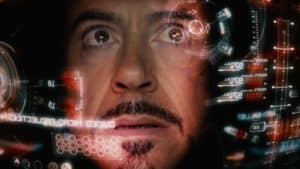


The ENTP – An ingenious troubleshooter who is skilled at connecting-the-dots and finding creative solutions to problems. The ENTP is guided by a hunger for logic and a thirst for stretching the boundaries of what’s possible.


So far, so good...
Tony Stark’s mind is always buzzing with possibilities and ideas that can improve the future. Like all ENTPs, his rapid-fire verbal sparring can get him in trouble, but it’s his ingenious inventions that set him apart. Even in the bleakest scenarios, Tony Stark is able to envision a way out – in fact, sometimes the feeling of being trapped enables him to think more creatively than he would otherwise. This is typical for ENTPs who often find that they get their best ideas under pressure!

Sunday, August 14, 2016

Oh, the Irony! A Look at Values in a Changing World

Forty years have passed and a lot has changed for me, my Army, and my Nation. 

I was 15 years old and something of an aspiring athlete when Bruce Jenner won the 1976 Olympic Decathlon in fairly dramatic fashion. From 1979 to 1984, I attended Notre Dame on an ROTC scholarship (read: not an athletic one!) and was subsequently commissioned an officer in the Army Corps of Engineers. I served in the Army on active duty from 1984 to 2012. My regard for Bruce the athlete was so high that I paid little attention to his demeaning and confusing appearances in reality TV shows in the role of Bruce, the husband of Kristen Mary "Kris" Houghton Kardashian Jenner beginning in 2007, or indeed to his surprising decision to come out as a woman in 2015. Now, 40 years to the day after Bruce Jenner was the hero of the Games of the 21st Olympiad, the world seems to be very different. Are we moving in the right direction? Is society evolving in a manner that will be seen as successful in hindsight? 

This post is not about irony, per se, but irony is involved in the telling of it. Given all the buzz around the ironic absence of actual irony in Alanis Morissette's song, "Ironic," I'd like to begin by stipulating to the following definition of irony. With a little help from our friends at Merriam-Webster, we believe irony is the expression of one's meaning by using language that normally signifies the opposite, typically for humorous or emphatic effect. So, irony is similar to sarcasm, causticity, cynicism, mockery, satire, and sardonicism, but quite different from, say, coincidence, such as rain on your wedding day.

Are we good?

I want to dispense with the terminology question because I am more interested in a deeper issue. This post is also about intrinsic values and the evolution of values in a social context. Our subjects for exploring this question are Olympic Champion Bruce Jenner, erstwhile commentator Terry Coffey, artist, photographer, and survivor Mark Hogancamp, psychologist Carl Jung, and the US Army. We'll look at how the values espoused by groups such as the Army can, do, and should change over time. Our success as a species depends on it.   

Here we go...  


Bruce Jenner in the 1976 Olympics and Caitlyn Jenner on the July 2015 cover of Vanity Fair.

“As I see post after post about Bruce Jenner’s transition to a woman, and I hear words like, bravery, heroism and courage, just thought I’d remind all of us what real American courage, heroism and bravery looks like!” --Terry Coffey, June, 2015

Insert grainy black & white photo of a wounded major being hauled through the mud to safety while defiantly firing a pistol at his attackers, and--BOOM!--an Internet meme is born.


Like millions, I saw the original post as it flew around . Were you one of the 800,000 who not only saw it but shared it? Did I see it because you shared it? For any of you who somehow missed this message and image that touched such a nerve, here is is again:


As an career Army officer, now retired, I place a high value on personal courage. The image Mr. Coffey attached to his comment and the courage it represented was one that resonated with me. I saw lots of my Army friends "liking" this image and commenting on social media. For some reason, I held back and did not share my opinion one way or the other. More on that later.

I can relate to the example of courage in the photo. Honestly, the example of Bruce transitioning to Caitlyn is harder for me to relate to on a personal level, but who am I to question or judge another's struggle? Truly, I am not sure which battle would require more courage.

Whether Mr. Coffey's comment was intended as a mockery of Jenner or merely a rebuttal to all the attention being paid to Jenner's public transition is unclear. However, supporters and detractors of rights for trans-gendered people soon took up sides. Mr. Coffey was praised by some, and slammed as a "trans hater" by others.


Who is Terry Coffey


As it happens, Mr. Coffey's commentary about "real" courage was ironic in a way that he couldn't have imagined. In an interview following the popularity of his post, Coffey admitted he had conducted a quick image search online, and simply chose an image that fit his words. Again, I think lots of people like me might have selected the same image as a depiction of true courage. After Coffey's post went viral, he decided to identify the photographer so he could give him or her proper attribution. Imagine Coffey's shock when he realized that the photographer was actually a cross-dresser who had been savagely beaten by a gang of five hate-filled and bigoted thugs.

“In an ironic twist, I have discovered that the photo is part of a documentary created by a man who was beaten nearly to death outside of a bar in 2000,” Coffey posted.
The photographer, Mark Hogancamp, spent nine days in a coma and suffered severe brain damage and other injuries, Coffey learned.
Hogancamp coped with his pain afterward by creating an imaginary world set in World War II – where he created the image that went viral years later – but Coffey was gobsmacked by something else he learned.
“Why was [Hogancamp] nearly beaten to death by 5 strangers?” Coffey asked. “Because he was a cross-dresser.”
“I could have chosen any one of hundreds of photos depicting bravery, but I chose this one,” Coffey said. “Do I think it was an accident? No, I don’t. What happened to this man was cruel, wrong, and unforgivable,” Coffey said. “Hate helps nothing, love wounds no one, God heals all, and irony makes you think.”
Oh, the irony! And, even though no one could have scripted Mr. Coffey's comeuppance, there is a script accompanying Marwencol, a 2010 American documentary film that explores the life and work of artist, photographer, and survivor Mark Hogancamp.
On April 8, 2000, Mark Hogancamp was attacked outside of a bar by five men who beat him nearly to death. After nine days in a coma and forty days in the hospital, Mark was discharged with brain damage that left him little memory of his previous life. Unable to afford therapy, Mark creates his own by building a 1/6-scale World War II-era Belgian town in his yard and populating it with dolls representing himself, his friends, and even his attackers. He calls that town "Marwencol," a portmanteau of the names "Mark," "Wendy" and "Colleen." The film was shot in New York State between 2006 and 2010. The film received widespread critical acclaim, holding a 98% approval rating on review aggregator Rotten Tomatoes. The site awarded the film their "Golden Tomato" Award for the best-reviewed documentary of the year. The Los Angeles Times called the film “an exhilarating, utterly unique experience” while the Village Voice said that it's “exactly the sort of mysterious and almost holy experience you hope to get from documentaries and rarely do.”
Suffice to say, this is a movie I would like to watch. Again, forty years have passed and a lot has changed....

As a person who grew up worshiping Bruce Jenner the athlete and then served 28 years in the Army, how did I get to the point where Terry Coffee's public excoriation leads me to an interest in a documentary about Mark Hogencamp's struggle to recover from senseless brutality?

I am what pioneering psychologist Carl Jung would call an ENTP (Extroverted, Intuitive, Thinking, Perceiving). As an ENTP, my preferences are to:
  • interact with others as a means of generating ideas and soliciting feedback in an environment that fosters interaction and synergy (Extrovert, E); 
  • use my intuition and deductive reasoning rather than facts and inductive reasoning to fill in the gaps in my knowledge (Intuitive, N); 
  • to think as opposed to feel my way through the world (Thinking, T); and 
  • to look for ways to improve processes and products rather than to judge them against a standard (Perceiving, P). 
As a consequence of my ENTP personality type, I spend a lot of time studying and perceiving (P) others such as Bruce, Terry, and Mark without judging them. Despite my extroverted (E) tendencies, I saw but did not share the original Coffey post. Now that the rest of the story has come to light, I am glad I listened to my intuition (N) and did not comment right away. How I felt about all of this at the time is not as important to me as is what I think (T) about it now.

How I respond to the Caitlyn Jenner story is a function of my personality type combined with my experience serving in the Army. The Army experience can be summed up as shared hardships around selfless service. In this environment, an individual Soldier's worth to the squad, platoon, company, and battalion is based on what he or she can do under pressure. I love this about the Army. If you can shoot, move, and communicate, you can succeed--regardless of your race, sex, sexual orientation, or gender identity.

Most folks think of the Army as a very conservative institution. Bear in mind, the Army has long been at the forefront of important social change. The Army integrated minorities before the nation as a whole (1948). The Army integrated women before the nation as a whole (1948). The Army integrated gays and lesbians before the nation as a whole (2011). The Army integrated trans-gendered people before the nation as a whole (2016). The Army is leading the way in terms of valuing people based on who they are and what they do, not where they are from, who they love, or how they pray.

The Army's current values statement expresses seven distinct and important values captured in the acronym, LDRSHIP. These Army values are: Loyalty, Duty, Respect, Selfless Service, Honor, Integrity, and Personal Courage. Although this particular value statement is fairly new (2003), I doubt there is much in there to which our WWII veterans would not ascribe. 


Seven values is a nice number of values to keep track of, but I think we can safely bump that number up to nine or 10 without undue burden--particularly if we are clever enough to do so, and spell LEADERSHIP properly to boot! And why would we want to do such a thing? Because times have changed. The core values are timeless--service before self, and merit-based promotion. What needs updating is how such selfless service and merit is recognized, valued, and rewarded. 

Therefore, thanks to the lessons we have learned at Terry Coffey's expense, to the Army's list of seven core values I would add three more: Equality, Acceptance, and Ethnic Diversity. Biases of bygone days must be challenged and the unhelpful ones removed. Expressly emphasizing the values of Equal treatment of all persons, Acceptance of various backgrounds, and appreciation for Ethnic diversity takes nothing away from the old values but strengthens the core.

  • Loyalty
  • Equality
  • Acceptance
  • Duty
  • Ethnic Diversity
  • Respect
  • Selfless Service
  • Honor
  • Integrity
  • Personal Courage


The Army is not a homogeneous bunch of xenophobic, misogynistic, bigoted, middle-aged white Christian men, so the Army's Values should explicitly reflect the institution's commitments to promotions based on merit and character and achievements independent of religion, race, sex, sexual orientation, or gender identity. The Army is a high-performing organization. The Army is a self-governing profession with a body of knowledge worthy of study and thought. The Army takes volunteers, transforms them into Soldiers, and provides society with Veterans who espouse the values inculcated into them. The Army can and should espouse values that enable Veterans to be the strength of the Nation.

This realistic depiction of personal courage was created and photographed by a talented human.

Are we moving in the right direction? Is society evolving in a manner that will be seen as successful in hindsight?  Ironically, er--I mean, coincidentally, Terry Coffey has the best answer to that question.

“Hate helps nothing, love wounds no one, God heals all, and irony makes you think.”--Terry Coffey

Tuesday, June 30, 2015

Finger Length and Personality, Part 3: Q&A

I must admit, I have been smitten with curiosity about the so-called 2D:4D ratio. I find its implications for improved self-awareness and appreciation of diversity to be compelling. This is the third post on the subject, the previous ones having to do with the Higher Perspective article and then my attempt to more accurately measure the 2D:4D ratio


I also dedicated a whole edition of L.I.N.K.S. to the subject, and I published a related inquiry on facial symmetry--a feature that, like ring finger length, tends to increase in response to pre-natal androgen exposure. 


That is a lot of exploration and investigation already. But, being the curious sort, I feel one really good question usually inspires two or three dozen more. And so I have prepared for you a list of additional questions (and some preliminary answers). It's my hope that this Q&A monologue will engage readers and inspire something more like a dialog. If you share my interest in this topic and would like to advance the conversation, please feel free to chime in--via comments.

Here we go!
  • Does it matter if you measure the ratio on your left hand or your right hand? If the measurements are different, which one is more accurate? 
Higher Perspective said simply to look at the back of your left hand. Most scientific studies I have seen cited have used calipers to accurately measure the digit lengths on the palm side. The copy machine works well enough for practical purposes as any errors are proportional. Some studies specify the right hand for increased accuracy, though I have yet to see why that should be the case. I suspect it's because "most people" are right-hand dominant. I suggest either using the hand with the greatest variation, or, having measured both, averaging the two.
  • If your instincts are hardwired, how much choice do you really have in the heat of the moment? Are people with low 2D:4D ratios more likely to be aggressive drivers? 
Studies have shown a positive correlation between longer ring fingers and increased risky behavior. Obviously, behavior can be learned (or unlearned) through training, but it is interesting to note that a certain amount of aggressiveness is apparently innate. Studies have shown, for example, positive correlation between longer ring fingers and aggressive driving. 
  • Is there a correlation between finger length ratio and other measures of personality, such as the MBTI profile? Are certain ratios disproportionately represented among Es or Is, for example? 
Low 2D:4D ratios are correlated with increased confidence, risk preference, search persistence, and vigilance. However, these traits are not unique to introverts or extroverts, so there does not appear to be a strong positive correlation between finger length ratios and personality type indicators such as the Jungian Meyers-Briggs Type Indicator (MBTI). It's worth noting that behavior and preference are different. 
  • Is there a correlation between finger length ratio and a person's sex (male, female, or intersex), sexual orientation (i.e., gender identity, e.g., male, female, trans, queer), or sexual preference (asexual, heterosexual, bisexual, homosexual)?
The sex difference in digit ratios is unrelated to the Y-chromosome. Estrogen in utero does not produce larger ratios. The presence or absence of testosterone explains all the difference. 
  • What are the ranges of ratios that have been measured?
Bailey and Hurd (March 2005) has a sample of 134 people. The distribution of men's finger length ratios has a mean of 0.947 and a standard deviation of 0.029. For women, the statistics are 0.965 and 0.026. 
  • Are there any published studies correlating the effects of pre-natal androgens? For example, to what degree are finger length ratios and facial symmetry correlated?
There must be a study correlating finger length ratio and facial symmetry, but I have not found it yet. I did find a study that found a positive correlation between finger length ratio and penile length. Apparently, the researchers took measurements of male subjects while they were under general anesthesia 
  • To what extent should finger length ratio influence your choice of  a potential mate? Should the ratio matter more or less than, say, a zodiac sign? In other words, is the finger length ratio merely a persistent but meaningless bit of pop psychology, or is it a window into serious insight?
No, those jeans fit you perfectly! 

  • What, if anything, do these topics have in common? How are they related if at all? 
    • Numerology
    • Tarot
    • Astrology (signs of the zodiac)
    • Parapsychology (hypnosis, extra-sensory perception, telepathy, etc.)  
    • Phrenology (reading the bumps on a person's skull for insights into brain structure and function)
    • Chiromancy (reading the proportions of a persons hands and fingers for predictions of future health and well-being)
    • Finger Length Ratio
    • Positive Psychology
    • Myers-Briggs Type Indicator
    • Abnormal Psychology
You are looking at a list of 10 topics ranging from parapsychology to pop psychology to main stream psychology. They are listed in order of my estimation of their relative seriousness, beginning with topics that require the most skepticism and progressing to the topics that are relatively more sound. I conclude the Q&A with this point to show that I think the finger length ratio is more useful and more reliable than most of the other topics, but still less accepted in academic circles.

Send or post your responses to the questions posed, your additional questions, more links as you find them, and your own answers as you think of them.

Wednesday, April 1, 2015

Match Your Myers-Briggs Personality Type to a Patron Saint

Image: Church of the Resurrection

On St Patrick's Day, Trevor McMaken of the Church of the Resurrection published in interesting twist on the ever-popular Meyers-Briggs Type Indicator: using your MBTI profile to match yourself to a saint in time for Holy Week.

As an ENTP, I was immediately curious to add a Saint to my collection of characters from Star Wars and Harry Potter characters. This fascination with the MBTI has been habit-forming! Turns out the folks at the Church of the Resurrection reckon that the Patron Saint of ENTPs like me is one St. Thomas Cranmer.

Image: Church of the Resurrection


Frankly, despite my post-secondary education at Notre Dame, I was not familiar with St. Cranmer and so was slightly disappointed that I did not align with someone more popular, like St. Francis of Assisi....

"Now I'm practicing my likeness of St. Francis of Assisi
And if I hold my hand outstretched a little bird comes to me"
                                                     --Elvis Costello, "Bedlam" 

Alas, clearly, I am no INFP, so IF McMaken and Church of the Rez are accurate, I have little hope of Elvis singing about me. However, I mollify myself with the speculation that Mr. Costello is himself a fellow ENTP. And I surveyed the remaining choices and found no descriptions more like me. Those of you who share my MBTI fetish might enjoy reading the choices to see whether you really do align with the recommended saint.


Image: Church of the Resurrection


The Sunday edition of the Washington Post placed this interesting bit of pop psychology into slightly wider circulation under this banner: For Holy Week, Here's How You Can Match Your Myers-Briggs Personality Type to a Patron Saint. I noticed more of my friends participating and commenting after the Post got in on the game. It was at this time that I figured I had better get a better understanding of the life of Thomas Cranmer. And that is when I discovered why the story of Saint Cranmer was not discussed at my alma mater....

Thomas Cranmer, Archbishop of Canterbury, is revered as a reformer and martyr in ... wait for it ... the Church of England. So, he may be a saint, but not one recognized by Catholics. Thomas made it possible for King Henry VIII to divorce Catherine of Aragon and marry Anne Boleyn, which of course made neither the King nor the Archbishop popular with the Pope.

Thomas Cranmer, Archbishop of Canterbury (1533-1556). Image: Wikipedia

Henry VIII died at age 55 and was succeeded by his 9-year old son, Edward VI, born by 3rd wife, Jane Seymour. During the reign of Edward VI, Cranmer was allowed to make the doctrinal changes he thought necessary to the church. In 1549, he helped complete the book of common prayer. After Edward VI's death, Cranmer supported Lady Jane Grey as successor. Her nine-day reign was followed by the Roman Catholic Mary I, who promptly tried Cranmer for treason.

Cranmer’s martyrdom, from John Foxe’s book (1563). Image and caption: Wikipedia


To save his life and his life's work, Cranmer recanted. He was even received back into the Catholic church. However, Mary I insisted on his execution. Cranmer was sentenced to be burnt to death in Oxford on 21 March 1556. Before his death, he publicly renounced his recantation. He dramatically stuck his right hand, with which he had signed his recantation, into the fire first.

As an ENTP, I am all about generating ideas for change, for reformation, and for continuous process improvement. I am also quite happy to work hard for causes in which I believe passionately. The whole burned at the stake thing, though. That is a different matter!

I hope this post has you in an enlightened, if somewhat somber, Holy Week mood. And if you are so inclined, feel free to comment or share.


References:

1. Church of the Resurrection
  • Address: 935 W. Union Ave., Wheaton, IL 60187. 
  • Phone: 630-653-3888. 
  • Email: office@churchrez.org. 
  • Website: http://www.churchrez.org 
2. Church of the Resurrection's original publication. Retrieved March 30, 2015, from http://www.churchrez.org/news/holy-week-myers-briggs

4. Wikipedia's entry on Thomas Cranmer. Retrieved March 30, 2015, from http://en.wikipedia.org/wiki/Thomas_Cranmer

5. Bedlam Lyrics. (n.d.). Lyrics.net. Retrieved March 30, 2015, from http://www.lyrics.net/lyric/7543662.

6. A British perspective on Church of England's sainted leader. Retrieved March 30, 2015, from http://www.bbc.co.uk/history/historic_figures/cranmer_thomas.shtml

Monday, June 9, 2014

My Personality Type: The Groundbreaking Thinker

What's the big idea?


I took the online iPersonic Personality Test at http://www.ipersonic.com/ and learned that my Personality Type is The Groundbreaking Thinker. I have pasted the results below--you may feel free to judge the accuracy! You may also visit the site and take the test for yourself. It's free, it only takes about 5 minutes, and you get immediate results.

When you pursue this a bit, you'll soon see that test results will place you into one of 16 different personality types which roughly align with classic Jungian types used by Myers-Briggs and others.

Here is my report

Groundbreaking Thinkers are charming, enthusiastic persons. They really bubble over with energy and like to take centre stage. They love variety both professionally and privately. Groundbreaking Thinkers tackle changes consistently with their optimism and firm belief in their own abilities; they are always on the look-out for improvement possibilities.
Their excellent communication skills are of great advantage to them here. They approach the world with curiosity and openness and master new situations with a great deal of talent for improvising and with resourcefulness. Their spare time is taken up with a large number of hobbies; most Groundbreaking Thinkers like to travel in order to gather as many different impressions as possible. This personality type is unbeatable at discovering new possibilities.

In their work, Groundbreaking Thinkers highly rate challenges and diversified tasks. They cannot stand routine and too detailed work. They love to astound others with bold ideas for an original, new project and then leave it up to the others to implement them. Hierarchies, rules and regulations arouse their opposition and they love outsmarting the system. It is vital to them that they enjoy their work; if this is the case, they quickly become pure workaholics. Their creativity best takes effect when they work independently; but they are very good at motivating others and infecting them with their optimistic nature. Conceptual or advisory activities appeal especially to Groundbreaking Thinkers. It can happen that some people feel somewhat duped by their flexible, spontaneous nature.

Their sociability and enterprise ensure that Groundbreaking Thinkers always have a large circle of friends and acquaintances in which activity plays an important role. As they are mostly in a good mood, they are popular and very welcome guests. Grumbling and peevishness are unknown to them. However, they do tend to be a little erratic and unstable when it comes to obligations and this makes them appear to be unreliable to some. Groundbreaking Thinkers are very critical and demanding when it comes to picking a partner because they look for the ideal relationship and have a very concrete picture of this ideal relationship. Mutual aims in life are very important to them. They do not like compromising and would rather remain alone. For the partner, it is often a challenge to have a long-term relationship with a Groundbreaking Thinker. Groundbreaking Thinkers need a lot of space and diversity or otherwise they become bored and feel cramped. Types who are rather more traditionalistic often have problems with the willingness of Groundbreaking Thinkers to take risks and their often crazy, spontaneous actions. However, if one can summon up sufficient flexibility and tolerance for them, one will never be bored in their presence and will always have a loyal and faithful partner.


As a Groundbreaking Thinker, you are one of the extroverted personality types. Dealing with others, communication, discussions, and a little action are your life’s blood - and some of your strengths. You are very articulate and love variety personally as well professionally. New tasks, new projects, new people, fascinate you because you are always interested to increase your wealth of experience.
Consequently, you have no problem run with the hare and hunt with the hounds; juggling parallel tasks to be accomplished electrifies you, and you are an accomplished improviser. Your enthusiasm carries others along and enables you to create positive impulses in your team. Mountains of paperwork, endless e-mail correspondences, and solitary work tire you quickly, and bore and frustrate you. The appreciation of your work by others is more important for you than for the introverted Thinker types. You measure your own professional value by the admiring glances of your colleagues and superiors.

The psychologist Keirsey once described the Groundbreaking Thinker as the “soul of the company,” and that can be just as easily applied to an employee position, as to an independent chief of a company. Since risk represents less of a threat than excitement, freelance or self-employment are well suited to you. However, you must take care to have collaborating staff around you, or that you are able to work closely with other teams in order to satisfy your contact and communication needs. You are naturally suited for leadership positions because there you have the ultimate freedom making your decisions and choosing your tasks.

Sunday, May 11, 2014

Know Thyself, and Seek Self Improvement


Lately, I have been on a bit of a pseudo-para-popular psychology kick, as evidenced by posts about Graphology, my Tarot Reading, Astrology (Capricorn), Numerology (Destiny Code 4), and Jungian Personality Types / Meyers-Briggs Type Indicator-ology (ENTP). There are plenty more where these came from! Future posts may well include results from any or all of the following:

  • ACT / SAT / GRE Scores
  • ITBS / Mensa / IQ Scores
  • Play to Your Strengths / StrengthsFinder Profile 
  • Johnson O'Connor Research Foundation 
  • many, many more

One thing I have not done is explain why I am taking such tests in the first place. Neither have I yet shared my motives for posting such personal information here on PhilosFX. Honestly, I am not exactly sure why I am doing this. I don't know the answer. Part of this exercise in openness makes no sense! Therefore, in a true Extrovert fashion, allow me to write about these questions so that I may learn the answers for myself and at the same time, share the answers with others.

Is that what "living out loud" is really all about? Asking and sharing in the open? Writing into the answers together? I mean, we could either be hermits and read old books, or we could ask our own questions and seek our own answers and leave books for others to read.

Or perhaps, a bit of both...

IN THE BEGINNING, I used to draw a lot of self-portraits. I learned about basic proportions. As I got more observant and more skilled at recording my observations with a pencil, I notices subtle muscle movements that define an entire mood. In turn, this made me much more observant about the proportions of other people's faces, and more aware of subtle changes in mood conveyed by muscles around the mouth, nose and eyes.

The inward-looking insights translated to outward-looking insights with proportional intensity, The better I knew myself, the more clearly I saw similarities and differences between myself and others.

I have learned a lot about myself from taking many personality (MBTI) and proficiency (ACT / SAT / GRE) tests. As I learn more about my strengths and weaknesses, I begin to appreciate more the similarities and differences I have with others and others have with each other. The things that attract me to or repel me from other people can often be traced back to my own preferences.  I might dislike something someone does because I see the same thing in myself and I don't like it. I may see something in you that I lack, and so yearn to be more like you in that regard. I might seek peace by increasing diversity, or in another situation I might crave similarity for the same reason.

Plato said, "We are all born whole, but we need each other to be complete."

We are already whole, sufficient, and enough. But we need the challenges and rewards of interaction to prove our uniqueness and true worth, Therefore, it is helpful and good to be awake and self-aware. Give me more personality tests! I'll take 'em! And I'll share the results! Moreover, I would encourage everyone to do the same--knowing in advance that many people will be disinclined to do so and accepting that as just fine.

Why share this information? Well, let me flip the question: why not share it? What good is a bit of knowledge if it's never used? I have benefited from a great deal of introspection, and in my opinion, the world would be a much safer, saner place if more (if not all) people did the same! This and similar posts are not offered because I truly believe anyone else in the Universe gives a crap about my scores. Rather, I believe that knowing oneself and seeking self-improvement is an important part of a life well-lived.

I think everyone should operate with the humility that comes from realizing that there may be more than one right way to do things, that we are all in this game called life together, that some differences are normal, and that tolerance of differences is the aim and evidence of education. I am willing to lead by example.

Leading by example is a principle of Army leadership. As I learned in the Army, the first principle of leadership is: Know thyself, and seek self-improvement! Leading by setting the example is #5.


The PhilosFX tagline is, "If your life were a movie, would anyone watch?" By the way, don't worry overmuch about this rhetorical question. Remember: people watch Duck Dynasty, Honey Boo Boo, and My Big Redneck Wedding. The bar is not all that high. Your personal "Reality TV" script does not have to be elaborately produced or expertly choreographed to be interesting. If you are grateful to be alive, act like it, and people will tune in.

"Real life can be almost as good as TV, if you let it."

Let's go!

Wednesday, March 19, 2014

Important (or at least famous) People with the MBTI Profile ENTP


A listing of (11 * 4 = 44) famous people and historical figures with the ENTP personality type follows below.

I happen to be a card-carrying ENTP. The mere fact that I am compelled to share that information with anyone who happens by my blog is evidence of the accuracy of Jungian psychology.

ENTPs are the least likely of all other personality types to suffer from heart disease or hypertension, or to report stress that is associated with family and health. Their traits score the highest in their ability to cope with stress and harness it for creative and inventive purposes. Although they typically acquire higher income jobs, ENTPs are among the types that are most dissatisfied with their work.

The list includes interesting pairs: Stewart and Colbert; Carlin and Crystal; Hume and Mill; Feynman and Heisenberg; and Edison and Tesla.


  • John Adams
  • Mahmoud Ahmadinejad
  • Alexander the Great
  • Rowan Atkinson
  • Edmund Burke
  • George Carlin
  • Catherine the Great
  • Julia Child
  • Stephen Colbert
  • Billy Crystal
  • Celine Dion
  • Walt Disney
  • Robert Downey Jr.
  • Thomas Edison
  • Federico Fellini
  • Richard Feynman
  • Benjamin Franklin
  • Newt Gingrich
  • Hugh Grant
  • Salma Hayek
  • Tom Hanks
  • Neil Patrick Harris
  • Bill Hicks
  • Werner Heisenberg
  • Alfred Hitchcock
  • David Hume
  • Henry Kissinger
  • Bill Maher
  • Rose McGowan
  • Sarah McLachlan
  • John Stuart Mill
  • John von Neumann
  • Barack Obama
  • Blaise Pascal
  • David Hyde Pierce
  • Sir Walter Raleigh
  • Theodore Roosevelt
  • Adam Savage
  • Socrates
  • David Spade
  • Jon Stewart
  • Nikola Tesla
  • Leonardo da Vinci
  • Voltaire
  • Mao Zedong

In addition to the "cool" pairs I mentioned above, there is at least one unsettling pair: Ahmadinejad and Zedong.  I'm not sure what I have in common with either Mahmoud Ahmadinejad or Mao Zedong, or whether historians would describe either of them as inventors before despots, but I suppose one must take the good with the bad. Would flattery be as sweet without a little derision mixed in? Are any of us all good or all bad all of the time?


More: http://www.personalitypage.com/ENTP.html

Sunday, December 8, 2013

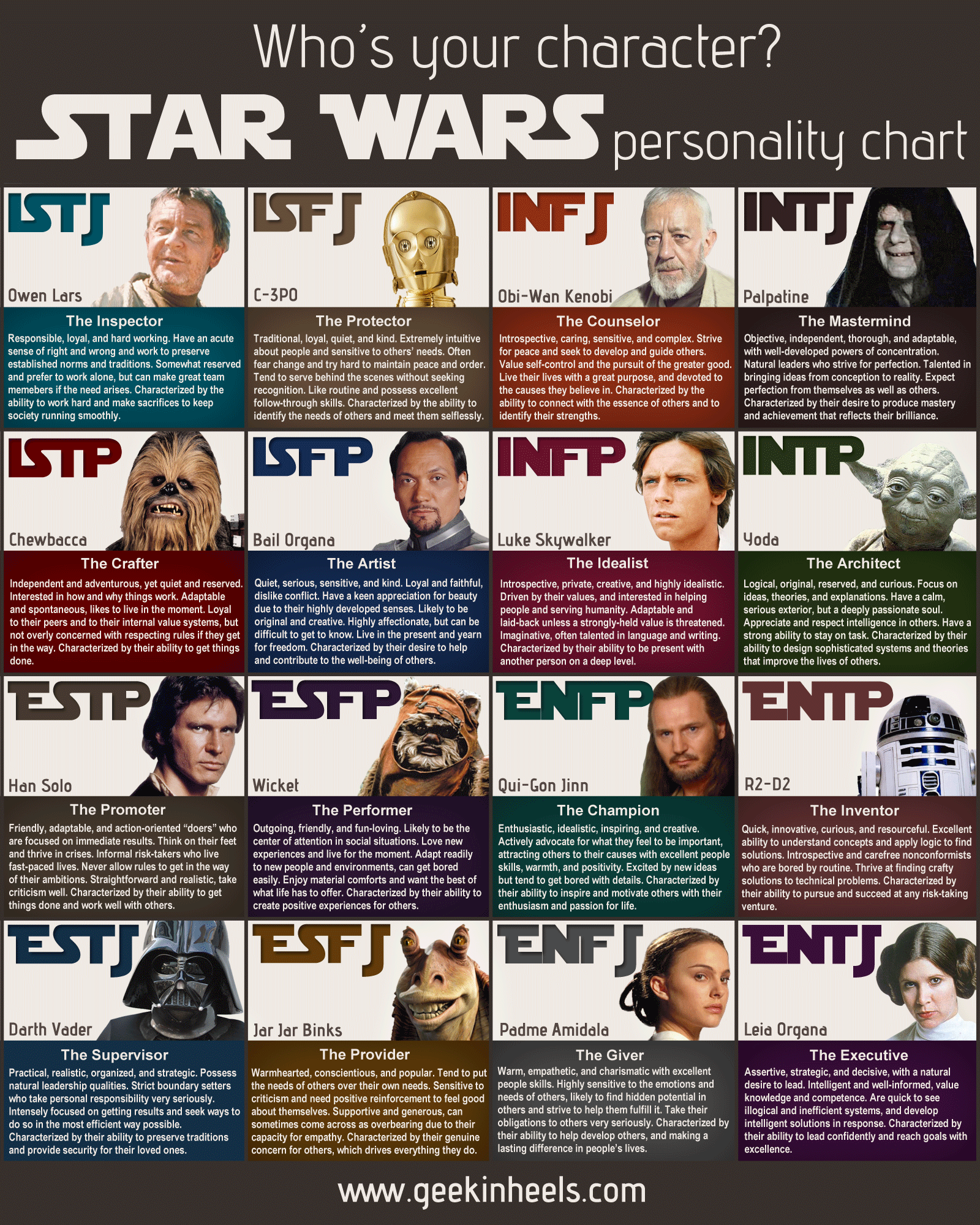
My Star Wars Character? R2-D2, The Inventor


A closer look at the whole poster is available here: http://www.geekinheels.com/wp-content/uploads/2013/10/star_wars_mbti.png

Personally, I am rather partial to the write-up for R2-D2


Search "MBTI" on this blog for similar posts!


Friday, November 29, 2013

My Harry Potter Character? Sirius Black, the Inventor


Here is another creative addition to the MBTI series of posts! I enjoy these immensely.

I stumbled upon this infographic / fandom chart here at Geeks are Sexy:
http://www.geeksaresexy.net/2013/09/17/the-harry-potter-based-mbti-personality-test-chart/test/


My MBTI profile of ENTP matches me to Sirus Black. Great character, by which I mean, sexy, and great write-up, by which I mean flattering.

Using the clue posted prominently in lower right-hand corner of the chart Geeks are Sexy, I discovered a reference to the original work here at Tumblr:
http://simbaga.tumblr.com/post/55375791416/disclaimer-i-am-not-an-expert-on-the-myers.

Interestingly, the original poster (Emily) has a different alignment of characters to MBTI types. Under this author's estimation, as an ENTP I should be aligned with Fred and George Weasley.


Now I am not as fond of the Weasley twins, as I am not much of a mischievous prankster. I do not quite agree with the write-up in this referenced version, either. Playful, maybe, but I am usually more serious minded and I am a horrible liar.

It appears that Geeks are Sexy kept the concept and the character artwork by Makani, but developed new text which I believe, at least in the case of ENTP, to be superior.

Here is what Emily did with Sirus Black in her original:


Both authors have used the original concept, artwork, and fonts, but notice how the image of Sirus has been flipped in the subsequent Geeks are Sexy edition.

I suppose the bottom line to all of this is caveat emptor. 

Emily, author of the Blasphemmy [sic] blog on Tumblr, has created many more of these "Who Are You?" MBTI fandom charts. See the collection here: http://simbaga.tumblr.com/tagged/mbti%20chart

Search this blog for more MBTI charts using the search phrase, "MBTI."

Monday, November 25, 2013

Which Wine Am I? Che Syrah, Shiraz

Does your Myers-Briggs Type Indicator correctly predict the type of wine that suits you best?


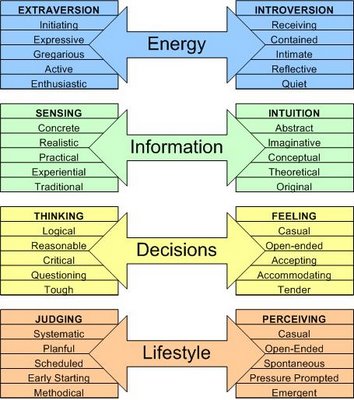
Most readers are familiar with the Myers-Briggs Type Indicator, a popular interpretation of Jungian psychology that helps explain a person's personality in terms of individual preferences. The figure above illustrates the four elements which define 16 personality types. Most readers probably also know their individual MBTI profile.

The VinoLovers have added another twist on the MBTI. Their beautiful online catalog sorts the world of wine into 16 types. These types are then paired with the most appropriate Myers-Briggs types based on common personality indicators.

http://glossi.com/grace_vinolovers/64882-the-type-of-wine-you-are-according-to-your-myers-briggs-profile


I agree with the write-up for my Myers-Briggs type, ENTP, and I do like Shiraz / Syrah. However, if we were to run this experiment the opposite way and choose personality type by preferred wine, I would be a Malbec-loving ISTP!

Why doesn't it work both ways? LOL


"If your life were a movie, would anyone watch?"

Friday, November 15, 2013

My LOTR Character? Merry the Visionary

Which LOTR character are you? Merry the Visionary suits me to a "T"


The original LOTR-Personality-Chart is HERE