Showing posts with label Happiness. Show all posts

Wednesday, November 22, 2017

The 10 Happiest Cities in America

Erik Gordon, the owner of Carabiner Coffee, serves climbers from a vintage Volkswagen van at Castle Rock, just a 20-minute drive from Boulder. Happiness for many of the city’s residents arises from its small-town character and its close proximity to nearby mountains. PHOTOGRAPH BY MATTHIEU PALEY for NATIONAL GEOGRAPHIC

According to new research by Dan Buettner and National Geographic, the 10 happiest cities in America are:
  1. Boulder, Colorado
  2. Santa Cruz, California
  3. Charlottesville, Virginia
  4. Fort Collins, Colorado
  5. San Luis Obispo, California
  6. San Jose, California 
  7. Provo, Utah
  8. Bridgeport, Connecticut
  9. Barnstable Town, Massachusetts
  10. Anchorage, Alaska
(You can find the list at NationalGeographic.com and in the cover story of the November issue of National Geographic magazine.)

I find "Happiness Research" fascinating. This blog is full of evidence of my interest in this topic. One thing I like about Buettner's approach is the distinction he draws between Positive Psychology (think mindfulness and gratitude journals), and more of a metrics-based approach.

Buettner, whose previous research has focused on longevity, admits that happiness is hard to define, let alone measure. One can, however, measure three things:
  • life satisfaction, or how you evaluate your life as a whole; 
  • positive affect, or your day-to-day, moment-to-moment happiness; and 
  • purpose, or whether you feel you have meaning in your life.

Buettner calls these metrics Pride, Pleasure, and Purpose, and he says enduring happiness occurs when these three strands are braided together.

Read more about the happiest cities in America, according to new research, HERE 

Wednesday, November 15, 2017

Word of the Day: IKIGAI

Ikigai, pronounced "ee-key-guy," is a Japanese word literally meaning the realization of what one hopes for and expects from life. This is akin to the Western concept of raison d'etre or one's useful purpose or reason for being. 


Figure 1. Conceptual model of ikigai


The illustration shows four overlapping components to ikigai. To fulfill one's purpose and find happiness, one must find an activity at the intersection of:
  • What one loves
  • What one is good at
  • What the world needs
  • What the world will pay for 
There are two internal or personal factors (what you love and what you are good at) and two external or corporate factors (what the world needs and what others will pay you for).

A natural progression from the most personal to the most corporate might look like this: Do what you love and you will get good at doing it. If the world needs and values the thing you are good at, you can earn a decent living doing it. If all is working well, you will love your activity even more and the virtuous cycle repeats and expands.

Figure 2. Although the four components work concurrently, not linearly, it may be helpful to imagine a progressive path, beginning with the most personal (what you love) and advancing through to the most external (what you can be paid for).


The four factors are weighted equally, hence the same-sized circles. Their relationship to one another is captured in a Venn diagram, implying that simultaneous outcomes are achieved through cyclic, iterative, interconnected, and mutually reinforcing factors. The factors are shown in a balanced state. All the circles and overlaps are uniform in size. However, the implication is that the relationship can become distorted if a factor grows or shrinks relative to the others. The "Love" circle can get bigger or smaller over time, and any change within that factor will distort the overall image.

The combination of what you love to do and what you are good at generates passion for your actions. If you can apply that passion to meet a need in the market, you are performing a mission. If customers are willing to pay you for the goods or services you bring to the market, your actions are consistent with your calling or vocation. And finally, if the thing you are getting paid for is also the thing you are good at relative to others, then you have found your profession. 

The maximum reward is gained at the overlap of all four circles. The rewards you earn for meeting a need by doing well something that you love include the summation of: 
  • Delight and fulfillment (12 o'clock), 
  • Excitement and usefulness (3 o'clock), 
  • Wealth and comfort (6 o'clock), and 
  • Satisfaction and certainty (9 o'clock). 

The rewards will be diminished if you are missing one or more of the four components. For example:
  • If you are doing what you love but are not getting paid, you may experience delight and fullness but no wealth (12 o'clock)
  • If you are doing what the world needs but you are not particularly good at it, you may experience excitement and complacency, but also a sense of uncertainty (3 o'clock)
  • If you are getting paid but you don't love what you are doing, you may be comfortable but experience a feeling of emptiness (6 o'clock)
  • If you are doing what you are good at but the world doesn't need it, you may feel satisfaction but also a sense of uselessness (9 o'clock)
Similarly, an imbalance in the four components can diminish the rewards of ikigai. For example, imagine a passion project that you love but no one is paying for. The abundance of love may allow you to continue with the project but the imbalance causes an increase in the passion and mission areas at the expense of critical profession and vocation areas. Notice also that the area of the overlap between the components--that area that represents ikigai--is smaller.

Figure 3. Imbalance stresses the factors and reduces ikigai

The secret to happiness according to the concept of ikigai is to do what you love, especially if: you are relatively good at it; there is a need for it; and you can earn a decent living doing it. The amount of happiness you achieve is a function of (and perhaps a measure of) your ability to translate your love into quality goods and services, then meet market needs with the quality product, then collect payment from satisfied customers.

In theory, if you are not happy and fulfilled, look at all four factors for reasons. Look at the factors separately and together (love + skill = passion). Identify the gaps, and set out to make improvements.
  • Are you doing what you love?
  • Are you good at the thing you are doing?
  • Does your product meet a specific need in the market?
  • Are you getting paid enough to cover your expenses and provide comfort?

If the answer to any one of these questions is not a resounding YES, then perhaps there is some room for improvement--or maybe even a requirement for radical change. If love is lacking, then either figure out how to bring more love into the activity or find a different activity you love even more. This process is personal. Life is too short to entrust your personal happiness--your ikigai--to anyone else.


Life is short: nurture ikigai.


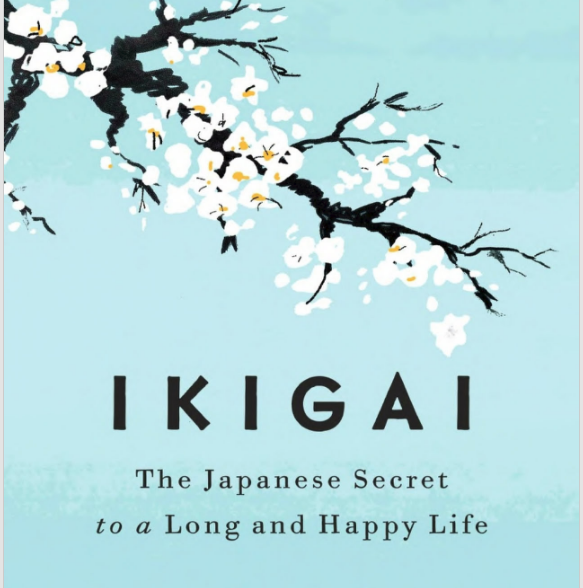
Figure 4. Cover art for García and Miralles (2017)

In their new book, Ikigai: The Japanese Secret to a Long and Happy Life, Héctor García, and Francesc Miralles define ikigai as the happiness of always being busy. But happiness is the goal, not merely being busy. We all know someone who is busy and miserable! And many of us have experienced that situation. I prefer the definition I laid out at the beginning of this post:


Ikigai is the realization of what one hopes for and expects from life. This realization is achieved through discovering, revealing, curating, and perfecting one's useful purpose or reason for being. 

I'd like to conclude with an abrupt left turn and a challenge for readers. Is ikigai the best prescription for happiness? How could it be improved? My friend Scott Nestler has this Kelly Corrigan quote hanging on his office wall:


"Make yourself useful, doing something hard, with good people."


This motto picks up a theme that appears missing from ikigai: teamwork. I'd like to ask readers to compare and contrast Corrigan's quote with the concept of ikigai in the comments. Which do you prefer, and why? Is anything else missing from ikigai? Do you have a different model or motto that you prefer? My intent is that the interaction which follows in comments will spark a future post.

As always, thank you for reading PhilosFX. Thoughtful comments are welcome. Stay (intellectually) thirsty, my friends! 

Wednesday, January 1, 2014

Happy New Year!


Welcome Twenty Fourteen! 
Welcome a New Year, with brand new 
opportunities, directions, challenges, and 
possibilities, and with renewed hope and faith. 
Ah, Twenty Thirteen, we hardly knew ye! 
Fare-thee-well and God be with ye. 
Welcome Twenty Fourteen! 


Wednesday, December 18, 2013

Fail Better


If failure is not only inevitable but also essential, as Costica Bradatan said, then perhaps the secret to happiness in this life is to bounce back from defeat, quickly assess the lessons to be learned, move again into the fray, and fail ever better.

Thursday, September 12, 2013

Do we really get wiser with age?

This wry comment from a younger colleague sent me into philosopher mode:


"Although we are getting older, I would like to think we are continually getting wiser which is a fair trade-off ... I think.  So enjoy that old age, old man, but do it wisely."


Ahem. My friend was plainly implying that I was indeed older, yet perhaps not as wise as might be expected for my advanced years.

Do we really get wiser with age? I found this proposition interesting. As I thought about the proposition more, what occurred to me is that aging is neither necessary nor sufficient for obtaining wisdom. Plenty of people get old and never seem wise to others. Likewise, some young people seem to have unusual gifts of integrity, character, and vision. So aging is not a continual, linear trade between decreasing physical ability and increasing mental, spiritual, and emotional ability. Age merely provides us with more opportunities to struggle and learn. Age opens us up, makes us pliable, and makes us more resilient (if not physically stronger).

Psychoanalyst Erik Erikson created an eight-stage theory of the human life cycle. In each stage, a person faces an internal struggle that develops different aspects of personality. For example, an infant's struggle is the battle between trust and mistrust; when infants feel they can trust those around them, they develop a sense of hope. In maturity, this virtue of hope manifests in an appreciation for interdependence and relatedness. Erikson's last stage, old age, people grapple with the balance between their personal sense of integrity, and defeat in the face of death and physical disintegration. If integrity wins out, then the result, according to Erikson, is wisdom.  


Accessed Sep 12, 2013 from http://www.intropsych.com/ch11_personality/eriksons_psychosocial_stages.html

I like Erickson's Stage Theory because it seems to explain things well, and because it can serve as a solid framework for questions around character, maturity, and acquired wisdom. The dialogue between my younger colleague and I proceeded thusly:

We all have our struggles and our stories, and according to Erikson, we develop at different rates depending on how we respond to struggle. I know very little about your story, and you probably don't know a whole lot about mine. Our opinions of each other are based solely on our brief interactions over the last few years. 

Your words imply that you do not think much of my wisdom and that you feel yours is superior. I would like to point our that I have not come to you seeking your advice on the matter. If you want to challenge me or teach me or help me to grow in wisdom and grace, I will listen, because I am far from complete and I am sure you can teach me many things. 

However, before you start something with me, please think about where you are coming from and what you hope to achieve. I know myself very well--the good, the bad, and the ugly. What do you see that motivates you to tell me to "enjoy that old age old man but do it wisely"? 

I have learned that criticism is always about the critic. For anyone to see a flaw in me, (a) I must be doing something; (b) they must be able to recognize the flaw first in themselves; and (c) they must have a motive for bringing this flaw to my attention. The playground rejoinder applies: "It takes one to know one." I wanted to know more about the issue that motivated my colleague's unsolicited advice. I suggested a we let Erikson's model serve as a common framework for advancing the discussion.

This willingness to listen without becoming defensive is not easy for most people, myself included. The idea of a common framework like Erikson's helps to keep the discussion objective. Another thing that helps is setting a common purpose, like helping each other grow. In this light, difficult conversations can be offered and accepted in the form of constructive criticism.

So I offered the framework and the purpose as a baseline from which to build, and continued:
If this baseline works for you, I am willing to learn why you felt the need to jack me up. I will listen without arguing or attempting to defend myself until you have made your point.

I wish I could say that the ensuing conversation was productive and mutually satisfying. Unfortunately I think my somewhat indignant tone belied my willingness to listen. I am still wondering, still aware that my character is not fully perfected, and still waiting.

Questions:

1. How do you handle criticism, especially unsolicited criticism?
2. When do you decide to offer criticism?
3. What if anything would you have done differently from me in the scenario I described?
4. Are you aware of a human life cycle theory that is better than Erikson's?


For readers who are curious about the relationship between age and wisdom, here is a link to some additional resources:


Tuesday, July 16, 2013

The Role of Goals


"Robert M. Pirsig, in Zen and the Art of Motorcycle Maintenance, describes joining a group of elderly Zen monks mountain-climbing in the Himalayas. Though Pirsig was the youngest member of the expedition, he was the only one who struggled; he eventually gave up, while the monks effortlessly ascended to the peak.

"Pirsig, focused on the goal of reaching the peak of the mountain and overwhelmed by what lay ahead, was unable to enjoy the climb; he lost his desire--and his strength--to carry on. The monks also focused on the peak, but only to make sure they were staying on course, not because reaching the peak itself was most important to them. Knowing that they were headed in the right direction allowed them to focus their attention and enjoy each step, rather than be overwhelmed by what lay ahead.

"The proper role of goals is to liberate us, so that we can enjoy the here and now."


                                                     --Tal Ben-Shahar, Happier, pp. 69, 70


Running a marathon is not about crossing the finish line so much as it is about learning to find joy in each stride taken from the first day of training right up until the goal is achieved. One foot in front of the other. Stay the course, and the finish line eventually comes to you.

Monday, July 15, 2013

Sentence Completions Facilitate the Art of Living Consciously


I have enjoyed Tal Ben-Shahar's book, Happier. One of the tips that I have found most valuable is Dr. Ben-Shahar's suggestion to use sentence completion drills as a means to raise one's self-awareness. He cites Nathaniel Branden's work in this area, turning readers to Dr. Branden's website, The Esteemed Self. Here is Dr Branden's description of this exercise:
"Sentence-completion work is a deceptively simple yet uniquely powerful tool for raising self-understanding, self-esteem and personal effectiveness. It rests on the premise that all of us have more knowledge than we normally are aware of – more wisdom than we use, more potential than typically shows up in our behavior. Sentence completion is a tool for accessing and activating these dormant or “hidden” resources.

 "Sentence completion can be used in many ways. Here I will describe a way I find particularly effective. The essence of this procedure is to write an incomplete sentence (or sentence stem) and then write a number of different endings, with the sole requirement that each ending is a grammatical completion of the sentence. Aim for a minimum of six endings.

 "To truly benefit from the exercises, you should work as rapidly as possible. Don’t pause to “think”, invent responses if you get stuck and don’t worry if any particular ending is true, reasonable or significant. The object is simply to let your thoughts flow forward without impediment.

 "When doing sentence completion exercises, it is best to work with a journal or computer. That way, past entries can easily be accessed for reflection."


I have chosen to operationalize Dr. Branden's suggestion with a few minor modifications. I offer this summary of modifications for your consideration.

In your gratitude journal, write out at least 5 replies for each stem. Work quickly, without over-thinking. Spend no more than 5 minutes before breakfast (B), no more than 5 minutes before Dinner (D), and no more than 5 minutes before bed at night (N). In addition, spend no more than 5 minutes  Sunday (S) to review and assimilate the past week’s entries.


B1. Living consciously to me means –

B2. If I bring 5 percent more awareness to my activities today –

B3. If I pay more attention to how I deal with people today –

B4. If I bring 5 percent more awareness to my most important relationships –

B5. If I bring 5 percent more awareness to (fill in a particular problem you are concerned about— for example, your relationship with someone, or a barrier you've hit at work, or your feelings of anxiety or depression) –


D1. When I reflect on how I would feel if I lived more consciously –

D2. When I reflect on what happens when I bring 5 percent more awareness to my activities –

D3. When I reflect on what happens when I pay more attention to how I deal with people –

D4. When I reflect on what happens when I bring 5 percent more awareness to my most important relationships –

D5. When I reflect on what happens when I bring 5 percent more awareness to (whatever you've filled in) –


N1-5. Today I am grateful for --


S1-5. If any of what I wrote this week is true, it would be helpful if I –


As I said I made a few changes from the original.

  • For one, I like to do this exercise daily, rather than Monday through Friday. 
  • I cut back to 5 completions from 6, because it's a bit faster and because the resultin sum of all sentences is a nice round number B (5 * 5) + D (5 * 5) + N (5 * 5) + S (5* 5) = 100. 
  • I used to write out the stems as well as the completions, but that took too much time. Now I have a printout of the above stems in my journal. 
  • What I call D3 above is something I added to the mix. In Dr Branden's list, there are only 4 stems for the evening. However, I prefer a "call and response" between morning and evening so I added D3 for symmetry. 
  • I tried writing out the stems and leaving blanks to be filled in later, rather like a template. But this did not work for me. If I did not complete the work on a given day, I wasted a bunch of space in my journal plus the time writing the framework out. Now I just do what I can, when I can, and if I miss a session I just move on. 
  • I use the abbreviations B, D, N, and S and the sequence numbers to cross-reference the stems and that keeps me straight and seems to be the fastest and most efficient process. The awareness and behavior changes that occur are more important than what the writing looks like on paper.
  • I prefer the journal rather than the computer foe many reasons. I spend too much time at the keyboard as it is. Moreover, I believe there is something special, personal. and intimate  about the mind-body connection of transmitting a thought through a pen to a piece of paper.
Try this at home! I recommend it. After you have performed this exercise for several weeks, visit Dr Branden's site. Look for more stems. There are currently two additional 30-week programs published. As of this writing, I am still learning from this first level.

Monday, April 11, 2011

Happiness!

Today I bought a new book via Kindle Singles. Amazon's Kindle "Singles" are short stories--the book world's equivalent of a single from a music album. This marketing idea is, in and of itself, an interesting topic. Genius fitted to the typical American attention span....


And the short book which caught my eye is the Happiness Manifesto, by Nic Marks. I am captivated! I'm ready to announce my second career as a traveling Happiness Manifesto consultant. And by traveling, I mean via 2008 Harley Road King or 1979 Catalina 27' Sloop or 1984 Fuji Touring Series IV or perhaps company Bombardier Leerjet 85 (no offense, 2006 Subaru Forester). And by consultant, I mean guy who gets paid tons of cash to show people and groups of people (some really BIG groups of people) how to get and stay happy the Nic Marks / New Economic Foundation way.

Timeline:

  • On 18 March 1968 Robert Kennedy said the Gross Domestic Product (GDP) "measures everything except that which makes life worthwhile." 
  • In 1972, the term Gross National Happiness was coined by the former King of Bhutan, as a way of shifting the emphasis from material goods to the well-bing of his subjects.
  • In 2001, Nic Marks starts the Centre for Well-Being at the New Economic Foundation (NEF). 
  • The NEF developed the Happy Planet Index (HPI) in 2006. The HPI measures the amount of health a population is able to extract per unit of Earth's resources. In general, Latin American countries are the "happiest" and African countries the least happy. Developed countries are in the middle, penalized by their larger carbon footprints. 
  • Nic was asked to give a TED Talk on measuring happiness, which he did in 2010. Then he was approached about writing a short book about the talk, which he did and that result was just published in January of 2011. I now have it on my Kindle. It's called, The Happiness Manifesto: How People and Nations Can Nurture Well-Being. 

More about the life and times of Nic Marks is on his website here: http://www.nicmarks.org/

Nic Marks' TED Talk is here: http://www.ted.com/talks/nic_marks_the_happy_planet_index.html

Happiness is ...
                    ...  a sense of purpose.