
Sunday, December 31, 2023


Sunday, November 26, 2023
Maranasati Meditation: Recollections of Death

Many of us consider death to be a morbid topic. We do not wish to contemplate death, either our own or that of a loved one. As humans, we are cursed by the knowledge of our mortality--we already know how this story will end. But a pathological fear of death is unhealthy. An antidote to this fear is to replace some of the uncertainty about mortality with a more conscious awareness of death. This post is brought to you in the name of exposure therapy.
I listened to a Tim Ferriss podcast while driving to West Virginia for work. I thoroughly enjoyed his wide-ranging conversation with author and professor Arthur C. Brooks. Tim is truly a master interviewer. His questions come from deep research and boundless curiosity. He attracts some of the most accomplished guests you could imagine. At about one hour and 29 minutes into this particularly fascinating interview, Tim asked Arthur, "Could you please describe your death meditation and why you have a death meditation?"
Arthur's response connected with me. I am working on updating my Estate Plan, so I have a comfort level with the topic of my mortality. I consider myself a Christian, but I have read from a wide range of wisdom traditions and I find value in the sometimes curious paths that other cultures have taken to the same destination.
Arthur, a Catholic, explains the Theravada Buddhist practice of familiarizing oneself with the truth of their future death through a meditation called Maranasati. The meditation involves the rather macabre technique of contemplating cadavers or photos of cadavers in 9 stages of decomposition ending in dust. They examine the first one and they say, that is me. And then after contemplating they move to the next one and say, that is also me. And what are they doing? They’re familiarizing themselves with the truth of their future such that they can be liberated from any fear of physical death.

Arthur goes on to say that as a Christian, he does not have a fear of death, per se. However, he does have a fear of losing his mind, of somehow not being fully himself. He has students who fear academic failure. Perhaps you have a particular fear that robs you of being fully present. Brooks advocates the Maranasati Meditation technique as a means of confronting all manner of fear. As he says,
"we won’t be fully alive until we actually face the death that really matters to us."
Reminding ourselves of our transience helps us truly embrace life. Let me provide a guided script for a form of Maranasati Meditation. This and other scripts like it are available in the references cited below. Practice this a few times without pictures, until you are comfortable with the progression through 9 stages. Then, feel free to adapt the model to your deepest existential fears.
1 Death is inevitable. No one is exempt.
Holding this thought in mind, I abide in the breath.
2 Our life span is ever-decreasing. Each breath brings us closer to death.
Holding this thought in mind, I delve deeply into its truth.
3 Death will indeed come, whether or not we are prepared.
Holding this thought in mind, I enter fully into the body of life.
4 Human life expectancy is uncertain. Death can come at any time.
Holding this thought in mind, I am attentive to each moment.
5 There are many causes of death – even habits, desires and accidents are precipitants.
Holding this thought in mind, I consider the endless possibilities.
6 The human body is fragile and vulnerable. Our life hangs by a breath.
Holding this thought in mind, I attend to my inhale and exhale.
7 At the time of death, material resources are of no use to us.
Holding this thought in mind, I invest wholeheartedly in practice.
8 Our loved ones cannot keep us from death. There is no delaying its advent.
Holding this thought in mind, I exercise non-grasping.
9 Our body cannot help us at the time of death. It too will be lost at that moment.
Holding this thought in mind, I learn to let go.
"Death is always present, and its transformational power is always accessible to us. Becoming aware of our own mortality can be a liberating and awakening experience, which can – paradoxically, it might seem – help us to live authentically and fully, perhaps for the first time in our lives."
Here's to confronting our fears as a means to living authentically and fully! Please visit the references below for additional context and inspiration. As always, comments and questions are welcome.
 |
| Memento mori: Remember that you will die. |
The Tim Ferriss Show with Arthur C. Brooks on YouTube
Tim Ferriss' blog post with Arthur C. Brooks
Arthur C. Brooks Interview Transcript
The nine contemplations on death
Positive Psychology on Maranasati Meditation
Buddhist Inquiry Shining the light of death on life Part I
Buddhist Inquiry Shining the light of death on life Part II
Corpse Meditation a Buddhist Practice
Cadaver Meditation: Anatomy and the Body
Why contemplating death can help you live a happier life
Thursday, November 23, 2023

Thursday, October 19, 2023

Thursday, October 12, 2023

Wednesday, October 4, 2023
Do and Be Better
 |
| Words of Wisdom from the Oracle of Omaha |
Are you addicted to achievement and adventure? Are you afraid of missing out? Does this disposition make you feel anxious, competitive, or insecure in some way? You are not alone!
There is a cure, and it may surprise you.
Sometimes, we get so caught up in our calendars, schedules, agendas, and endless To-Do lists that we forget why we are even here on this Earth. We focus on improving our activities, our achievements, our adventures--our "doings"--until we lose our balance. Nothing is ever good enough, and time rolls by ever faster, increasing a sense of separation.
All the attention we pour into doing things better, faster, and cheaper may come at the expense of deepening and improving the essence of who we are: our values, character, and demeanor.
I am reminded of the phrase, "Peaceful Being and Purposeful Doing" by Steven Lawson, creator of the Monk Manual. Like Warren, Steven suggests that true happiness lies in finding and maintaining the balance between our Being and our Doing. Warren emphasized the importance of surrounding ourselves with people who push us to both do and be better.
We are not just our accomplishments; we are values on display, for whatever precious little time is allotted us. There is nothing wrong with the drive to enhance productivity. Do your best! But don't neglect the personal growth and development that comes from study, introspection, and contemplation. We must also endeavor to be the best possible version of ourselves.
Contemplation is necessary, but not sufficient. Nothing happens until something moves. The cure I alluded to above lies in helping others. We must get out of our own heads and be of service. Be kind to yourself, and in your dealings with others, be just a little kinder than the situation requires. No drama or negativity, just positive reinforcement and encouragement. No jealousy or hate, just bringing out the absolute best in each other.
Warren's words of wisdom are a perfect share for Wisdom Wednesday. If you would like to explore this topic deeper, let me know. My mastermind group for publishers exists to develop that sweet spot between being and doing.
Friday, September 29, 2023

Wednesday, September 6, 2023

Friday, September 1, 2023
Hands Around the World
“Hands Around the World” is inspired by the legacy of world-leading humanitarian and visionary, Ken Kragen, the creator of We Are the World and “Hands Across America”.
I am old enough to remember Hands Across America, a public fundraising event held on Sunday, May 25, 1986, when about 6.5 million people held hands for 15 minutes in an attempt to form a continuous human chain across the contiguous United States. The event was a partial success. The actual coast-to-coast chain did not fully materialize, but participants and supporters still raised $15 million for charities after operating expenses.
There is something beautifully compelling about the notion of a human chain stretching around the world, uniting people of every age, race, religion, and ability in one unbroken line. For more information about “Hands Around the World”, visit their website or send an email to: info@hands.world.
For my part, I started wondering whether it would be possible to form a human chain that could encircle the planet. Could the current population of Earth, standing side by side and holding hands at arm’s length, wrap around the Earth’s equator?
Let's explore!
Assume
- relatively flat and stable surfaces,
- sufficient time and logistical support, and
- the ability to stand on water… ha
Circumference, C, of the earth at the equator
- In miles: 24.9k mi
- In feet, C = 24.9k * 5.28k = 0.131477 billion feet
Population, P, of Earth
Overall, P = 8.058 billion
- Children 0-14 years of age comprise 25%
Average Handspan, H, in feet
- Overall, H = 4.0 feet
- Adults: 4.5
- Children: 3.0
Calculations
- W = (P * H) / C
- W = (8.058 billion * 4 feet) / 0.131477 billion feet
- W = 32.23 billion feet / 0.131477 billion feet
- W = 245.14 wraps around the equator!
Conclusion
The population of Earth, standing side by side at double arm intervals and holding hands, could encircle the Earth at the equator not just once, but over 245 times! I find that astonishing.
The Earth seems big, but it may be smaller than one thinks in relation to the population. It takes 32.87 million people to wrap around the equator once. If everyone alive on the planet were to join in simultaneously, the ranks would be 245 deep.

 |
| Ken Kragen |
Ken Kragen left a powerful legacy. Kenneth Allan Kragen (November 24, 1936 – December 14, 2021) was an American music manager, television producer, author, speaker, and non-profit consultant, best known for his role in organizing the 1985 benefit record "We Are the World" and the 1986 charity event Hands Across America.
Friday, August 25, 2023
Happy Birthday, Elvis Costello!
“Through a two-way looking glass, You see your Alice”
—Beyond Belief, by Elvis Costello, born 25 Aug 1954 |
| The Gin Palace, Dublin |
Happy birthday to the one and only Declan Patrick MacManus, aka Elvis Costello, 69 years young on this day.
Why a pic of The Gin Palace? If you know, you know! For anyone who is in search of a clue, read through the lyrics below.
I took the photo on August 22nd, 2023, and could hardly wait to share it on the 25th.
Beyond Belief
History repeats the old conceits
The glib replies the same defeats
Keep your finger on important issues
With crocodile tears and a pocketful of tissues
I'm just the oily slick
On the windup world of the nervous tick
In a very fashionable hovel
I hang around dying to be tortured
You'll never be alone in the bone orchard
This battle with the bottle is nothing so novel
So in this almost empty gin palace
Through a two-way looking glass
You see your Alice
You know she has no sense
For all your jealousy
In a sense she still smiles very sweetly
Charged with insults and flattery
Her body moves with malice
Do you have to be so cruel to be callous
And now you find you fit this identikit completely
You say you have no secrets
And then leave discreetly
I might make it California's fault
Be locked in Geneva's deepest vault
Just like the canals of Mars and the Great Barrier Reef
I come to you beyond belief
My hands were clammy and cunning
She's been suitably stunning
But I know there's not a hope in Hades
All the laddies cat call and wolf whistle
So called gentlemen and ladies
Dog fight like rose and thistle
I got a feeling
I'm going to get a lot of grief
Once this seemed so appealing
Now I am beyond belief
I got a feeling
I'm going to get a lot of grief
Once this seemed so appealing
Now I am beyond belief
I got a feeling
I'm going to get a lot of grief
Once this seemed so appealing
Now I am beyond belief
Source: LyricFind
Songwriters: Elvis Costello
Monday, June 19, 2023
The Motte and Bailey Fallacy
 |
| A medieval Motte and Bailey castle, the namesake for an interesting logical fallacy |
Are you interested in logical fallacies? That is to say, do you study common flaws in thinking either to avoid them personally or spot them in sales pitches and other persuasive arguments? In my experience, this has become a critical survival skill.
The motte and bailey fallacy is a rhetorical technique where the proponent is essentially saying two things: one more defensible but less interesting (the motte), and one less defensible but more interesting (the bailey). The concept was invented by Nicholas Shackel and was popularised by Scott Alexander.
If you are with me so far, (a) thank you, and (b) have you heard of the Motte and Bailey Fallacy? This particular logical flaw is not as well-known as, say, the Strawman or the Appeal to Authority. And yet, as evidence-based truth-seekers and diligent data skeptics, we must keep our eyes peeled for simple mistakes as well as deliberate attacks.
In a typical motte and bailey argument, the proponent will establish common ground with the opponent. This safe or neutral space is analogous to the motte. For example, the proponent might ask, "Are you in favor of inclusion?" And the obvious answer is, "Of course!" Who would be opposed to inclusion? Having established the motte, the proponent can now assert that language which is offensive to minorities has the effect of excluding them by making them feel unwelcome. When the opponent counters with a freedom of speech argument, the proponent can claim, falsely, that the opponent is against inclusion. See how it works?
I would welcome your thoughts on this type of fallacy. Please feel free to leave a comment. Have you seen this fallacy before? Can you cite some examples? Will you keep an eye out for it to avoid using it yourself, or being tricked by it?
For your convenience, I have included some references below. Feel free to use those or others of your choosing--there are many just a quick search away.
Thanks for reading. The world needs evidence-based truth-seekers and diligent data skeptics now, more than ever!
References
What are Logical Fallacies?
What is a Motte and Bailey Castle (the namesake of the Motte and Bailey Fallacy)?
What is the Motte and Bailey Fallacy?
Friday, May 26, 2023
Remember and Honor: Memorial Day, 2023

In memoriam
The following 39 comrades-in-arms died while in service to the Nation. We remember their sacrifice this Memorial Day, and always.
Chronological
WOC Lee Price, 1978, helicopter accident, Alabama
CPT Mario Fajardo, 1991, minefield accident, Iraq.
SPC Gilman, 1999, traffic accident, North Macedonia.
Pentagon 9/11/2001
Colleagues, alphabetically after Leadership
LTG Timothy Maude, 1947-2001, 9/11 terror attack, Pentagon
CSM Larry Strickland, 1949-2001, 9/11 terror attack, Pentagon
SPC Craig Amundson, 1973-2001, 9/11 terror attack, Pentagon
MSG (Ret) Max Beilke, 1932-2001, 9/11 terror attack, Pentagon
COL Canfield "Bud" Boone, 1948-2001, 9/11 terror attack, Pentagon
SFC Jose Calderon, 1957-2001, 9/11 terror attack, Pentagon
CTR Gerald Fisher, 1944-2001, 9/11 terror attack, Pentagon
COL (Ret) Ron Golinski, 1941-2001, 9/11 terror attack, Pentagon
LTC Stephen "Neil" Hyland (fellow Notre Dame alum), 1955-2001, 9/11 terror attack, Pentagon
SGM Lacey Ivory, 1958-2001, 9/11 terror attack, Pentagon
LTC Dennis Johnson, 1953-2001, 9/11 terror attack, Pentagon
MAJ Steve Long, 1962-2001, 9/11 terror attack, Pentagon
CTR Terry Lynch, 1952-2001, 9/11 terror attack, Pentagon
MAJ Ron Milam, 1968-2001, 9/11 terror attack, Pentagon
DAC Odessa Morris, 1947-2001, 9/11 terror attack, Pentagon
DAC Deb Ramsaur (Germany), 1956-2001, 9/11 terror attack, Pentagon
CW4 William Ruth, 1943-2001, 9/11 terror attack, Pentagon
COL Dave Scales, 1956-2001, 9/11 terror attack, Pentagon
DAC Marion Serva, 1954-2001, 9/11 terror attack, Pentagon
LTC (Ret) Gary Smith, 1945-2001, 9/11 terror attack, Pentagon
DAC Patricia Statz, 1960-2001, 9/11 terror attack, Pentagon
LTC Kip Taylor, 1963-2001, 9/11 terror attack, Pentagon
SGT Tamera Thurman, 1976-2001, 9/11 terror attack, Pentagon
LTC Karen Wagner, 1961-2001, 9/11 terror attack, Pentagon
SPC Chin "Sunny" Pak Wells, 1976-2001, 9/11 terror attack, Pentagon
CTR Ernest Willcher, 1938-2001, 9/11 terror attack, Pentagon
MAJ Dwayne Williams, 1961-2001, 9/11 terror attack, Pentagon
CTR Edmond Young, 1979-2001, 9/11 terror attack, Pentagon
DAC Lisa Young, 1963-2001, 9/11 terror attack, Pentagon
9/11 victims who were family of my colleagues
DAC Patty Mickley, sister of a friend, 1959-2001, 9/11 terror attack, Pentagon
DAC Don Simmons, husband of a friend, 1943-2001, 9/11 terror attack, Pentagon
DAC Cheryl Sincock, wife of a friend, 1946-2001, 9/11 terror attack, Pentagon
Chronological, continued
MAJ Pete Graff, 2003, suicide, Charlottesville. Pete was an exceptional platoon leader in the 497th Engineer Company.
SES Reginald Brown, 2005, pancreatic cancer, Pentagon. I was Mr. Brown’s Military Aide when he suddenly became ill.
LTC (Ret) James Daron, 2010, lymphoma, Kansas. Jim and I served together in Iraq and I dedicated my Iron Butt Association ride to him.
MAJ Joe Jones, 2012, colon cancer, Virginia. Joe and I served together in the Pentagon.
Thursday, April 13, 2023
ONLY 16 COUNTRIES LEFT!
Thank you to the unknown (to me, yet) but most welcome visitor from the British Indian Ocean Territory!
As of April 13, 2023, readers from 226 of 242 countries (a whopping 93.4% of the globe) have visited this page at least once, according to my friends at Flag Counter.


Who's next? Cabo Verde? Mauritania? Palau? How about Saint Bart's? Only 16 remain....
Perhaps one of you regular readers will decide to become a digital nomad and work from a tropical paradise with good Wi-Fi. That lifestyle sounds appealing to me, too! Let's go island-hopping and check into PhilosFX as we travel. So who's with me?
Which country will be the 227th?
 |
| Cabo Verde |
 |
| Palau |
 |
| Tuvalu |
Sunday, May 29, 2022
Trust Science?
 |
| Source: https://netivist.org/ |
Science produced wonderful insights over the centuries. We know more today than we did 10, 100, or 1000 years ago. Are we done? Have we learned all there is to learn about the universe and time and life?
Of course not.
"Since we know we don’t know what we don’t know, why would we assume that what we do know is enough?"
Don’t "trust" the science. No legitimate scientist would ever say, "Trust me, I am a scientist." Instead, follow the science, because science is the best way we have for falsifying competing theories.
Follow science, not scientists. Scientists are humans and thus fallible and suceptible. Scientists themselves know this, and for this reason the scientific method features a process of verification known as peer-review. The community is less likely to be wrong than any one individual. Paradoxically, the greatest advances in science have occurred when an individual challenged the frontier of human knowledge in an unexpected way. Progress depends on the rogues.
Bottom line: Life is an experiment. Choose your questions carefully. When you see an answer, be skeptical and critically examine the investigator's motive, funding source, context, method, results, and conclusions. Have the results been peer reviewed and replicated? Some questions are better than others and some answers are deadly.
Tuesday, March 1, 2022
The ‘doomed’ resistance in Ukraine
A reflection inspired by McAulay's Horatius at the Bridge
Reading about the 'doomed' resistance in Ukraine reminds me of McAulay's Horatius at the Bridge [1], especially these lines:


“…To every man upon this earth, death cometh soon or late;And how can man die better than facing fearful odds,For the ashes of his fathers, and the temples of his Gods,"And for the tender mother who dandled him to rest,And for the wife who nurses his baby at her breast,And for the holy maidens who feed the eternal flame…”
Russian President Vladimir Putin seems determined to win at all costs. Meanwhile, under Ukrainian President Volodymyr Zelensky, the people of Ukraine are unexpectedly and boldly defiant. Like Horatius at the Tiber river bridge, they are fighting, defending, holding--protecting their families and their property, and giving nothing away.
Reminiscent of Lars Porsena's Etruscan army attacking Rome as described in McAulay's epic poem, Russia’s forces are extended. The logistics tail is weakening. With the ruble’s value plummeting, the attackers risk finding themselves out of food and fuel, losing support from home, and surrounded by angry defenders wielding pitchforks and torches.
Putin’s arsenal includes artillery, airborne infantry, and nuclear weapons.
Let’s hope a desperate Putin does not resort to drastic (read: nuclear) measures.
Wait! Strike that.... Let's not hope. Hope is not a method [2]. Let us instead work, co-operate, and sacrifice to ensure Putin does not employ his nukes and thus invite mutually assured destruction.
Is Ukraine 'doomed'?
Against Putin's deep resources, Ukraine cannot win militarily, but that does not mean they will be "defeated." Zelensky’s bravery is rallying the West. The resistance has already lasted longer than many analysts predicted, and longer is better! The extended resistance has bought time for the EU and the UN to impose sharper sanctions, cut off SWIFT, and consider Ukraine's request for expedited membership in EU. These measures offer the best path to a favorable outcome but they still require Putin to capitulate. Support is taking many forms, but we in the West who prefer to see a free and independent Ukraine should be reluctant to cause a military escalation.
Putin’s unlikely to withdraw. His military victory is inevitable but increasingly expensive. Without military aid from the West, there will be heavy casualties before the smoke clears. Having won the territory at great expense, Putin will install a puppet government and attempt to control the population. I suspect he will find governing the region and the people of Ukraine even more difficult and costly than capturing the territory.
The consequences of a Putin victory in Ukraine are impossible to calculate. The former Soviet satellite nations of Estonia, Latvia, Moldova would face attacks next, forcing NATO to invoke Article 5. Russia's allies, China, North Korea, and Iran would join the fray. China would take Taiwan. North Korea would make a move on South Korea. Surely Iran would push west past Iraq and Syria in their attempt to shove Israel off the map. In short, a Putin victory in Ukraine is tantamount to Armageddon.
To forestall a third World War, we must support Ukraine, NATO, and the EU, to contain Russia, China, North Korea, and Iran.
The long game for Ukraine is to see the day when Putin finally realizes he made a terrible mistake. Once his propaganda machine is unable to persuade, and his economy is in tatters, and his oligarchs have fled with what they could salvage from their wealth, the aspirations of a dictator and would-be emperor will implode. Balance based on fair trade and strong defenses will be restored.
So the Western alliance is walking a fine line here, staying on the sidelines, using diplomacy and economic sanctions instead of providing direct support to Zelensky. Putin is determined and undeterred. Many Ukrainian fighters and civilians will be casualties in the conflict. Eventually, Putin will come to see Kyiv as his Waterloo. He will fail as a dictator, and disappear into the dustbin of history. Then these Ukrainian dead, who died facing 'fearful odds', shall not have died in vain.
Thank you for reading, commenting, and sharing.
Notes:
[1] Gill, N.S. (2020, August 26). 'Horatius at the Bridge' by Thomas Babington McAulay. Retrieved from https://www.thoughtco.com/horatius-at-the-bridge-4070724
[2] The title of General Gordon Sullivan's memoir is apropos. https://www.penguinrandomhouse.com/books/175183/hope-is-not-a-method-by-gordon-r-sullivan/
Tuesday, February 1, 2022
Happy Mid-Winter / Imbolc / St. Brigid’s Day!

The name Imbolc can be translated literally as “in the belly,” and figuratively as anticipating the birth of Spring.
Imbolc originated as a festival in honor of the pagan goddess Brigid, a powerful woman and the matron of healing, arts, fertility, poetry, music, prophecy, and agriculture.
Today, Brigid is considered the matron saint of Ireland. She was born c. 451 in Faughart,and died c. 525 (age 74) in Kildare.
"Fun fact about Brigid is that she is a synchronized goddess who stayed virtually intact as a saint. Her shrine is at Kildare where you can still draw from Her healing well and visit Her perpetual flame."
--Heather Gaffney Darnell, intuitive reader
Happy Mid-Winter / Imbolc / St. Brigid’s Day!
Enjoy these links:
Year of the Water Tiger
Happy LunarNewYear to all who are celebrating!
 |
| Year of the Water Tiger |
May the Year of the Water Tiger bring us peace, prosperity, and happiness.
"Lunar New Year (Chinese Chunjie, Vietnamese Tet, Korean Solnal, Tibetan Losar), also called Spring Festival, begins with the first new moon of the lunar calendar and ends on the first full moon of the lunar calendar, 15 days later." --Britannica
Enjoy these links:
Saturday, January 29, 2022
Map of Emotional Manifestations in the Body

Across cultures, people feel increased activity in different parts of the body as their mental state changes.
"A new study by Finnish researchers published today [Dec 30, 2013] in the Proceedings of the National Academies of Sciences, suggests that our emotions do indeed tend to influence our bodies in consistent ways."
"It's worth noting that the bodily sensations weren't blood flow, heat, or anything else that could be measured objectively—they were based solely on physical twinges subjects said they experienced."
Excerpts are from an article by Olga Khazan which was published in The Atlantic on December 30, 2013 and accessed January 29, 2021 from https://www.theatlantic.com/health/archive/2013/12/mapping-how-emotions-manifest-in-the-body/282713/.
I spotted the colorful graphic in the Facebook Story of a friend and fellow veteran who shares my interest in a range of health issues. Searching for the original source, I saw that it had already been re-shared multiple times--and rightly so. Hat Tip to Keith Toy, aka Buzz Lightyear.
Thursday, December 16, 2021
Advice to my Current Self from my Future, (Presumably) Wiser Self
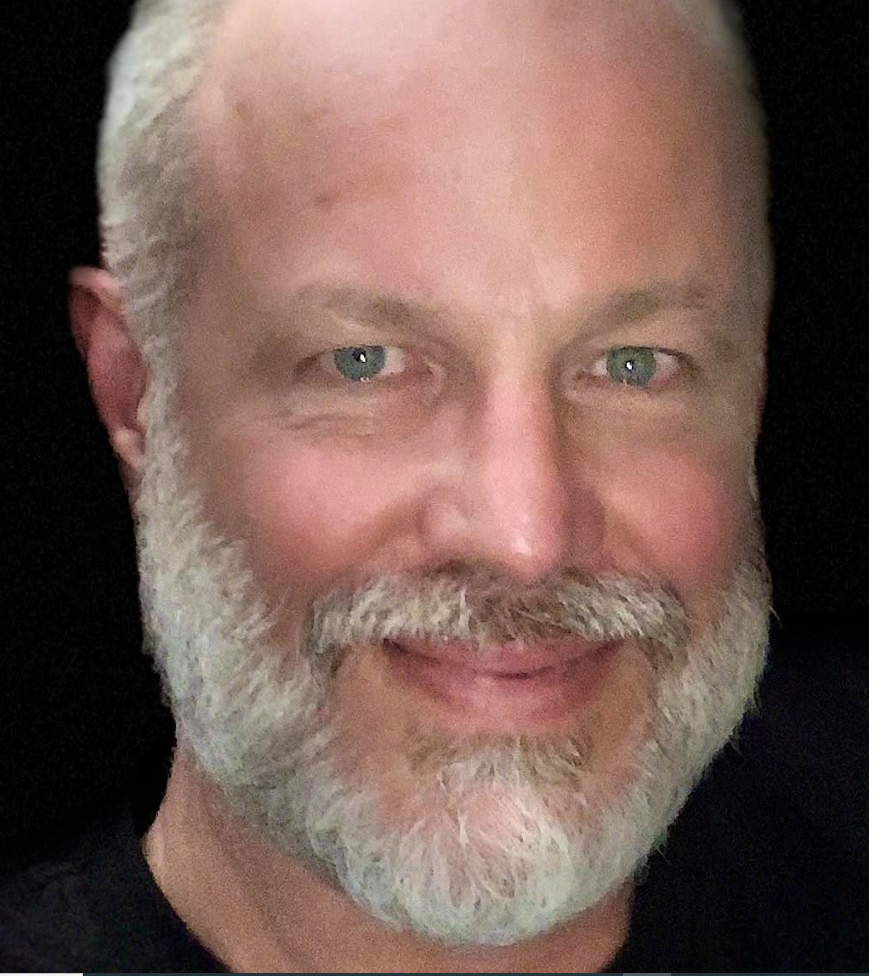 |
| Fig 1. Hello, from my 59.999-year-old self to YOU! |
My favorite author, interviewer, and podcaster, Tim Ferriss, will often ask this provocative question of a successful person now in mid-life:
"What advice would you give to your 20- or 30-year-old self?"
Our mid-20s. That is the time when many of us are starting our working lives. The choices we make then shape our options going forward. By mid-life, we have a few projects and relationships under our belts. We have experienced some of life's finest peaks and valleys. We can look back on those early days with the benefit of hindsight, and offer advice on how to make better choices.
There are any number of truly great and inspirational commencement addresses available if you should ever desire some examples to help you craft a perfect response to this question. Age does not always confer wisdom, but I suppose it is fine to examine our own experience and see the ways in which time has improved our outlook and awareness.
This leads me to wonder: Is it a safe bet that wisdom will continue to increase as we age? If our current selves are wiser than our much younger selves, will our future selves be wiser still? If so, what might we learn from our future selves?
Introduction
Today I would like to do something completely different and uncommon. Rather than offer advice to twenty-somethings, or to my own 20- or 30-year old self, I want to turn this question around and upside down. I am going to project my consciousness to life's end, and give my current self some much needed and welcome advice!
I'm 59.999 years old, but let's just call it middle-aged. According to actuarial tables, a white American male having attained the age of 59+ has a remaining life expectancy of about 23 years. So if you will indulge me, today I am going to ask my actuarial 83-year-old self this question:
"What advice would you give to your (almost) 60-year-old self?"
Obviously, I hope you, Dear Reader, will enjoy this exercise and decide to try to adapt it for yourself. To add some realism, you may wish to use an app such as "Age My Photo" to make yourself look older. I tried this and made myself look 83 in the photo in figure 2 below. I printed that picture and posted it above my work station. Now, my future me is looking down, checking on me, and standing by to give advice. Now and then, I ask myself, "What would my future self do in this situation?"
 |
| Fig 2. This is how I might look in 23 years, according to the "Age My Photo" app. |
Advice to my Current Self from my Future, (Presumably) Wiser Self
Dave,
Hey there, youngster! I'll bet you don't hear 'youngster' much anymore. Haha! Enjoy it while you can!
Listen, I am glad I made it to the ripe old age of 83, and I welcome the opportunity to pass along some advice while you are still an impressionable youth--relatively speaking! Take it from me, we never stop learning. So lean into learning and look for ways to expand, grow, and improve. I'm still learning and I aspire to live into the triple digits, but let's face it: the odds are what they are. So let me take time now share some thoughts to guide you through the next 20, 30, maybe 40, maybe even 60 years. Can you (we?) make it to 120?
Time will tell...
As your future self, I can tell you that some of your choices in mid-life were better than others! Let's map out a plan to find the most beneficial habits, avoid the wasteful or harmful choices, and generate the motivation and discipline to stay the course.
For starters, do not look at me as an old man with one foot in the grave, but as someone you care for deeply. Appreciate that time goes by quickly and trust me when I say that you will actually be 83 before you know it. So do your best to make better choices now. You'll be glad you did tomorrow! Any chance I have to break the century barrier starts with the choices you make today.
Before we get into specifics, Dave, I want to suggest a framework for the discussion. When I was your age, Tony Robbins was an enormously successful lifestyle coach. Time has gone by and other lifestyle coaches have come and gone, but we still refer to the same timeless ideas that Tony popularized in your time. Tony did a great job of channeling timeless wisdom and extending ideas for his audience to embrace. Tony describes six core human needs that will sound familiar to you whether you are 20, 40, 60, 80, 100, or beyond.
The Six Core Human Needs
 |
| Fig 3. The Six Core Human Needs |
The Four Needs of Personality:
- Certainty - safety, stability, security, comfort, order, predictability, control, and consistency
- Variety - surprise, challenges, excitement, difference, chaos, adventure, change, and novelty
- Significance - the need to have meaning, pride, needed, wanted, accepted, loved, listened to, sense of importance and worth, worthy of love.
- Love and connection - a partnership of two souls, family love, friend love, unified, approval, attachment; cherished, adored, to feel intimacy and love with another human being
The Two Needs of Spirit:
- Growth - Evolution is the reason why we were born, why we learn while we live, the need for constant emotional, intellectual, and spiritual development. The reason why our souls are given numerous lives to live and evolve into our best version; to grow and evolve towards divinity.
- Contribution - the need to give beyond ourselves, give, care, protect, aid, and serve others
Keeping the six core human needs in mind, there are two additional dimensions that we can visualize as surrounding and enable the fulfillment of our six basic human needs. Tony did not describe these extra dimensions, but we can agree that a wholistic model of human flourishing should include environmental factors such as the element of time, and our changing needs, motives, and abilities around self-care.
The Two Dimensions of Human Flourishing
 |
| Fig. 4. Two Dimensions of Human Flourishing |
Time Horizon
The first point is the idea of time horizon and the associated changes in risk tolerance over time. What you worry about changes as you get older. Bear in mind that what seems important to an octogenarian is different from what matters to a 20-something. At 59.999, you already realize that this ride doesn't go on forever. At my age, I have an even more intimate relationship with each passing moment. When I was 20 I could recover from a mistake quickly. At 80, I'd rather not make a mistake in the first place.
Self Care
How well you are able to cope with challenges and setbacks reflects your personal preparation and resilience. As time goes by, proactive self-care becomes increasingly important. When we were 20, we could skip a work out or a meal or maybe over exert ourselves or over indulge. The consequences for such self-abuse were negligible, because recovery was nearly instantaneous. I am much less able to recover now, and so I need you to start pushing the self-care--for my sake!
Putting the Framework into Action
Let's now leverage the modified Tony Robbins framework to visualize a lifestyle that will help you get the most out of life, one day at a time. We'll walk through the two dimensions and the six core human needs.
Notice that the dimensions and the needs exist in tension. For example, humans need both:
- prudent risk-taking and proactive self-care
- predictability and new challenges
- to stand out from the crowd and to be a valued partner, family member, and team mate
- to grow, but also to contribute
This tension is normal and it continues into old age. Expect it. But notice that the balance point changes as time goes by. Perhaps you can imagine two friends on a teeter-totter. If the friends of prudent risk taking and proactive self-care weigh the same, then the teeter-totter's fulcrum is right in the center. In youth, when the time horizon seems so far away, the need to take risks is exaggerated and the requirement for self-care is diminished. The tension between the two exists, but the fulcrum slides to the left for balance. Later in life, the fulcrum slides to the right to reflect risk aversion and more health concerns.
The point is that we don't beat the reaper by living longer, Dave. We beat the reaper by living more fully. We are human beings, not human doings. I want you to focus less on achievements and more on fulfillment. Concentrate on timeless and enduring values. Get the values right, or the plans don't matter. Get the plans right, or the results don't matter. Once the results align with those essential values, then and only then does it make sense to scale up and out.
“The place to improve the world is first in one's own heart and head and hands, and then work outward from there.” ― Zen and the Art of Motorcycle Maintenance: An Inquiry Into Values
Time Horizon and Self-Care
I want you to continue to take prudent risks. But now that you are almost 60, I want you to consider the impacts of actions on others more explicitly. I will view the results of your actions--because they can impact me, and we don't have time to recover from mistakes. Now that you are almost 60, I want you to get more disciplined about what you eat, how often you get exercise, and how well you sleep.
Certainty and Variety
It's natural to crave variety when you are young and certainty when you are old. You are at the cross-roads now. Continue to seek variety, but be a bit more selective in where you go to find it. At my age, I don't want to eat the same food every day and I don't want to read the same books over and over. But I am aware that I have fewer months remaining and so I will not read a popular book until I have read more of the classics. Start developing that mentality now.
Significance and Love and Connection
Of course we all want to love and be loved in return. What brings me joy in my age is not the achievements of my working life but the love and connections I've made and continue to make and nurture. At your age, you still want to land the big contract, leave your mark on the world, make the big nest egg that will secure your comfort and provide for your legacy. That is good and noble and just. I want you to think about balancing the tension, though.
Growth and Contribution
Searching is good. Learning is good. But balance the growth with contribution. Don't spin your wheels. Don't be "busy." Do less in order to be more. Remember the words on your W.I.S.H. list: Earn the respect, esteem, and affection of the important people in my world.
Right now, Dave, you are struggling to make sense of how best to navigate the second half of life. You are looking at many aspects, such as
Health & Fitness
- Intellectual
- Emotional
- Character
- Spiritual
- Love Relationship
- Parenting
- Social
- Career
- Financial
- Quality of Life
- Life Vision
You are seeking wisdom to improve in these areas from many sources, such as
- Your parents and ancestors
- Your faith traditions and the wisdom embedded in major world religions
- Philosophers and psychologists
- Self-help authors and lifestyle designers
- Your closest friends and confidants
The thing is, Dave, you will one day realize that you are 83 years old and either you will still be searching, chasing and trying to keep up with the latest, or you will recognize, nurture, and share the truth that has always existed within yourself.
Conclusion
Think about the impact your actions today will have on me, your 83-year old self. Are you treating yourself today as someone you love and respect? Are you treating yourself today as you would want your older self treated? Is your self-talk and self-care similar to the kinds of things you say to and do for your parents or your children? If not, why not?
I love you, Dave, and I care about you. I want nothing but the best for you in the future. Do you care about your own future? Will you treat yourself with love and respect? Will you consume only the food and beverages and sounds and images and ideas that will benefit me, your future self? If so, we'll both be happier, and your example will be a better one for others to follow.
Love,
Me (You)
Epilogue
The exercise of projecting one's consciousness to life's end yields an interesting thought experiment. I recommend it. However, I also offer two parting comments. These comments may very well be the basis for future blog posts.
Firstly, there is no practical way for one to actually anticipate life's lessons in advance. I realize it might be seen as pretentious to try. Still, we all forecast things all the time. We use the information at hand to make all manner of projections and prognostications. Perhaps thinking about the future can help us contemplate what matters most, and manifest a better reality.
Secondly, don't forget to seek out real, living mentors. Imagining an ideal future is instructive, but taking counsel from one's self alone is foolish. Talk to some 80- and 100-year-olds. Ask them what advice they would give their 60-year-old selves. And here's another twist. Put yourself in listening mode and ask some 20- or 30-year-olds for some advice. If you don't have a younger mentor, you are missing out on a valuable perspective.
Subscribe to:
Posts (Atom)