Showing posts with label L.I.N.K.S.. Show all posts

Saturday, August 12, 2017

"My Aim is True" Turns 40


22 July 1977 to 22 July 2017


"It was rather like recording in a telephone booth. Overdubs were barely an option. Everything is heard pretty much as it was played."


--Elvis Costello, via Twitter on July 22nd


L.I.N.K.S. (XVI): MAIT Turns 40

In this edition of L.I.N.K.S. (hyperlinks that Lure, Intrigue, Nurture, Kindle, or Stimulate), we focus on the 40th anniversary of the release of "My Aim Is True," Elvis Costello's debut album.

"Recorded in four six-hour late-night sessions in a London eight-track studio, My Aim Is True was the debut album by the audaciously named soon-to-be 22-year-old singer-songwriter Elvis Costello, née Declan Patrick McManus. Produced by Nick Lowe, former bassist for the pub-rock band Brinsley Schwarz and a labelmate on the cheeky upstart indie Stiff Records, it reportedly cost a mere £2,000 to make, and was released in the U.K. on July 22, 1977."


My favorite links:

1. Paste features Elvis saying he’s actually not angry as angrily as humanly possible

2. Billboard does the impossible and ranks the album's tracks

3. Trunkworthy pays homage to a track that didn't make the album

4. Treblezine focuses on the artist's professed motives of revenge and guilt

And finally,

5. Spill takes the story to a personal level, drawing from the recent Costello autobiography


“I’ve always told people that I wrote ‘Alison’ after seeing a beautiful checkout girl at the local supermarket,” writes Costello in Unfaithful Music on perhaps the most well-known song on My Aim is True; after all the album takes its name from a line in the song. 

“Now she was punching in the prices on cans of beans at a cash register and looking as if all the hopes and dreams of her youth were draining away. All that would be left would soon be squandered to a ruffian who told her convenient lies and trapped her still further.”


Thursday, December 29, 2016

L.I.N.K.S. (XV): Toward an Age of Oneness

L.I.N.K.S. that Lure, Intrigue, Nurture, Kindle, or Stimulate, Part XV:

Toward an Age of Oneness

Over the course of time I have published some thoughts on how to make the world a better place by moving toward a future age of Oneness. The idea is that evolutionary changes in the social fabric and individual DNA will be deemed successful in hindsight when they are confirmed to have contributed positively to increasing harmony, unity, singularity, or oneness.

A recapitulation of past posts:

For better or for worse, the arc of web development is moving humanity toward Singularity, which of course is another term for Oneness or Unity. In the case of technological Singularity, the harmony is achieved via a melding of flesh and blood humans and the computing power indistinguishable from the human mind.

  • Web 1.0: Networked
  • Web 2.0: Collaborative
  • Web 3.0: Semantic
  • Web 4.0: Integrated
  • Web 5.0: Singularity

A reasonable approximation of progress toward the Age of Oneness can be constructed by estimating the proportions of the global population that are in each of the five stages of web development. People who do not have access to the web run the risk of being left behind. I am sure some folks would consider that a blessing in disguise!


Conduct an Internet search using the search term, "moving toward oneness," and you will likely find links to books and articles such as these 10 gems:


Here is a list by galonsor with about 69 movies that deal with the Singularity theme. How many of these Singularity movies have you seen? Any favorites?

Are there any missing from galonsor's list? I find it odd that there is no mention of Blade Runner (1982) or any of the Alan Turing movies, such as Breaking the Code (1996) or The Imitation Game (2014). Others?

Please add your thoughts in the comments section, and thanks for reading PhilosFX!


Have you enjoyed this collection of links? Are you looking to be Lured, Intrigued, Nurtured, Kindled, or Stimulated some more? Leave me some topic suggestions in the comments. Meanwhile, here are links to previous entries in the L.I.N.K.S. series. Enjoy!

L.I.N.K.S. 1: Interesting: The first in an intended series of interesting links (2010/12)
L.I.N.K.S. 2: Random: The second in a series of interesting links (2011/01)
L.I.N.K.S. 3: Mysterious: Five Fascinating Links (2011/03)
L.I.N.K.S. 4: Building informed and engaged organizations, teams, and individuals (2011/05)

Sunday, November 1, 2015

An All Hallows L.I.N.K.S. dedicated to The Female Stranger

This edition of L.I.N.K.S. (hyperlinks that Lure, Intrigue, Nurture, Kindle, or Stimulate) is dedicated to the mysterious female stranger, whose tortured soul some claim still haunts Room 8 of Old Town Alexandria's Gatsby Tavern Inn.

The young, unnamed woman, known to history as the Female Stranger, slipped the surly bonds of this earth in Room 8 on October 14th, 1816. Her identity and cause of death shrouded in mystery, she was buried in St Paul's cemetery by a man claiming to be her husband. For nearly 200 years now, rumors and hypotheses have grown like weeds on an untended grave.

Who was the Female Stranger? Why did she come to Alexandria? Why was she so adamant about hiding her identity? How did she die? Who was the man who claimed to be her husband? What secrets did her doctor--sworn to secrecy--carry to his own grave? Why did the doctor agree to protect his patient's identity?

Rumors abound:

  • She was escaping an unhappy marriage with a paramour when she became deathly ill. 
  • "She" was really Napoleon Bonaparte in disguise. 
  • There is no body in that grave. The whole charade was just part of an elaborate disappearing act.

I first heard of this story in October 2014, when Port City Brewing Company released a new beer called Long Black Veil. This is a Black IPA brewed in honor of the Female Stranger who died in the Gatsby Tavern Inn nearly 200 years ago. Yes, the love of beer is a gateway to mystery.

This year, looking for some spooky fun, I visited the Gatsby Tavern Museum on Hallowe'en and took the tour (I highly recommend this tour, by the way! Ask for Laurie.). The tour guide explained that she does not normally mention the Female Stranger, since there are more rumors than facts, and to repeat spurious rumors would be pandering. However, partly at my insistence, and partly because there was a Female Stranger-themed birthday party happening even as we discussed the idea, she agreed to include some aspects of the young woman's story on her tour.

I took photos of Room 8, including the ghostly figure of a number 8 on the door. The story goes that at the moment when the young woman gave up the ghost, the numeral slipped 90 degrees and became an infinity sign.

Our tour guide convinced a birthday partier dressed as The Female Stranger to pose for a photo. Backlit in my photo, the veil-clad young lady appears eerily translucent--almost ghost-like.

I went from the tavern to St Paul's cemetery and searched for a tombstone in memory of The Female Stranger. After a spooky search, I found it!


The nearly 200 year old table-top grave marker is now weathered and difficult to read. I searched the Internet and found this helpful transcription.

"Tomb of a female stranger, Alexandria, Virginia (8597808671)" by Boston Public Library

And so now, with all that as prologue, I offer this collection of L.I.N.K.S., the 14th in the series, this one dedicated to the mysterious woman known to us only as The Female Stranger.

Post Script: L.I.N.K.S. is a recurring feature here at PhilosFX. You can find and enjoy previous editions of L.I.N.K.S. (hyperlinks that Lure, Intrigue, Nurture, Kindle, or Stimulate) by using the search term, L.I.N.K.S. Enjoy them all!

Tuesday, May 26, 2015

L.I.N.K.S. that Lure, Intrigue, Nurture, Kindle, or Stimulate, Part 10: Finger Length Ratio and Personality

L.I.N.K.S. that Lure, Intrigue, Nurture, Kindle, or Stimulate, Part 10:

Finger Length Ratio and Personality

This 10th edition of L.I.N.K.S. is inspired by my recent pop psychology post on Finger Length Ratio and Personality which observed that the length of your ring finger was determined before you were even born. That post concluded with the open-ended observation that many other aspects of your appearance and even your personality may be in-born, and thus largely out of your direct control.

Coming as I do from the "Leaders are made, not born" school, the realization that I find the thought that some behavior is inborn a tad unsettling. I wanted to follow-up with some links (10 links, as a matter of fact--in honor of the 10th edition of L.I.N.K.S.!) to additional reading on the subject for those of you curious enough to explore this topic in a bit more detail. I welcome your comments.

Ten annotated L.I.N.K.S.
  1. Five Things a Man's Finger Length Says About Him. The ratio of digits' lengths could hint at everything from personality to intellect to physiology to propensity for disease. http://www.livescience.com/49883-finger-length-in-men.html 
  2. Finger length ratio can predict aggressive behavior and risk of disease. Researchers continue to study what sparks these hormonal changes and have begun looking at environmental chemical exposure, stress levels and diet during pregnancy. http://discovermagazine.com/2013/may/04-finger-length-ratio-can-predict-aggressive-behavior-and-risk-of-disease 
  3. Polite, promiscuous... gay? What does your ring finger say about you? The longer your ring finger is is compared to your index finger, the greater chance you will be polite and happy, straight, rich or handsome, with a long penis. But, on the down side, you will have a much higher than average chance of developing prostate cancer. http://www.telegraph.co.uk/men/the-filter/11424695/Polite-promiscuous...-gay-What-does-your-ring-finger-say-about-you.html 
  4. How the length of a woman's fingers reveals her Career: Short index finger hints that she's more likely to be in high-powered role. The idea is that a low 2D:4D ratio is associated with more aggressive behavior. Contrast this with the findings in article #10. http://www.dailymail.co.uk/sciencetech/article-2965316/How-length-woman-s-fingers-reveals-CAREER-Short-index-finger-hints-s-likely-high-powered-role.html 
  5. Study: Finger length a tell-tale sign of a cheater? A study of 1,300 men and women in England and the United States found that those with same-length ring and index fingers are more likely to “stay” with a committed partner. Those whose ring fingers are longer than their index fingers may be more likely to “stray,” as the authors of the study put it. http://www.hlntv.com/article/2015/02/06/oxford-study-ring-finger-length-cheater-faithful
  6. Can you judge a man by his fingers? Examining the link between relative lengths of index and ring fingers in men and their behavior towards women. Men with short index fingers and long ring fingers are on average nicer towards women. This phenomenon stems from their fetal life, and the hormones these men have been exposed to in their mother's womb. The findings might help explain why these men have more children. http://www.sciencedaily.com/releases/2015/02/150218122110.htm
  7. Personality Isn't Random. A large component of a child's personality in inherited from that child's parents, and siblings tend to have far more in common with each other than two people their age in the general population. This article came close to making a connection between finger length and MBTI. http://washparkprophet.blogspot.com/2013/02/personality-isnt-random.html 
  8. Penis Size: It May Be Written in the Length of His Fingers. Long ring fingers are associated with larger penile length in males and enlarged clitorises an shallow vaginas in women. http://healthland.time.com/2011/07/06/penis-size-it-may-be-written-in-the-length-of-his-fingers/
  9. Human 2D (index) and 4D (ring) finger lengths and ratios: cross-sectional data on linear growth patterns, sexual dimorphism and lateral asymmetry from 4 to 60 years of age. The study examines how absolute and relative digit lengths vary over a wide range of postnatal ages, and tests whether these variables are influenced by gender, laterality and handedness effects. http://www.ncbi.nlm.nih.gov/pmc/articles/PMC2732043/
  10. Finger length ratio (2D:4D) correlates with physical aggression in men but not in women. Finger length ratio (2D:4D) is a sexually dimorphic trait. Men have relatively shorter second digits (index fingers) than fourth digits (ring fingers). Smaller, more masculine, digit ratios are thought to be associated with either higher prenatal testosterone levels or greater sensitivity to androgens, or both. http://www.ncbi.nlm.nih.gov/pubmed/15620791

Incidentally, there is a lot of junk science out there, too, and plenty of bad or misleading links. Here is an example of a link that did not make the list. Anytime I see the word "THIS" or lots of ALL CAPS or exclamation points (!!) in the title of an article, I dismiss the article, the author, and the source.

Monday, May 5, 2014

L.I.N.K.S. (9): NaPoMo 2014 Recap

L.I.N.K.S. that Lure, Intrigue, Nurture, Kindle, or Stimulate, Part 9


I set out to participate in National Poetry Month by writing or sharing something of a poetic nature each day in the month of April. I hope readers, friends, and family enjoyed the journey as much as I did. For your convenience (and to satisfy my desire to recapitulate) here is a summary of NaPoMo 2014 on PhilosFX:


  1. National Poetry Month
  2. hallelujah-redux
  3. Courage
  4. happy-86th-maya-day
  5. would-anyone-watch?
  6. uncage-your-mind
  7. our-origin-in-stars
  8. Vonnegut's Letter to Students
  9. versions-of-vision
  10. 50 Miles of Haiku
  11. dont-close-door
  12. Gettysburg
  13. write-just-write
  14. of-lying-liars-laying-in-layers
  15. this-mood-is-not-your-fault
  16. Conflicted
  17. condemned-or-redeemed
  18. Rock Me Gently
  19. talon-pierced-carp
  20. Budding Young Poet
  21. the-tao-of-deve
  22. earth-day
  23. in-honor-of-william-shakespeares-450th
  24. 50-reasons-not-to-date-poet
  25. how-wonderful-life-is-with-you-in-my-world
  26. love-is-inverted-fear
  27. What do I know about Love?
  28. a-haiku-about-getting-out-of-bed
  29. Baby Got Brew
  30. we-all-have-cancer


I studied architecture because I loved art and science both, and no profession I could think of aside from philosophy prized both equally. The point is that I am sure my poetry reveals certain clues about my poor fitness as a poet. I share anyway.

Follow your heart.


Thursday, January 9, 2014

L.I.N.K.S. (8): Mood, Memory, & Movement

L.I.N.K.S. that Lure, Intrigue, Nurture, Kindle, or Stimulate, Part 8


This 8th edition of L.I.N.K.S. explores the brain as it relates to mood, memory, and movement. We'll look 5 links to research being done to better understand depression, Alzheimer's, and Parkinson's. This fascinating work--the cartography of neurons--is mapping the uncharted territory of the last great frontier, the human brain.


1. Mood, memory and movement: an age-related neuro-degenerative complex?


2. The University of Cincinnati Neuroscience Institute is a research center specializing in collaborative treatment and investigation of stroke, brain aneurysms, brain and spinal cord trauma, Parkinson’s disease, brain tumors, seizures, neuralgia, Alzheimer’s disease and memory disorders, mood disorders, and neuro-muscular disorders.


3. Dr. Andres Lozano's TED Talk about deep brain stimulation,a technique allowing surgeons to place electrodes in almost any area of the brain, and turn them up or down -- like a radio dial or thermostat -- to correct dysfunction.

4. NPR interview with Dr. Andres Lozano regarding deep brain stimulation, aka "hacking the brain."


5. As emerging technologies begin to overcome fundamental human limitations, what are the ethical matters involved? Here is a frighteningly amoral look at the future of our species.

Thursday, December 26, 2013

L.I.N.K.S. that Lure, Intrigue, Nurture, Kindle, or Stimulate, Part 7: Predictions for 2014

The theme for this 7th edition of L.I.N.K.S. is

PREDICTIONS


Something about the Winter Solstice inspires certain thought patterns in the minds of men. We reflect on the past, and project the future. We put our experience into the context of hopes and fears. 
  • What developments in the past year shocked you the most?
  • When you look out into the future, what trends alarm you? Which delight you? 
  • How will you hedge against the pitfalls? How will you leverage your advantages? 


Let's have a look at a collection of predictions for 2014. I'll provide just the links at this time, and then in another post. I'll filter these predictions through my personal prism, add some additional thoughts and commentary. What is more, I promise to grade my own predictions this time next year. 

1. Forbes Financial Outlook http://www.forbes.com/sites/advisor/2013/12/19/top-10-predictions-for-2014/

2. Biggest Overlooked Trends http://www.politico.com/magazine/story/2013/12/overlooked-trends-of-2013-101491_full.html

3. Amazon http://news.cnet.com/8301-1023_3-57615894-93/amazon-5-bold-predictions-for-2014/

4. Social Media Today http://socialmediatoday.com/chrissyme/2019991/10-best-social-media-predictions-2014

5. World Future Society http://www.wfs.org/Forecasts_From_The_Futurist_Magazine

Happy prognosticating!  Or, if history is more your bag, search this site for all 6 previous posts in the L.I.N.K.S. series. Comments and suggestions are always welcomed! What are your predictions for 2014? What topics would you like to see covered in the next edition of L.I.N.K.S.?

Monday, November 18, 2013

L.I.N.K.S. that Lure, Intrigue, Nurture, Kindle, or Stimulate #6: Life Force


L.I.N.K.S. that Lure, Intrigue, Nurture, Kindle, or Stimulate, Part 6, in which we contemplate


LIFE FORCE


1. We are (recycled) stardust. The atoms in our bodies are composed of elements like carbon, nitrogen, and oxygen which were created in exploding stars. The atoms in your left hand may have come from a different star than the atoms in your right hand.


http://www.physics.org/article-questions.asp?id=52
http://www.sciencedaily.com/releases/1999/06/990625080416.htm


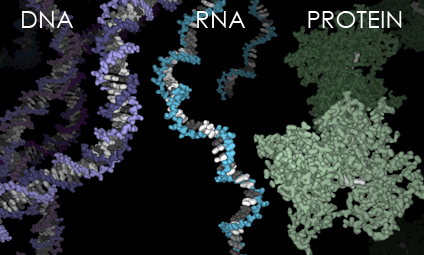
2. The science around evolution and the origin of species is all but settled. The essential enduring mystery in the science of life's origins centers around questions like these: Where did the first material come from? And what force lit the very first spark? Recent discoveries about RNA offer clues about the (spontaneous?) origins of Life.


http://exploringorigins.org/timeline.html


3. Our bodies are only 10% human. The human body consists of roughly 100 trillion cells, of which only 10 trillion contain human DNA. The rest are mostly bacteria in the gut and on the skin. The micro-biome of our bodies contains hundreds of bacteria species. The colony that thrives on your tongue seems foreign to the colony that thrives a "continent" away on the roof of your mouth. We are not only recycled stardust carrying the physical and spiritual evidence of life's first spark, but, to literally trillions of single-celled animals, we are the embodiment of a mysterious and symbiotic Universe.


http://discovermagazine.com/galleries/zen-photo/m/microbiome#.Urh4m_RDtgk


4. We sentient beings know that there is but one way out of this game called life. We struggle to survive for a variety of reasons--your reasons may be different from mine. The animal kingdom is ruled by survival instincts, and all creatures instinctively fight, or flee to fight another day, while hopefully existing long enough to pass genes to the next generation. In nature, there comes a moment when a mighty moose accepts its role--as food for the pack of hungry wolves. Life is not about winners and losers but about balance and acceptance, and finding and fulfilling your purpose as best as you are able.


http://northernwoodlands.org/outside_story/article/survival-of-the-fittest


5. Animals with big brains are not the only living things filled with life force. Survival instincts occur in plants, too. When temperatures drop and the ground begins to freeze, the carrot pulls its sugars to center. Some cooks prize these cold-tempered carrots for their delicious sweetness--even deliberately subjecting carrots to freezing temperatures right before harvesting them. Did you realize that when you bite into the resulting sweetness, you are tasting that carrot's attempt to survive?


http://www.organicgardening.com/learn-and-grow/storing-vegetables-for-the-winter


Collections of Stardust. The Spark of Life. Symbiotic relationships. Balance and acceptance. The will to survive. My motive for tying all of these seemingly disparate LIFE FORCE links together? In a word, cancer. Do you have cancer, or do you know someone close to you who has cancer? Odds are, everyone reading this post knows someone who has some firsthand experience with this horrid disease.

Walk with me:
  • Cancer patients are composed of stardust--just as are their tumors. Cancer is harmful but it is not unnatural. It is part of life.
  • Cancer patients are filled with a mysterious life force--so too are wolves, carrots, and tumors. We do not know where the tumors come from, or how to prevent them taking up residence in people we love. But we do know why tumors persist, and what happens if they are not defeated.
  • Like all of us, cancer patients host many non-human creatures--a soup can's worth of bacteria, mostly in our digestive tract. Unlike the mutually beneficial arrangement we have with most of our parasites, tumors are unwelcome invaders.
  • The life force compels us (and our parasites--beneficial, or otherwise) to accept uncertainty. In a world of predators and prey, of the survival of the fittest, of the ultimate stakes, there are some pitched battles. A pack of cunning wolves can forcibly bring a mighty moose to the moment when that moose stops struggling and accepts its fate. Similarly, the cancer patient, his medical team, his family and friends, and a global network of Prayer Warriors fighting back as a team can force a tumor to succumb.
  • Like sweet, cold-harvested carrots, tumors try to survive by adapting to their environment. Some tumors are especially good at adapting. This is to be expected and even respected. What to do? Find a way to win. If necessary, make a way to win. 
The LIFE FORCE is mysterious. We are made to struggle. We have no choice but to fight. The way we humans look at the world may not be the only way. What makes one particular collection of space debris more important than another? What does God look like to the bacteria in your gut? Go. Fight. Win. What else is there?


Here are links to previous entries in the L.I.N.K.S. series. Enjoy them and feel free to suggest a theme for the next edition, L.I.N.K.S. 7. Comments always welcome!

Thursday, October 3, 2013

L.I.N.K.S. #5: Is alcohol good for you?

L.I.N.K.S. that Lure, Intrigue, Nurture, Kindle, or Stimulate, Part 5


Is alcohol good for you? 


Sure, that beer tastes good, but is it good for you? This seems a reasonable question to ask this time of year. It's autumn, and the wet-hopped harvest ales are everywhere, along with the Oktoberfest Maerzens and the spicy pumpkin ales. Thank goodness for chocolate, coffee, and stout--the key ingredients to one of my fall favorites: imperial chocolate coffee stout!   

Alcohol is both a tonic and a poison. The difference lies mostly in the dose....  

As they say, all things in moderation. There is strong medical evidence that drinking moderate amounts of alcohol reduces risk of heart disease. Have a look at these five L.I.N.K.S., and see your yourself! 

1. Medical evidence links moderate drinking and reduced risk of heart disease (MNT)
2. Moderate drinking seems to be good for the heart and circulatory system (Harvard)
3. Risks and benefits of alcohol comsumption (NIH)
4. 5 hidden health benefits of alcohol (Livestrong)
5. How alcohol may affect longevity and heart health (HuffPost)


Here are links to previous entries in the L.I.N.K.S. series. Enjoy!
L.I.N.K.S. 1 (Interesting): http://philosfx.blogspot.com/2010/12/links-that-lure-intrigue-nurture-kindle.html
L.I.N.K.S. 2 (Random): http://philosfx.blogspot.com/2011/01/links-that-lure-intrigue-nurture-kindle.html
L.I.N.K.S. 3 (Mysterious): http://philosfx.blogspot.com/2011/03/links-that-lure-intrigue-nurture-kindle.html
L.I.N.K.S. 4 (Building informed and engaged organizations, teams, and individuals):  http://philosfx.blogspot.com/2011/05/links-that-lure-intrigue-nurture-kindle.html

Saturday, May 14, 2011

L.I.N.K.S. that Lure, Intrigue, Nurture, Kindle, or Stimulate, Part 4


This collection of L.I.N.K.S., fourth in the series, has a theme: building informed and engaged organizations, teams, and individuals. There are three links for each of the three levels. Please comment on these or share your favorites.

1. Organizations can be corporations or cities--large, complex groups of people with many constituent sub-groups. Here, the goal is to recognize and understand diversity, and promote peace and understanding in the pursuit of mutually beneficial objectives.


2. Teams can be business units, companies, sports teams, tactical military units, home owners associations, and so on. As opposed to larger, more diverse organizations, teams usually are organized around a smaller number of mutually agreed upon goals and objectives. Individuals in teams usually have a role to play and are accountable to teammates and others who rely on them.


3. Individuals are people, each with his own unique skills, knowledge, and abilities. Individuals also have their own motives, needs, preferences, and ways of looking at the world. As people change over time, their goals and objectives also change. 


Note about polls and poll design, and why I grouped Gallup and Pew in different levels. Public opinion polls reflect the aggregated opinions of individuals. The data can be disaggregated into constituent subgroups as well. Two types of polls are trend and flash. Trend polls are designed to show trends over time (e.g., the President's Approval Rating). For these, the same questions are asked to the same sample group on a recurring basis. In contrast are flash polls, designed to show responses to a particular question (e.g., predict who will win an election). Gallup and Pew conduct both types of polls. In my experience, Gallup has made more of an effort to aggregate poll results to national and even global levels, and Pew has more often disaggregated results to illustrate important distinctions between subgroups. Illustrative examples include  Gallup's survey of the world's Muslim population, and Pew's recent political typology study, in which people are sorted into a political bin based upon their answers to 20 questions. I grouped Gallup with Organizations and Pew with Teams to reflect this perceived difference in respective poll designs and intent. Check them both out!


Tuesday, January 25, 2011

L.I.N.K.S. that Lure, Intrigue, Nurture, Kindle, or Stimulate, Part 2

This being the second in a series of interesting links.

1. When’s the Best Time to Publish Blog Posts?  Answer is (HERE)

2. Leonard Cohen's "Hallelujah." A discussion of one of my favorite songs is (HERE)

3. New Zodiac Sign Dates: Ophiuchus The 13th Sign? Nothing new here, folks. Details (HERE)

4. Brewers Association Announces 2011 Beer Style Guidelines. Contains descriptions for 140 recognized styles. The same guide will be used by judges at both Great American Beer Festival (GABF) and the World Beer Cup (WBC). The new guide is  (HERE)

Saturday, December 4, 2010

L.I.N.K.S. that Lure, Intrigue, Nurture, Kindle, or Stimulate, Part 1

This being the first in an intended series of interesting links.


1. The more labels you have for yourself, the dumber they make you. Small Identity


2. Prof Brians' list of common errors in English. English Errors


3. Is the Christian faith a spent force in the world—totally irrelevant to our lives—or has its true message been misunderstood and its transformative power for good gone untapped? Emerging-Christianity-Conversation


Comments and suggestions welcomed!