Showing posts with label Critical Thinking. Show all posts

Thursday, March 16, 2017

The Pink Freud Matter: Today's Lesson in Critical Thinking

Have you seen this quote circulating on any of your social media sites?

Quote attributed to Sigmund Freud (1856-1939) 


Odds are good that you have seen this quote at least once. It showed up in my news feed again recently. This particular image has 1.2 million shares on just one Facebook site (Fb / The Idealist, as in "idea list"). There may be countless other individuals and groups circulating this same image via Facebook. It's on Twitter, too. And Pinterest. In short--it's everywhere.

Furthermore, plenty of creative people have entered their own versions of the meme into circulation. A simple Google search reveals a multitude of variations.

Not only have you probably seen this exact poster--or one very similar to it--but you may have even shared it with your friends and contributed to its popularity. Oh, we love the sardonic and heartfelt wisdom in the remark. And we'd love to ascribe such earthy wisdom to someone whose reputation validates our instinctive trust. Confirmation bias (the tendency to believe statements because they reinforce our previous understanding) makes it easy for us to accept the attribution to Freud without question--as millions of others have done.

However, the famous psychoanalyst Sigmund Freud is most certainly not the author of that quote. That's right, we've all been duped! Because ...

Freud never said those words!

Freud was a prolific writer. Many great quotes are legitimately attributed to him. The following links feature quotes gleaned from his writings. At best case, they are properly cited. As you read through them you will notice certain tonal qualities to them that reveal the context and content of Freud's thoughts. Yet no where will you find the "quote of the day."


In Freud's day (the early 20th century), few educated people used offensive gutter terms like "assholes" in serious conversation. Apparently many others have questioned the language of this quote, because a simple search of the Internet turns up many variations of the quote of the day in which the offending term is replaced with something else.
  • I found an "arseholes" version. (Born and educated in eastern Europe, Freud died in London. This term is common vernacular in England today, but was it used by an Austrian ex-pat in 1920?)
  • There are many versions, still attributed to Freud, where the offending word is replaced with benign synonyms: "idiots," "bunch of jerks," or "mean people." 
  • In one version, the offending word is not replaced but boldly over-written with "idiots." This edited version makes it clear that the person circulating the quote did not approve of "Dr. Freud's" language and wanted to substitute a more suitable term without breaking attribution. 
  • Many of the modified quotes are shared anonymously, without attribution of any kind. 
  • Perhaps my "favorite" version is the one published by Board of Wisdom (www.boardofwisdom.com) and credited to someone supposedly named Laura Rose. Neither the Board of Wisdom nor Laura Rose understand plagiarism.  

Nice try, Laura Rose! (If that is your real name.)

Laura Rose: Altering is not authoring!

So far, we've seen how the popular quote has been attributed to Freud without a shred of evidence and despite the inconsistency with his other, properly attributed quotes. We've seen how the language of the quote has been edited by a number of others, and even co-opted by at least one more would-be author. Turns out, Freud is not the only person people want to believe uttered these words. The quote has also been misattributed to  the award-winning science fiction author, William Gibson.


William Gibson (1948-present) did not say these words, either

Compare the Freud and Gibson versions and note the subtle difference in the last phrase: "...just surrounded by assholes," versus "...just surrounding yourself with assholes." The former is passive, and the latter is active. Unlike our friend Laura Rose, Gibson did not change a couple of words and pass the quote off as his own idea. Gibson merely re-tweeted--initially without attribution--something he saw and enjoyed. Others, seeing the Gibson imprimatur, were all too quick to ascribe his authorship and create posters such as the one above. But the fact is that Gibson not only did not write the quote, he has actively attempted to give credit to the (less famous) person he re-tweeted. Yet the misattribution to the more well-known writer persists.

The question of who authored the quote was put to Quote Investigator (http://quoteinvestigator.com) and researchers there scoured the Internet and written records for clues. They actually searched Freud's papers and contacted people such as William Gibson and asked questions. They found a tweet by @debihope published in 2010. When contacted, she said she just wrote what she felt after a bad breakup. The researchers failed to turn up any prior citations.

Based on current evidence, we conclude that Debbie Hope (Twitter handle @debihope) should be credited with composing this saying. The attribution to William Gibson (Twitter handle @GreatDismal) was based on a misunderstanding because he re-tweeted the remark. Gibson himself never tried to take credit for the quote, and attempted to credit Steven Winterburn (Twitter handle @5tevenW) from whom Gibson had re-tweeted the quote. Interestingly, Winterburn has claimed to be the originator, but his first use (May 24, 2011) was 16 months after that of Debbie Hope (Jan 24, 2010). The ascription to Freud has no substantive support.

Note how easy it is to believe that Freud said these words. The words make sense and we want to believe them. We may even want to share them so that we can be affiliated with the wisdom contained in them. But when it comes to credibility, with which person do we prefer to align our opinions? Sigmund Freud? Impressive! Or William Gibson? Popular! How about Steve Winterburn? Debbie Hope? Anonymous? Or maybe we follow the Laura Rose example and put our own name on it?

From evidence, we conclude the attribution to Freud is incorrect. Gibson vigorously denied authoring the statement. Both Winterburn and Laura Rose claimed attribution in error. That leaves Hope, the person who claims the quote. So far, no previous version has been documented.

So the matter is settled. Or, is it? Why do so many people persist in attaching the quote to Gibson or Freud?  

Pink Freud to the rescue! 

Fixed it! Or, did I? Who is Pink Freud?

So, what is the point of all this? Several lessons can be drawn.

  • Don't believe every poster or meme--they are easy to make. Deb Hope is not the meme artist known as Pink Freud even though I spent all of 5 minutes making the above poster.
  • Think critically about the information that is pouring into your ears and eyes. Don't be so quick to trust the attribution given by someone else.
  • Avoid confirmation bias by asking challenging questions about what you know versus what you want to believe.
  • Always test what you know and check sources. Don't make up a source or accept an unverified source
  • Give credit where it's due. Do not plagiarize or take credit for someone else's idea.


Thanks for reading PhilosFX. Check out these related links!


Monday, May 5, 2014

Carl Sagan's Baloney Detection Kit

NOTE: Brain Pickings is the brain child of Maria Popova, an interestingness hunter-gatherer and curious mind at large, who has also written for Wired UK, The New York Times, Harvard’s Nieman Journalism Lab, and The Atlantic, among others, and is an MIT Futures of Entertainment Fellow.  Today I'd like to put in a plug for Maria and her Brain Pickings site by publishing an adapted version of her post from January 3, 2014.


Carl Sagan's Baloney Detection Kit

Through their training, scientists are equipped with what Sagan called a “baloney detection kit” — a set of cognitive tools and techniques that fortify the mind against penetration by falsehoods:


The kit is brought out as a matter of course whenever new ideas are offered for consideration. If the new idea survives examination by the tools in our kit, we grant it warm, although tentative, acceptance. If you’re so inclined, if you don’t want to buy baloney even when it’s reassuring to do so, there are precautions that can be taken; there’s a tried-and-true, consumer-tested method.


But the kit, Sagan argues, isn't merely a tool of science — rather, it contains invaluable tools of healthy skepticism that apply just as elegantly, and just as necessarily, to everyday life. By adopting the kit, we can all shield ourselves against clueless guile and deliberate manipulation.


Sagan shares nine of these tools:


  • Wherever possible there must be independent confirmation of the “facts.”
  • Encourage substantive debate on the evidence by knowledgeable proponents of all points of view.
  • Arguments from authority carry little weight — “authorities” have made mistakes in the past. They will do so again in the future. Perhaps a better way to say it is that in science there are no authorities; at most, there are experts.
  • Spin more than one hypothesis. If there’s something to be explained, think of all the different ways in which it could be explained. Then think of tests by which you might systematically disprove each of the alternatives. What survives, the hypothesis that resists disproof in this Darwinian selection among “multiple working hypotheses,” has a much better chance of being the right answer than if you had simply run with the first idea that caught your fancy.
  • Try not to get overly attached to a hypothesis just because it’s yours. It’s only a way station in the pursuit of knowledge. Ask yourself why you like the idea. Compare it fairly with the alternatives. See if you can find reasons for rejecting it. If you don’t, others will.
  • Quantify. If whatever it is you’re explaining has some measure, some numerical quantity attached to it, you’ll be much better able to discriminate among competing hypotheses. What is vague and qualitative is open to many explanations. Of course there are truths to be sought in the many qualitative issues we are obliged to confront, but finding them is more challenging.
  • If there’s a chain of argument, every link in the chain must work (including the premise) — not just most of them.
  • Occam’s Razor. This convenient rule-of-thumb urges us when faced with two hypotheses that explain the data equally well to choose the simpler.
  • Always ask whether the hypothesis can be, at least in principle, falsified. Propositions that are untestable, unfalsifiable are not worth much. Consider the grand idea that our Universe and everything in it is just an elementary particle — an electron, say — in a much bigger Cosmos. But if we can never acquire information from outside our Universe, is not the idea incapable of disproof? You must be able to check assertions out. Inveterate skeptics must be given the chance to follow your reasoning, to duplicate your experiments and see if they get the same result.


Just as important as learning these helpful tools, however, is unlearning and avoiding the most common pitfalls of common sense. Reminding us of where society is most vulnerable to those, Sagan writes:
In addition to teaching us what to do when evaluating a claim to knowledge, any good baloney detection kit must also teach us what not to do. It helps us recognize the most common and perilous fallacies of logic and rhetoric. Many good examples can be found in religion and politics, because their practitioners are so often obliged to justify two contradictory propositions.
He admonishes against the twenty most common and perilous ones — many rooted in our chronic discomfort with ambiguity — with examples of each in action:
  1. ad hominem — Latin for “to the man,” attacking the arguer and not the argument (e.g., The Reverend Dr. Smith is a known Biblical fundamentalist, so her objections to evolution need not be taken seriously)
  2. argument from authority (e.g., President Richard Nixon should be re-elected because he has a secret plan to end the war in Southeast Asia — but because it was secret, there was no way for the electorate to evaluate it on its merits; the argument amounted to trusting him because he was President: a mistake, as it turned out)
  3. argument from adverse consequences (e.g., A God meting out punishment and reward must exist, because if He didn't, society would be much more lawless and dangerous — perhaps even ungovernable. Or: The defendant in a widely publicized murder trial must be found guilty; otherwise, it will be an encouragement for other men to murder their wives)
  4. appeal to ignorance — the claim that whatever has not been proved false must be true, and vice versa (e.g., There is no compelling evidence that UFOs are not visiting the Earth; therefore UFOs exist — and there is intelligent life elsewhere in the Universe. Or: There may be seventy kazillion other worlds, but not one is known to have the moral advancement of the Earth, so we’re still central to the Universe.) This impatience with ambiguity can be criticized in the phrase: absence of evidence is not evidence of absence.
  5. special pleading, often to rescue a proposition in deep rhetorical trouble (e.g., How can a merciful God condemn future generations to torment because, against orders, one woman induced one man to eat an apple? Special plead: you don’t understand the subtle Doctrine of Free Will. Or: How can there be an equally godlike Father, Son, and Holy Ghost in the same Person? Special plead: You don’t understand the Divine Mystery of the Trinity. Or: How could God permit the followers of Judaism, Christianity, and Islam — each in their own way enjoined to heroic measures of loving kindness and compassion — to have perpetrated so much cruelty for so long? Special plead: You don’t understand Free Will again. And anyway, God moves in mysterious ways.)
  6. begging the question, also called assuming the answer (e.g., We must institute the death penalty to discourage violent crime. But does the violent crime rate in fact fall when the death penalty is imposed? Or: The stock market fell yesterday because of a technical adjustment and profit-taking by investors — but is there any independent evidence for the causal role of “adjustment” and profit-taking; have we learned anything at all from this purported explanation?)
  7. observational selection, also called the enumeration of favorable circumstances, or as the philosopher Francis Bacon described it, counting the hits and forgetting the misses (e.g., A state boasts of the Presidents it has produced, but is silent on its serial killers)
  8. statistics of small numbers — a close relative of observational selection (e.g., “They say 1 out of every 5 people is Chinese. How is this possible? I know hundreds of people, and none of them is Chinese. Yours truly.” Or: “I’ve thrown three sevens in a row. Tonight I can’t lose.”)
  9. misunderstanding of the nature of statistics (e.g.,President Dwight Eisenhower expressing astonishment and alarm on discovering that fully half of all Americans have below average intelligence);
  10. inconsistency (e.g., Prudently plan for the worst of which a potential military adversary is capable, but thriftily ignore scientific projections on environmental dangers because they’re not “proved.” Or: Attribute the declining life expectancy in the former Soviet Union to the failures of communism many years ago, but never attribute the high infant mortality rate in the United States (now highest of the major industrial nations) to the failures of capitalism. Or: Consider it reasonable for the Universe to continue to exist forever into the future, but judge absurd the possibility that it has infinite duration into the past);
  11. non sequitur — Latin for “It doesn’t follow” (e.g., Our nation will prevail because God is great. But nearly every nation pretends this to be true; the German formulation was “Gott mit uns”). Often those falling into the non sequitur fallacy have simply failed to recognize alternative possibilities;
  12. post hoc, ergo propter hoc — Latin for “It happened after, so it was caused by” (e.g., Jaime Cardinal Sin, Archbishop of Manila: “I know of … a 26-year-old who looks 60 because she takes [contraceptive] pills.” Or:Before women got the vote, there were no nuclear weapons)
  13. meaningless question (e.g., What happens when an irresistible force meets an immovable object? But if there is such a thing as an irresistible force there can be no immovable objects, and vice versa)
  14. excluded middle, or false dichotomy — considering only the two extremes in a continuum of intermediate possibilities (e.g., “Sure, take his side; my husband’s perfect; I’m always wrong.” Or: “Either you love your country or you hate it.” Or: “If you’re not part of the solution, you’re part of the problem”)
  15. short-term vs. long-term — a subset of the excluded middle, but so important I’ve pulled it out for special attention (e.g., We can’t afford programs to feed malnourished children and educate pre-school kids. We need to urgently deal with crime on the streets. Or: Why explore space or pursue fundamental science when we have so huge a budget deficit?);
  16. slippery slope, related to excluded middle (e.g., If we allow abortion in the first weeks of pregnancy, it will be impossible to prevent the killing of a full-term infant. Or, conversely: If the state prohibits abortion even in the ninth month, it will soon be telling us what to do with our bodies around the time of conception);
  17. confusion of correlation and causation (e.g., A survey shows that more college graduates are homosexual than those with lesser education; therefore education makes people gay. Or: Andean earthquakes are correlated with closest approaches of the planet Uranus; therefore — despite the absence of any such correlation for the nearer, more massive planet Jupiter — the latter causes the former)
  18. straw man — caricaturing a position to make it easier to attack (e.g., Scientists suppose that living things simply fell together by chance — a formulation that willfully ignores the central Darwinian insight, that Nature ratchets up by saving what works and discarding what doesn’t. Or — this is also a short-term/long-term fallacy — environmentalists care more for snail darters and spotted owls than they do for people)
  19. suppressed evidence, or half-truths (e.g., An amazingly accurate and widely quoted “prophecy” of the assassination attempt on President Reagan is shown on television; but — an important detail — was it recorded before or after the event? Or: These government abuses demand revolution, even if you can’t make an omelette without breaking some eggs. Yes, but is this likely to be a revolution in which far more people are killed than under the previous regime? What does the experience of other revolutions suggest? Are all revolutions against oppressive regimes desirable and in the interests of the people?)
  20. weasel words (e.g., The separation of powers of the U.S. Constitution specifies that the United States may not conduct a war without a declaration by Congress. On the other hand, Presidents are given control of foreign policy and the conduct of wars, which are potentially powerful tools for getting themselves re-elected. Presidents of either political party may therefore be tempted to arrange wars while waving the flag and calling the wars something else — “police actions,” “armed incursions,” “protective reaction strikes,” “pacification,” “safeguarding American interests,” and a wide variety of “operations,” such as “Operation Just Cause.” Euphemisms for war are one of a broad class of reinventions of language for political purposes. Talleyrand said, “An important art of politicians is to find new names for institutions which under old names have become odious to the public”)
I commend this post to all free-thinking philosophers, skeptics, and critics.

  • Learn Sagan's Nine Helpful Hints of Baloney Detection. 
  • If need be, unlearn the 20 Perilous Pitfalls of Common Sense.
  • And for Heaven's Sake use pitfall #6, "Begging the Question," in the intended sense of "Assuming the Answer." Many people say begging the question when what they mean raising or dodging a question. Ironically, misusing Begging the Question raises questions about the questioner's questioning competence.
  • Did you see what I did there? For "Heaven's Sake?" Which of the 20 pitfalls covers special pleading? Does reference to Heaven beg the question?   
  • Visit Brain Pickings and support Maria as you see fit.
  • Come back to PhilosFX often and sit a spell...

Criticize with Kindness

How to Criticize with Kindness: 
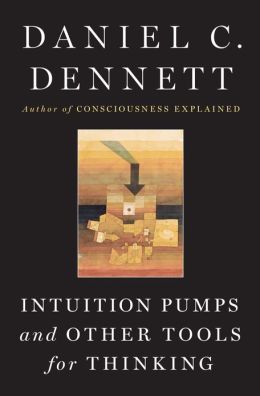
Philosopher Daniel Dennett on the Four Steps to Arguing Intelligently


Dennett synthesizes the steps:
How to compose a successful critical commentary:
  1. You should attempt to re-express your target’s position so clearly, vividly, and fairly that your target says, “Thanks, I wish I’d thought of putting it that way.
  2. You should list any points of agreement (especially if they are not matters of general or widespread agreement).
  3. You should mention anything you have learned from your target.
  4. Only then are you permitted to say so much as a word of rebuttal or criticism.
If only the same code of conduct could be applied to critical commentary online, particularly to the indelible inferno of comments from anonymous hoi polloi.


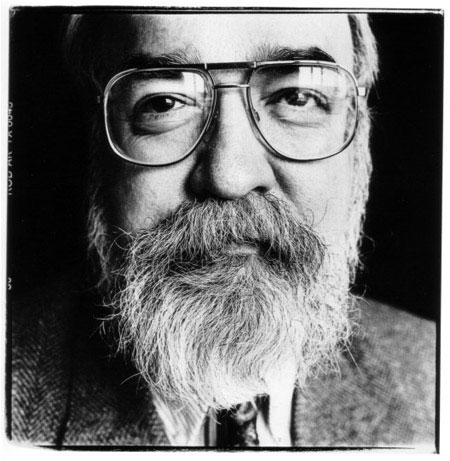
Daniel C. Dennett, b. 1942