Showing posts with label Art of Style. Show all posts

Monday, July 20, 2015

A Guide to Men's Hats


Hats are a useful and potentially decorative or even fashionable accessory.  A person of any age can wear some kind of hat in any season and any clime--and in almost any weather. Take the versatile baseball cap, for example. It has a brim to shade your eyes and keep your glasses dry, while the crown protects the top of your head--all while announcing your loyalty to a particular team, if you are so inclined.


If you like hats as I do, sooner or later you will want to know the proper names of hats and how to tell various hat styles apart. I am writing to pass along a link to a great hat guide from the folks at Real Men Real Style. Follow the link so that you may get a closer look at the helpful infographic posted below.


RMRS's infographic features 16 hat styles


This guide is helpful for distinguishing between similar hats styles that are often confused. Flat Caps and Newsboy Caps are often confused, as are Fedoras and Trilbys. The detail below helps to distinguish between the similar styles.


Slightly closer detail of RMRS's infographic. Please visit them for a better look.


Many hat styles like the ball cap have become popular enough to wear across multiple cultures. Pictures of people from all different races and religions are seen wearing a fedora or Panama hat as they travel the globe. Other items of headgear, such as the turban, fez, sombrero, or yarmulke, are for a very particular time or place and would seem inappropriate in the wrong setting. one could even argue that the Western or "cowboy" hat looks ridiculous on an urban person. I sold my Stetson at a yard sale years ago...

I have a hundred hats in a variety of styles. I keep a few in the car and a few others in the saddle bag of my Harley.  A collection of baseball caps is on display in my closet. My trunk is half-full of military "covers" including boonie caps. On top of all that, I have a little rack by the front door. This is for those rare times when I am tempted to step outdoors unadorned and think better of it at the last moment.

Hats are awesome! Know your hat styles.

Friday, September 5, 2014

Art of Style: Determining the Right Colors for Your Skin Tone


A glass block wall makes a wintry, ice-cube backdrop for a "True Winter."


Someone saw the above photo and said I was a true Winter. And like many folks, I was baffled by the comment. What does it mean to be a Winter? Is this good or bad? Should I see a doctor?

Faced with the uncertainty and associated concern, I did what anyone else would do: I consulted the oracle (Google). I found lots of interesting information about skin color, skin tone, and using skin tone to guide fashion choices--or at least clothing and accessory color choices. Fabrics, textures, shapes and other aspects of fashion are beyond the scope of this inquiry. People who wear make-up have probably already figured out how to accentuate their natural colors. Me? I am a neophyte.

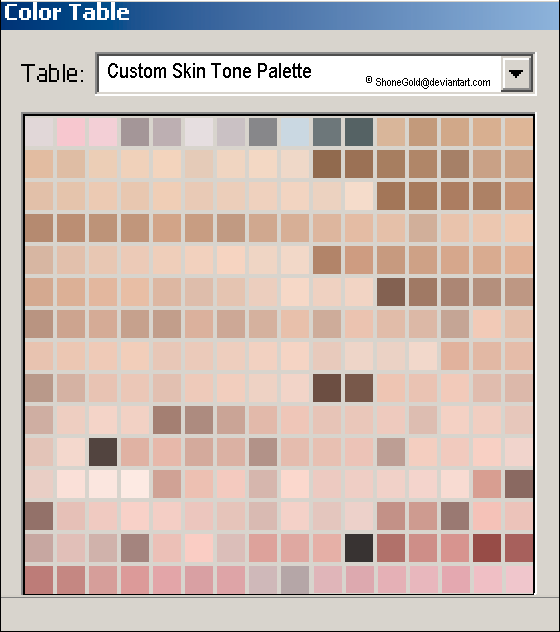
First, color. Look at the palette of skin tone colors. Human skin comes in a wide range of colors, doesn't it? And some of the differences are very subtle. Naturally, all the different colors have very distinct names as well. Pantone's numeric identifiers seem to be most popular, based only on how frequently they are referred to by others. Every paint company and make-up company comes up with their own twist, but in the end, one person's Latte and another's Sepia are both cross-referenced to Pantone's 62-8 C.

Do you see your skin tone here?
I like what Brazilian Angelica Dass is doing by matching a human face with a swatch of that person's respective Pantone skin color. Human beings come in a glorious spectrum of different colors: skin that is light, dark, plain or freckly; hair that is black, brunette, blond, auburn, or white; and eyes that are blue, hazel, green, amber, or brown, to name just a few. The variety is attributable to a single class of pigment known as melanin. How much melanin you have is (a) an accident of birth, and (b) the primary determinant of where you fall on the color spectrum.

Angelica Dass is mapping the world's human colors at SLR Lounge


But what about skin tone? How do we get from color to the four seasons? Actually, there are many helpful skin tone charts out there on the Interwebs. Many, like the example below, focus on the underlying color aspect of skin tone, using relative temperatures like icy blue, cool, warm, and red hot.


I found the Tone and Contrast chart below published by Art of Style and feel it is a helpful resource. It combines color with contrast to create a 2x2 matrix of four "seasons."


Based on the above charts, I would tend to agree that I am indeed a Winter. This brings us to the third level of inquiry: how to use information about skin color, tone, and contrast to guide fashion choices.

According to the Art of Style's article, The Right Colors For Your Skin Tone, "the Winter skin tone has cool skin tone (isn't that skin tone-skin tone redundant?) and clear contrast with stark, dramatic skin. Asians, Africans and Caucasians with very pale skin and dark hair all find themselves in this category."

Art of Style goes on to specify the Do's and Don'ts of color choice for us Winters thusly:

Colors To Wear: True white, true black, cool (i.e., bluish) grays, navy blue, deep reds, bright pinks, jewel tones (emerald, royal blue, royal purple, ruby red), and icy pastels are all flattering.

Colors To Avoid: Beige, orange, gold, brown, and other washed out shades would make you look faded and ashy.

"Caucasians with very pale skin and dark hair?" My hair has never been dark but it certainly has gotten, um, lighter lately. These days, it blends in with my cool and clear skin, making my blue eyes stand out more. So I will try to play up that natural color when I can.

Perhaps my wintry tone-and-contrast combination explains my preference for white gold and silver over yellow gold. I have few accessories, but none with any yellow gold in them. It just doesn't work. Now I know why!

My closet is full of jewel tones, so I supposed I have been picking flattering colors on my own, without much regard for the underlying science. However, I now appreciate the idea of using skin tone to determine colors to wear which accentuate my natural features.

I hope you learned something--I sure did! Since good clothing is expensive, let's choose well.


H/T: Huckleberry