Monday, April 1, 2013

The Recent DDoS Attacks on Banks: 7 Key Lessons Learned


Here’s a good recap of the recent Distributed Denial of Service (DDoS) attacks on banks, for anybody who hasn’t followed the mounting Cyber Security threat.


What should banks large and small learn from the DDoS attacks that crippled websites and shook consumer faith in the industry?

Here’s what Rodney Joffe, one of the world’s leading experts, has to say.


Starting in mid-September, one of the largest and most sophisticated DDoS attacks ever targeted the titans of American banking. Initially, victims included Bank of America, JPMorgan Chase, Wells Fargo, PNC Bank, and U.S. Bancorp. In the weeks to come, others would also feel the pain. Websites crashed, customers were unable to make transactions and IT professionals and PR gurus went into panic mode. Leon Panetta, then-U.S. Secretary of Defense, said the attacks foreshadowed a “Cyber Pearl Harbor.” While evidence still continues to emerge, the following lessons are clear enough. All spell danger, for banking and the world in general.


1. DDoS attacks have entered a dangerous new phase. A combination of size and intelligence marked these attacks. While they peaked at between 60 and 150 Gbps (most DDoS attacks are smaller than 1 Gbps), the assaults on banks involved only 2,000–3,000 computers, not the tens or hundreds of thousands we’ve seen in botnets before. The difference: most of the compromised systems were powerful business machines, rather than traditional home computers, with access to significantly more bandwidth to help flood connections. First, the attackers hit web resources with large numbers of HTTP (web) traffic and then moved on to DNS servers, which tend to be more vulnerable. The result was a curious hybrid: a highly strategic, brute-force attack that left its victims reeling. Clearly, the attackers were well acquainted with how the Internet works.

2. Who did it and why are less important than the fact it could be done. An Islamic group calling itself the Cyber Fighters of Izz ad-din Al Qassam claimed credit for the attacks, allegedly retaliating for an anti-Muslim video. While some suspect the hand of Iran behind these concerted strikes, no one has provided definitive proof of the culprits’ identities or motives. It’s possible a nation-state or terrorist cell is guilty. It’s also possible for the proverbial basement genius to have done it. And that’s the scariest part. Anyone with sufficient knowledge could have pulled this off. Whoever it was didn’t need millions of dollars or a global support network. If you truly know how the Internet is architected, you can succeed in taking down whole industries, no matter who you are and whatever your reasons may be.


3. Brand reputations have suffered. So far, nobody has reported stolen data or major revenue losses, though of course most organizations are in no rush to admit such breaches. Unquestionably, however, America’s largest banks have lost a measure of public trust. Online forums lit up as website outages dragged on. Bank customers wondered aloud about security readiness. Some feared for their data and ultimately their money. As September rolled into October, there were concerns about defaulting on mortgage payments and other monthly bills because customers couldn’t log in to their bank accounts. While some banks did a good job of keeping customers apprised, no one had reassuring news. The best they could do was spin.

4. Traditional DDoS protection proved to be ineffective. Most companies rely on firewalls and intrusion detection/ protection systems to repel DDoS attacks. Some even have their own DDoS mitigation appliances, though many lack the trained staff to wield them effectively. When banks got socked by malicious HTTP traffic, firewalls may have worked to a point but finally turned into bottlenecks. And when enormous amounts of bad DNS traffic showed up, it was game over. Traditional systems simply were not up to the task. Pipes got flooded, outages occurred and the cavalry was called in – third-party DDoS protection specialists with cloud-based solutions affording more bandwidth and a better chance of success.


5. Smaller banks weren’t hit, but are more vulnerable. Think about it. The largest banks have the budgets to spend on DDoS protection. While their solutions couldn’t stop these recent attacks, they can stop most – the 90% less than 1Gbps in size. Small banks, on the other hand, lack the protection to stop even these. A modest-sized attack can cripple their operations. This makes local and regional banks extremely vulnerable. Third-party solutions, especially affordable on-demand services, are a good bet for smaller players who cannot build their own.


6. The attacks demonstrated the need for holistic DDoS protection. It’s not nearly enough to have a customized firewall or a mitigation appliance, especially one nobody has thought to tune in months. To repel today’s attacks you also need enormous bandwidth, skilled mitigation staff and diverse technologies, a mix that stops both HTTP and DNS attacks along with the application-layer attacks that have become so popular. In other words, you have to be ready for anything. Building on the bank attacks, the next wave of DDoS will surely be comprehensive – in strategy, tactical skill and destructive power.


7. The Internet itself was the attackers’ arsenal. Yes, for years now DDoS attackers have marshaled botnets to do their bidding. But the bank attackers showed an unprecedented understanding of the Internet’s potential as a kind of weapons storehouse. Everything they needed was out there for the taking: high-capacity servers, bandwidth galore and information on the business networks in their crosshairs. The attackers showed great patience and impressive intelligence gathering. They clearly learned from past attacks and successful defenses. Their own success in taking down the nation’s largest banks will prove to be an “Aha!” moment for aspiring miscreants. Knowing there is no protocol to stop attacks at their sources, future attackers likewise will plunder the Internet, cobbling together the resources and bandwidth to flood pipes, take down websites and leave business giants helpless.


Last thought: The banking industry leads the world in protection and security practices. If these attacks could happen to banks, they can happen to anyone. They truly are a when, not an if.


H/T: RT

Saturday, March 16, 2013

Theater Masks: A Fun DIY Papier Mache Project

Theater Mask craft project--Fun and Easy

This was fairly easy and a ton of fun!

My youngest daughter came up with a great idea to satisfy a requirement at school regarding the influence of ancient Greek drama on modern entertainment. Her idea: make a pair of those iconic and seemingly timeless Tragedy and Comedy theater masks.

This post is about our do-it-yourself theater mask project, and I encourage readers to try this at home. We both had a fun time making these life-like, wearable and decorative masks. The masks are painted papier mache over aluminum foil forms. I have not seen the aluminum foil form idea before, but it worked really well! All the steps you need to create your own masks are outlined below.

Step one: chose a design concept

There are many variations on the classic theme. We looked at the various designs that are already out there before developing our own designs. You can buy prints, pre-made masks, and for the crafty, even paint-ready plastic masks. We were feeling uber-crafty, and bent on custom-making our own masks. For inspiration, we searched for images of Theater Masks and found results like these:


Step two was to gather the materials and set up the craft studio.

Materials:

  • 1/4 C white flour, 1 Cwater, and 1/2 tsp salt
  • Sauce pan in which to boil the ingredients to make paste
  • Bowl for dipping the newspaper strips into the paste
  • Stapler
  • Spray paint for the base coat (we used white)
  • Marker to draw features before painting
  • Acrylic paint (we used red and black) and brushes (some flat and some pointed)
  • Ribbon (we used red and black)
  • X-acto blade to cut through the mask for eyes, mouth, and ribbon holes 
  • Large cardboard box to use as a paint booth
  • Aluminum foil, about 21" wide and 40" long per mask. Fold the long strip into 3 plies thick
  • Newspapers--just the newsprint, none of the glossy stuff. 

Preparation:

  • Wear clothes that can stand a little washable paste and paint
  • Cover a large table with newspaper or an old, washable tablecloth
  • Stir the paste ingredients over medium heat until they boil, then turn off the heat and let the mixture cool and gel. Boiled paste is not quite as strong as raw, but boiling helps the masks last longer by preventing mold. 
  • Rip (don't cut) some newspaper into ~1" wide strips. You'll need about 50 each 6" long strips for each layer of each mask, and each mask will need at least two layers
  • Shred some paper to make a kind of modeling clay for some additional features 

Step the third: the frame

Fold some newspaper into 1.5" wide strips, at least 4 plies thick, and as long as you can make them from a sheet of newsprint. Staple or tape the plies together to reinforce them and prevent them unfolding. You'll use these reinforced strips to frame your mask, so you'll need enough to wrap around the perimeter of your model's face, one time for each mask.

Wrap a strip of the reinforced paper around your model's face from under the chin, straight up over the top of the head, and back around to the start point. Staple the form into a closed loop. The shape should slide on and off of the model's face snugly. When you set the frame down on the table, it should retain the oval or almond shape of your model's face. 


Step fourth: the molded face form


The forms were made by pressing 3 plies of aluminum foil over Madeline's highly expressive features. You want enough foil so it keeps its shape when you layer paper mache over it. You want the foil to completely encase the face, so gently press it against the model's face with plenty of slack in the middle to allow you to form-fit it to your model's features. Have your model smile so you can gently press the foil around lips, nose, and eyes and capture the expression. Do the same with the frowning pose so you have two foil face forms.


Step 5ive: apply the papier mache

Tuck the foil forms inside the paper frames. You'll eventually remove the foil from the inside of the finished mask, so be sure the foil fits snugly against the inside of the frame. The combined frame and form is fragile at this point of construction, but it should give you an excellent idea for what the finished mask will look like.

Pour the cooled paste into a large bowl and start dunking strips of paper into the paste. Squeeze off excess pasted with fingers and drape the paper over the form. Keep applying paper until the entire mask form is covered. While the first mask dries, repeat the process on the second mask. You'll need at least two layers of strips.

You can smoosh some of the shredded paper into the paste to make modeling clay. This clay can then be used to build up eyebrows or cheeks as desired.

Excess paste can be stored in the fridge and warmed up for later use, but I do not recommend eating it.


Step 6th: Paint

Let the masks dry for 24 hours before painting. Gently pull the foil away from the inside of the mask. Check to make sure all the paste is thoroughly dry. You can sand the masks at this stage to smooth out rough spots before painting.

I used a large cardboard box as a spray booth, and sprayed a white primer base coat on both masks, and then let the paint dry for 2 hours. Once the white paint was dry, I used a marker to draw the outlines of features such as the eyes and mouth before brushing black and red paint to complete the design.


Step 7: Finish the masks

Time to apply the finishing touches. Use an X-acto blade to make cut-outs for vision and voice. Cut some slices in the temples of the masks just wide enough to pass the ribbon through. Attach the ribbon, long enough to tie behind the wearer's head, et viola!


 ... and anguished with the finished masks.
As you can see, my daughter was both ecstatic ...


Step 8: Clean up

Clean up is a snap. Close out the project with more photos and a celebratory coconut cream pie! 


If you like this idea, why not make some masks at home? Masks have been used for dramatic effect for centuries. Western civilization celebrates the classic Greek theater masks, but masks have been used for many purposes and across diverse cultures. 

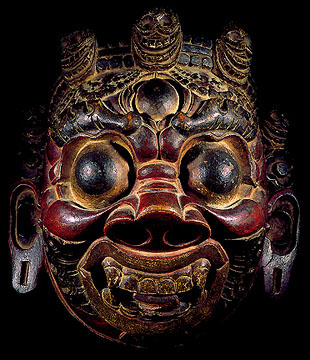
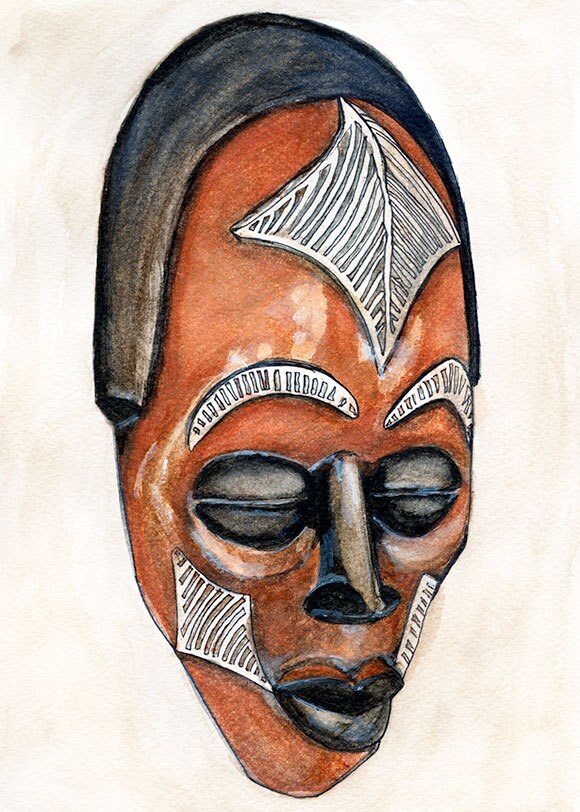
Native American, African, and Asian masks are strikingly different in features, scale, and colors. Such differences reveal interesting culture clues. 


Asian
Native American
African


What about death masks, such as the famous mask made just after President Lincoln succumbed to his fatal wound? 

Lincoln Death Mask

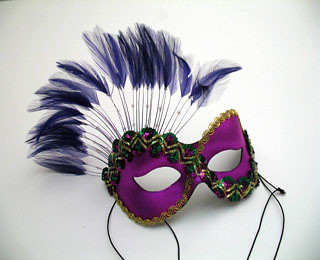
And don't forget the often elegant masks worn at masquerade balls.

Elegant intrigue


What types of masks are favored by thieves? And what explains their preferences? 
Anonymous thuggery

Why not make your own Hallowe'en masks? You can be whomever your heart desires. 

The Penguin of Batman fame


One final example: Mardi Gras!

laissez les bons temps rouler!


Feeling inspired? Consider making your own masks using the technique we developed and described above. Then share your results in the comments, or send us a link to your own blog post. Have fun! 

Thursday, March 14, 2013

Pi Day Treat


PhilosFX is celebrating Pi Day (3.14) with some tasty numbers!


Friday, March 1, 2013

President Obama's 2d Term Agenda

Photo by WaPo. For a full transcript of the SOTU address, go HERE
This is the second in a three part series of articles about the President's agenda for his second term.

First impression: I need some new ties. I have no pastel, Easter-colored neck ties. I was not invited to attend the SOTU address this year, but had I been present in the House Chamber, I would have looked out of place. Lilting Lilac. Sky Blue. Fuzzy Peach. Mint Green. Bunny nose Pink. We went from Mardi Gras to Easter Sunday in one fell swoop.

As long as we are dispensing with the trivia, what did you think of Marco Rubio's "water moment" in the Republican rebuttal? I found the moment humanizing but the hoopla about it de-humanizing. If you don't know what I am referring to, consider yourself lucky and the matter closed. Enough said?

Speaking of social media, my Facebook friend and frequent PhilosFX commentator, CT, said this fanfare of banality all reminded him of a favorite Frank Zappa quote,

"Politics is the entertainment division of the military-industrial complex."

Frank may have been on to something, but, like it or not, we are governed by the people we elect, following the process outlined in our Constitution. So let's take a more serious look at what the State of the Union Address tells us about where the President sees the Nation in relation to where he'd like to take us.

  • Increasing the minimum wage
  • A path to citizenship and tougher border security
  • Only “modest” Medicare and Social Security reforms
  • Increased gun control
  • Ending the war in Afghanistan
  • Increased infrastructure spending
  • Addressing climate change
  • Increasing sharing of information to prevent cyber attacks

Some folks look at this list and see a fairly pragmatic agenda. Some other folks look at the same list and see a threat to our freedom in the form of big government take-over. Some folks never get past the fact that our President self-identifies as a Black man, although I dare say that fewer and fewer citizens are paying attention to race and gender. President Obama is not the Black President. He is the President (who happens to be Black). That color-blindness is a good thing, as long as people are truly focused on issues that matter more, such as the strength of the Nation and the health and well-being of her people.

Personally, I look at the list and I see a fairly pragmatic agenda, which is what I want to see. Which is why I am immediately suspicious. Rhetoric sways people. Recall these stirring words from Part One, the President's second inaugural address.
" . . . each time we gather to inaugurate a president, we bear witness to the enduring strength of our Constitution.

"What makes us exceptional, what makes us America is our allegiance to an idea articulated in a declaration . . . We hold these truths to be self-evident, that all men are created equal. That they are endowed by their Creator with certain unalienable rights, and among these are life, liberty, and the pursuit of happiness.

"The patriots of 1776 did not fight to replace the tyranny of a king with the privileges of a few, or the rule of a mob. They gave to us a republic, a government of, and by, and for the people. Entrusting each generation to keep safe our founding creed . . . "

 
A President of the United States can use phrases like "unalienable rights" and government "of, by, and for the people" in speeches, even as his policies

"... point away from a republic of liberty and toward bureaucratic despotism.  President Obama's policies - from Obamacare, to higher taxes and runaway debt, to increased regulation of the economy and of family life - are in direct contradiction to these words in his second inaugural address.

"President Obama can only get away with misusing the words of America's founders because too many Americans today have not been properly educated about our American Heritage.

"And if this is allowed to continue, our great nation will become less free and less prosperous, and the intrusive bureaucratic state will expand." --Dr. Larry P. Arnn, President, Hillsdale College

Let's get past the melody and the message and get to the meat. How will the agenda laid out in the SOTU address contribute to the strength of the Nation and the health and well-being of her people? So the challenge now is to connect the beautiful melody of January's Inaugural Address with the inspiring lyrics of this State of the Union Address and produce the actual sheet music of the President's Budget for FY 2014. Follow the money.

Of course, the words are eloquent, but as we know, a brilliant plan without a supporting budget is just fantasy. 

Given the gridlock in Congress and their track record of producing budgets of late, I would say,

"Welcome to Fantasy Island."


Wednesday, February 13, 2013

Beginnings (Redux)

Image accessed 13 Dec 2012 from http://poetryblogroll.blogspot.com/2011/11/thursday-think-tank-73-waning-days-of.html 


"...[W]henever you feel urgent or overwhelmed, whenever you feel pressed to figure things out or rethink the unthinkable . . . rest . . . so that the endless beginning--which some call the voice of God--might break through what has happened....
"...And you will wake feeling like dawn." 
                                     --Mark Nepo, The Book of Awakening, p. 390 

This passage in Mark Nepo's day book (from the entry for Nov 27) strikes a chord within me. Until now, I have lived life linearly. I have imagined myself moving from beginning, through middle, toward the end. I look to my left and right and compare my progress with others. I am a little ahead of someone, and I feel proud. I see someone ahead of me and I feel jealous. Sometimes, I am so caught up in the race that days go by and I do not even notice the passing of time. I come home to a pile of unfinished projects and unformed ideas and unrealized dreams. I feel overwhelmed.

Perhaps it is time to begin living more iteratively. Perhaps life is more a series of new beginnings than a linear race to the inevitable end. Every morning when I wake up, I realize I have a new day to make the most of--and so do you!


This Ash Wednesday post is a follow up to my earlier thoughts on Beginnings:

Wednesday, January 30, 2013

A Qualitative Value Map of the President's Agenda

Jonathan Newton / THE WASHINGTON POST
Image credit: Jonathan Newton / THE WASHINGTON POST

I listened to the "pre-game" coverage of the Inaugural address on NPR. What I heard were lots of reasons why we should not expect much from this address. Historically, Inauguration speeches are not meant to inspire much more than a healthy respect for a unique American trademark: the peaceful transition of power. Beyond that, we could expect some thoughts about reaching across the aisle and working together for a better tomorrow, but not much in the way of substance.


As evidence of these low expectations, some Americans are still wondering whether Beyonce lip-synced. If she lip synced, she synced her lips so expertly as to fool me. And while I admire authenticity, I also value risk management, and I have moved beyond this question.

Speaking of risk management, I will also admit that I had a morbid curiosity about whether Chief Justice Roberts would again muff the oath of office. Armed with a note card and an abundance of caution, he performed perfectly. One day, I hope to learn what flicker of thought momentarily interrupted the President's concentration, but I am prepared to wait for that answer, too. His verbal stumble was evidence of humanity, and nothing to dwell upon.

Of much more significance to me is the skillful way in which the President leveraged the moment. With no concern over his political future now that he's in his final term, he could afford to offer a bolder vision for America, and that he certainly did do. The fact that he gave his address on Martin Luther King, Jr Day was significant as well. He invoked Dr King with great effect. I got caught up on the passion and unexpected specificity of the President's remarks.

As a concerned citizen in middle age, I listened intently to the President's address. I heard a clear Purpose statement, drawn from the Constitution. I heard the compelling language of Ends, Ways, and Means. I also heard a vision for a progressive agenda--a call to action. As a scholar-practitioner of Value-Focused Thinking, I responded to his clear and compelling drumbeat:

Our Journey is not complete until

  • Boom, 
  • Boom, 
  • Boom...


Making a Qualitative Value Map of the President's Agenda: 


A Value-Focused Thinking look at President Obama's 2013 Inaugural Address


I have applied my VFT craft to the President's words and repackaged them below as if I were going to use them to make a math model of the President's agenda. Here is my breakdown of the Inauguration address in Value-Focused Thinking terms.


Fundamental Objective

aka Purpose, equivalent to the “Ends” in Ends = Ways + Means

“We hold these truths to be self-evident, that all men are created equal, that they are endowed by their Creator with certain unalienable rights, that among these are Life, Liberty, and the pursuit of Happiness.”

Vision

aka Desired Endstate / How we will know when we have achieved the Fundamental Objective

Today we continue a never-ending journey, to bridge the meaning of those words with the realities of our time.  For history tells us that while these truths may be self-evident, they have never been self-executing; that while freedom is a gift from God, it must be secured by His people here on Earth. 

Objective Function(s)

aka Ways (we seek to Maximize these functions)
 
  • Freedom:
  • Equality:
  • Initiative: youth and drive
  • Transparency: diversity and openness
  • Entrepreneurial spirit: an endless capacity for risk (?)
  • A gift for reinvention?  (I think this means starting over or re-framing)
  • Skepticism of central authority (balance of power, gov’t works for the people)
  • Limited government (all society’s ills cannot be cured through government alone)
  • Celebration of initiative and enterprise
  • Insistence on hard work and personal responsibility
  • Being true to our founding documents / creed / principles (a reference to the Constitution, used at least 4 times)

Means Objectives

these are the “Means” by which we will maximize the Objective Functions “Ways” and achieve the Fundamental Objective “Ends”)

For our journey is not complete until (Specified)

  • Pay equality: our wives, our mothers, and daughters can earn a living equal to their efforts
  • Advancing gay rights: our gay brothers and sisters are treated like anyone else under the law – for if we are truly created equal, then surely the love we commit to one another must be equal as well 
  • Voting reform: no citizen is forced to wait for hours to exercise the right to vote
  • Immigration reform: showing more tolerance toward illegal immigrants: we find a better way to welcome the striving, hopeful immigrants who still see America as a land of opportunity; until bright young students and engineers are enlisted in our workforce rather than expelled from our country
  • Ending gun violence: all our children, from the streets of Detroit to the hills of Appalachia to the quiet lanes of Newtown, know that they are cared for, and cherished, and always safe from harm
  • Preserving the social welfare safety net
  • Acting to stop climate change.

For our journey is not complete until (Implied)


  • Infrastructure: a modern economy requires railroads and highways to speed travel and commerce
  • Education: a modern economy requires schools and colleges to train our workers
  • Market regulation: a free market only thrives when there are rules to ensure competition and fair play
  • Social Safety Net / Emergency Management: a great nation must care for the vulnerable, and protect its people from life’s worst hazards and misfortune
  • Diplomacy / Statecraft: A decade of war is now ending (peace dividend)
  • Economy: An economic recovery has begun (and must continue)
  • Environmental Protection: respond to the threat of climate change, knowing that the failure to do so would betray our children and future generations
  • America’s prosperity must rest upon the broad shoulders of a rising middle class (tax reform)
  • We must be a source of hope to the poor, the sick, the marginalized, the victims of prejudice – not out of mere charity, but because peace in our time requires the constant advance of those principles that our common creed describes:  tolerance and opportunity; human dignity and justice
  • A little girl born into the bleakest poverty knows that she has the same chance to succeed as anybody else, because she is an American, she is free, and she is equal, not just in the eyes of God but also in our own
  • Remake our government
  • Revamp our tax code
  • Reform our schools
  • Empower our citizens with the skills they need to work harder, learn more, and reach higher
  • We cannot mistake absolutism for principle, or substitute spectacle for politics, or treat name-calling as reasoned debate. 
  • Pragmatism: We must act, knowing that our work will be imperfect
  • We must act, knowing that today’s victories will be only partial, and that it will be up to those who stand here in four years, and forty years, and four hundred years hence to advance the timeless spirit
  • Citizenship: citizens have the obligation to shape the debates of our time – not only with the votes we cast, but with the voices we lift in defense of our most ancient values and enduring ideals


If asked, I would make a Qualitative Value Model of the President's vision. The next steps in my process of transforming the President's speech into a tool for strategic communication, math model would be the following:


  • Condense the Means Objectives to the collectively exhaustive and mutually exclusive few. Try for 7, plus or minus 2.
  • Develop Evaluation Measures for each Means Objective. These Evaluation Measures come in four types: leading or lagging measures, and measures of performance or effectiveness. The best model has a mix of the four types of Evaluation Measures.
  • Affirm the data sources for each Evaluation Measure and map the data to the measures.
  • In consultation with the Office of the President, develop Value Functions, which are like grading curves for converting data to scores. 
  • Add in a capability for Monte Carlo Simulation.  
  • Maintain the model by adjusting the weights and thresholds as required. 


I am looking forward to the more policy-oriented State of the Union address, where I hope to hear more details about how the President would implement his agenda during his second term. The odds of his success are not great, given the fact that the new Congress is not a lot different, in terms of party distribution, from the last one. The biggest advantage the President has in promoting an activist agenda is the simple fact that his performance rating has climbed into the 50s while Congress has sunk even lower than it had been before, if that can be imagined.


The President's approval rating has more influence on Congressional outcomes than the clarity of his speeches. Why? Because in this constitutional republic, concerned citizens are still in charge. People are fed up with gridlock in Congress. If the President's vision for the future is not the best, it is no longer sufficient to mock it or block it. someone m?

Anyone can lip sync a good speech.  What really matters is who listens to the words, and what the listeners do in response to them. If listeners continue to focus on delivery, we're doomed to more partisan rhetoric. Let's turn our focus to content. Let's get pragmatic so we can move forward together.

A Qualitative Value Map helps by delivering the following:


  • definition of what the objective looks like
  • how we will know when we have arrived
  • how we will measure success
  • how we know where we are relative to the objective
  • which investments would likely produce the most favorable impact on the system score.


I wonder why we don't already have such a powerful tool available. If you think a Qualitative Value Map would be a good thing, let me know, and I'll get right on it!


A transcript of President Obama 2013 inaugural address is HERE.


Sunday, January 27, 2013

World Map Composed of Flags?


Mosaic World Map


I found this creative world map here.


Hongkiat describes the work as a mosaic of flags, which is an idea that appeals to me. Unfortunately, that is not an accurate description of the work. Fortunately, Hongkiat was careful to cite the original source, Genista.


Genista offers a detailed look at the tiles that compose the world map, as well as a link to the color sorting program that arranged the tiles in an optimal map. Have a look here.


I find the work of Genista and the Long Line collaborators endlessly fascinating and I'm delighted to share this with PhilosFX readers.


But I still want to see a world map that really IS composed of Flags...