"What advice would you give to your 20- or 30-year-old self?"
Our mid-20s. That is the time when many of us are starting our working lives. The choices we make then shape our options going forward. By mid-life, we have a few projects and relationships under our belts. We have experienced some of life's finest peaks and valleys. We can look back on those early days with the benefit of hindsight, and offer advice on how to make better choices.
There are any number of truly great and inspirational commencement addresses available if you should ever desire some examples to help you craft a perfect response to this question. Age does not always confer wisdom, but I suppose it is fine to examine our own experience and see the ways in which time has improved our outlook and awareness.
This leads me to wonder: Is it a safe bet that wisdom will continue to increase as we age? If our current selves are wiser than our much younger selves, will our future selves be wiser still? If so, what might we learn from our future selves?
Introduction
Today I would like to do something completely different and uncommon. Rather than offer advice to twenty-somethings, or to my own 20- or 30-year old self, I want to turn this question around and upside down. I am going to project my consciousness to life's end, and give my current self some much needed and welcome advice!
I'm 59.999 years old, but let's just call it middle-aged. According to actuarial tables, a white American male having attained the age of 59+ has a remaining life expectancy of about 23 years. So if you will indulge me, today I am going to ask my actuarial 83-year-old self this question:
"What advice would you give to your (almost) 60-year-old self?"
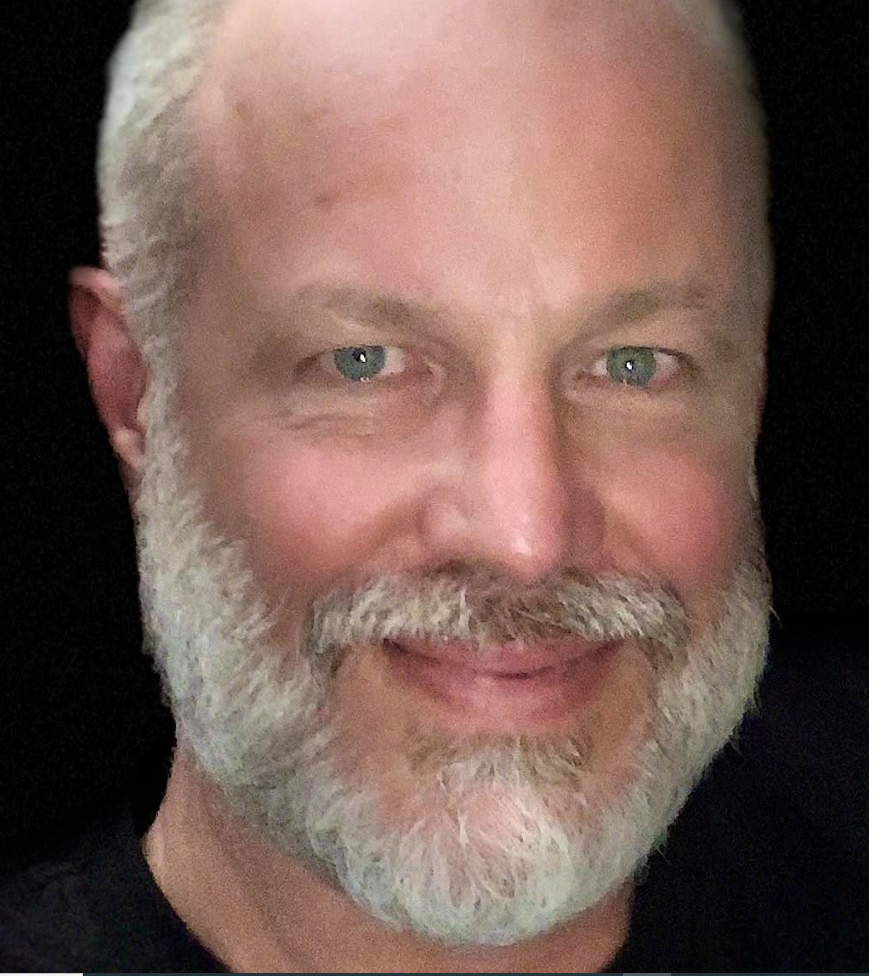
Obviously, I hope you, Dear Reader, will enjoy this exercise and decide to try to adapt it for yourself. To add some realism, you may wish to use an app such as "Age My Photo" to make yourself look older. I tried this and made myself look 83 in the photo in figure 2 below. I printed that picture and posted it above my work station. Now, my future me is looking down, checking on me, and standing by to give advice. Now and then, I ask myself, "What would my future self do in this situation?"
 |
Fig 2. This is how I might look in 23 years,
according to the "Age My Photo" app. |
Advice to my Current Self from my Future, (Presumably) Wiser Self
Dave,
Hey there, youngster! I'll bet you don't hear 'youngster' much anymore. Haha! Enjoy it while you can!
Listen, I am glad I made it to the ripe old age of 83, and I welcome the opportunity to pass along some advice while you are still an impressionable youth--relatively speaking! Take it from me, we never stop learning. So lean into learning and look for ways to expand, grow, and improve. I'm still learning and I aspire to live into the triple digits, but let's face it: the odds are what they are. So let me take time now share some thoughts to guide you through the next 20, 30, maybe 40, maybe even 60 years. Can you (we?) make it to 120?
Time will tell...
As your future self, I can tell you that some of your choices in mid-life were better than others! Let's map out a plan to find the most beneficial habits, avoid the wasteful or harmful choices, and generate the motivation and discipline to stay the course.
For starters, do not look at me as an old man with one foot in the grave, but as someone you care for deeply. Appreciate that time goes by quickly and trust me when I say that you will actually be 83 before you know it. So do your best to make better choices now. You'll be glad you did tomorrow! Any chance I have to break the century barrier starts with the choices you make today.
Before we get into specifics, Dave, I want to suggest a framework for the discussion. When I was your age, Tony Robbins was an enormously successful lifestyle coach. Time has gone by and other lifestyle coaches have come and gone, but we still refer to the same timeless ideas that Tony popularized in your time. Tony did a great job of channeling timeless wisdom and extending ideas for his audience to embrace. Tony describes six core human needs that will sound familiar to you whether you are 20, 40, 60, 80, 100, or beyond.
The Six Core Human Needs
 |
| Fig 3. The Six Core Human Needs |
The Four Needs of Personality:
- Certainty - safety, stability, security, comfort, order, predictability, control, and consistency
- Variety - surprise, challenges, excitement, difference, chaos, adventure, change, and novelty
- Significance - the need to have meaning, pride, needed, wanted, accepted, loved, listened to, sense of importance and worth, worthy of love.
- Love and connection - a partnership of two souls, family love, friend love, unified, approval, attachment; cherished, adored, to feel intimacy and love with another human being
The Two Needs of Spirit:
- Growth - Evolution is the reason why we were born, why we learn while we live, the need for constant emotional, intellectual, and spiritual development. The reason why our souls are given numerous lives to live and evolve into our best version; to grow and evolve towards divinity.
- Contribution - the need to give beyond ourselves, give, care, protect, aid, and serve others
Keeping the six core human needs in mind, there are two additional dimensions that we can visualize as surrounding and enable the fulfillment of our six basic human needs. Tony did not describe these extra dimensions, but we can agree that a wholistic model of human flourishing should include environmental factors such as the element of time, and our changing needs, motives, and abilities around self-care.
The Two Dimensions of Human Flourishing
 |
| Fig. 4. Two Dimensions of Human Flourishing |
Time Horizon
The first point is the idea of time horizon and the associated changes in risk tolerance over time. What you worry about changes as you get older. Bear in mind that what seems important to an octogenarian is different from what matters to a 20-something. At 59.999, you already realize that this ride doesn't go on forever. At my age, I have an even more intimate relationship with each passing moment. When I was 20 I could recover from a mistake quickly. At 80, I'd rather not make a mistake in the first place.
Self Care
How well you are able to cope with challenges and setbacks reflects your personal preparation and resilience. As time goes by, proactive self-care becomes increasingly important. When we were 20, we could skip a work out or a meal or maybe over exert ourselves or over indulge. The consequences for such self-abuse were negligible, because recovery was nearly instantaneous. I am much less able to recover now, and so I need you to start pushing the self-care--for my sake!
Putting the Framework into Action
Let's now leverage the modified Tony Robbins framework to visualize a lifestyle that will help you get the most out of life, one day at a time. We'll walk through the two dimensions and the six core human needs.
Notice that the dimensions and the needs exist in tension. For example, humans need both:
- prudent risk-taking and proactive self-care
- predictability and new challenges
- to stand out from the crowd and to be a valued partner, family member, and team mate
- to grow, but also to contribute
This tension is normal and it continues into old age. Expect it. But notice that the balance point changes as time goes by. Perhaps you can imagine two friends on a teeter-totter. If the friends of prudent risk taking and proactive self-care weigh the same, then the teeter-totter's fulcrum is right in the center. In youth, when the time horizon seems so far away, the need to take risks is exaggerated and the requirement for self-care is diminished. The tension between the two exists, but the fulcrum slides to the left for balance. Later in life, the fulcrum slides to the right to reflect risk aversion and more health concerns.
The point is that we don't beat the reaper by living longer, Dave. We beat the reaper by living more fully. We are human beings, not human doings. I want you to focus less on achievements and more on fulfillment. Concentrate on timeless and enduring values. Get the values right, or the plans don't matter. Get the plans right, or the results don't matter. Once the results align with those essential values, then and only then does it make sense to scale up and out.
“The place to improve the world is first in one's own heart and head and hands, and then work outward from there.” ― Robert M. Pirsig, Zen and the Art of Motorcycle Maintenance: An Inquiry Into Values
Time Horizon and Self-Care
I want you to continue to take prudent risks. But now that you are almost 60, I want you to consider the impacts of actions on others more explicitly. I will view the results of your actions--because they can impact me, and we don't have time to recover from mistakes. Now that you are almost 60, I want you to get more disciplined about what you eat, how often you get exercise, and how well you sleep.
Certainty and Variety
It's natural to crave variety when you are young and certainty when you are old. You are at the cross-roads now. Continue to seek variety, but be a bit more selective in where you go to find it. At my age, I don't want to eat the same food every day and I don't want to read the same books over and over. But I am aware that I have fewer months remaining and so I will not read a popular book until I have read more of the classics. Start developing that mentality now.
Significance and Love and Connection
Of course we all want to love and be loved in return. What brings me joy in my age is not the achievements of my working life but the love and connections I've made and continue to make and nurture. At your age, you still want to land the big contract, leave your mark on the world, make the big nest egg that will secure your comfort and provide for your legacy. That is good and noble and just. I want you to think about balancing the tension, though.
Growth and Contribution
Searching is good. Learning is good. But balance the growth with contribution. Don't spin your wheels. Don't be "busy." Do less in order to be more. Remember the words on your W.I.S.H. list: Earn the respect, esteem, and affection of the important people in my world.
Right now, Dave, you are struggling to make sense of how best to navigate the second half of life. You are looking at many aspects, such as
Health & Fitness
- Intellectual
- Emotional
- Character
- Spiritual
- Love Relationship
- Parenting
- Social
- Career
- Financial
- Quality of Life
- Life Vision
You are seeking wisdom to improve in these areas from many sources, such as
- Your parents and ancestors
- Your faith traditions and the wisdom embedded in major world religions
- Philosophers and psychologists
- Self-help authors and lifestyle designers
- Your closest friends and confidants
The thing is, Dave, you will one day realize that you are 83 years old and either you will still be searching, chasing and trying to keep up with the latest, or you will recognize, nurture, and share the truth that has always existed within yourself.
Conclusion
Think about the impact your actions today will have on me, your 83-year old self. Are you treating yourself today as someone you love and respect? Are you treating yourself today as you would want your older self treated? Is your self-talk and self-care similar to the kinds of things you say to and do for your parents or your children? If not, why not?
I love you, Dave, and I care about you. I want nothing but the best for you in the future. Do you care about your own future? Will you treat yourself with love and respect? Will you consume only the food and beverages and sounds and images and ideas that will benefit me, your future self? If so, we'll both be happier, and your example will be a better one for others to follow.
Love,
Me (You)
Epilogue
The exercise of projecting one's consciousness to life's end yields an interesting thought experiment. I recommend it. However, I also offer two parting comments. These comments may very well be the basis for future blog posts.
Firstly, there is no practical way for one to actually anticipate life's lessons in advance. I realize it might be seen as pretentious to try. Still, we all forecast things all the time. We use the information at hand to make all manner of projections and prognostications. Perhaps thinking about the future can help us contemplate what matters most, and manifest a better reality.
Secondly, don't forget to seek out real, living mentors. Imagining an ideal future is instructive, but taking counsel from one's self alone is foolish. Talk to some 80- and 100-year-olds. Ask them what advice they would give their 60-year-old selves. And here's another twist. Put yourself in listening mode and ask some 20- or 30-year-olds for some advice. If you don't have a younger mentor, you are missing out on a valuable perspective.