Thursday, May 3, 2012

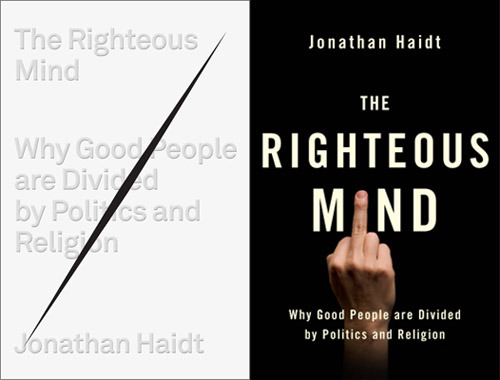
‘The Righteous Mind,’ by Jonathan Haidt


The Righteous Mind: 

Why Good People Are Divided by Politics and Religion


Jon Haidt uses the social science of psychology to explain the origins and future of morality. 

  • What binds people together?
  • Are people rational or intuitive? 
  • Is the news for information or entertainment? 
  • Is there one and only one right way, one master moral code? 
  • Will religious and political diversity lead us to tolerance and acceptance, or to division and suspicion?


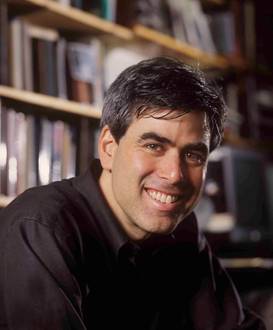
I have heard of other Positive Psychologists, notably Prof. Martin Seligman at U Penn. However, I had not heard of Prof. Jonathan Haidt at U Va until my Uncle mentioned him. Now I cannot wait to read his latest book, The Righteous Mind, and learn more about his philosophy.


Sequence of Events


  • April 29. My Uncle shows me his copy of The Righteous Mind. I make note of it and add it to my wish list.
  • May 2. I catch author Jon Haidt on the Colbert Report, and text my Uncle.
  • May 3. Good email feedback from my Uncle inspires me to introduce Haidt to blog readers with my endorsement.


Central ideas: 


  • All things are connected, and 
  • Getting along, i.e., maintaining balance, is essential. 


Here are some helpful resources for understanding Haidt:


PhilosFX Flags


Wednesday, May 2, 2012

1337: How to Read and Write "LEET"


Here's another in a series of blog posts highlighting my ongoing attempt to master irrelevant skilz. Or, for those of you who already speak 1337, I should have written,

$k!L2


If you are intrigued or simply want to know more, follow this link to the wikiHow article, How to Read and Write 1337 in 12 steps


Maybe after you read about 1337, some of the vanity plates and Twitter tags you see around will make more sense to you. Perhaps you will even be able to appear hip when texting teens and twenty-somethings.


You're welcome!


PS--The vanity license plate on the BMW at the top of this post says H4X0RZ, or Hackers.

Thomas Merton's Prayer


This prayer by Thomas Merton speaks to me today. Does it speak to you as well? Do you feel Merton could have written this prayer on your behalf?  If so, feel free to share your comments.


My Lord God,


I have no idea where I am

going. I do not see the road ahead
of me. I cannot know for certain
where it will end. Nor do I really
know myself, and the fact that I
think that I am following Your will
does not mean that I am actually
doing so.


But I believe that the desire

to please You does in fact
please You. And I hope I have that
desire in all that I am doing. I hope
that I will never do anything apart
from that desire. And I know that
if I do this You will lead me by the
right road though I may know nothing
about it.


Therefore will I trust

You always though I may seem to
be lost and in the shadow of death.
I will not fear, for You are ever
with me, and You will never leave
me to face my perils alone.

~Thomas Merton, Thoughts in Solitude.


Before reading this prayer, I hadn't read or thought much about Thomas Merton for many years. In 1983 while a student at Notre Dame, I read his 1948 autobiography, The Seven Storey Mountain. It is still one of the most moving stories I have ever read.

I was instantly taken by this "writer and mystic. A Trappist monk of the Abbey of Gethsemani, Kentucky, he was a poet, social activist, and student of comparative religion."

Merton wrote about his doubts as well as his certitudes. He did not pretend to have all the answers. While a devout Catholic, he showed respect for other religions and honored the common goal of connecting to the Divine through prayer and service.

"Merton wrote more than 70 books, mostly on spirituality, social justice and a quiet pacifism. Merton was a keen proponent of interfaith understanding. He pioneered dialogue with prominent Asian spiritual figures, including the Dalai Lama, the Japanese writer D.T. Suzuki, and the Vietnamese monk Thich Nhat Hanh." 

For more on Merton's biography, read this Wiki entry.

The prayer speaks to me because I, too, am struggling to keep up with life, to understand my purpose, and to see which obstacles in my path are meant to be overcome and which are meant to steer me in a new direction.

H/T: MGW

Bill Samuels' Perfect Mint Julep

Just in time for the Kentucky Derby, May 5th, Chow Bella has published Bill Samuels' Perfect Mint Julep recipe. Mr. Samuels, of course, is the Pesident of Maker's Mark Distillery and producer of Maker's Mark handmade Kentucky straight Bourbon Whisky. In full disclosure, I am a Maker's Mark Ambassador.


MINT JULEP.jpg


Rob Samuels is the grandson of the creator of Maker's Mark Whisky and current chief operating officer of the distillery. 


You would expect a family with such a rich, bourbon-soaked history to know a few good whisky recipes -- and you'd be right. Rob's father, Bill Samuels Jr., perfected his Mint Julep recipe over years of experimentation. The recipe below serves 14-16 people and is perfect for a Kentucky Derby party (which is coming up on May 5). 


Make sure you get to work on your Juleps a day before you want to serve them -- the recipe takes more than a day to make, but the drink is worth every second.


The ingredients:
1 liter Maker's Mark Bourbon
Lots of fresh spearmint
1 cup distilled water
1 cup granulated sugar
Powdered sugar

How to make it:


  • To prepare the mint extract, remove about 40 small mint leaves from their stems, then wash and place them in a small mixing bowl. Cover with 3 ounces of Maker's Mark and allow the leaves to soak for 15 minutes. Gather the leaves in a clean, soap-free piece of cotton cloth and vigorously wring the mint bundle over the bowl of whisky. Dip the bundle again and repeat the process several times. Set aside.
  • To prepare the simple syrup, mix 1 cup of granulated sugar and 1 cup of water in a cooking pot. Heat to dissolve the sugar. Stir constantly so the sugar does not burn. Set aside to cool.
  • To prepare the mint julep mixture, pour 3 ½ cups of Maker's Mark into a large glass bowl or glass pitcher. Add 1 cup of the simple syrup to the Maker's Mark.
  • Begin adding the mint extract a tablespoon at a time to the julep mixture. Each batch of mint extract is different, so you must taste and smell after each tablespoon is added. You may have to leave the room a time or two to clear your nose. The tendency is to use too much mint. You are looking for a soft mint aroma and taste -- generally about 3 tablespoons.
  • When you think it's right, pour the whole mixture back into the empty liter bottle and refrigerate it for at least 24 hours to marry the flavors.
  • To serve the mint julep, fill each glass (preferably a silver mint julep cup) half-full with shaved ice. Insert a sprig of mint and then pack in more ice to about an inch over the top of the cup. Insert a straw that has been cut to one inch above the top of the cup so the nose is forced close to the mint when sipping the julep.
  • When frost forms on the cup, pour the refrigerated julep mixture over the ice, add a sprinkle of powdered sugar to the top of the ice and serve.

Follow Chow Bella on FacebookTwitter and Pinterest.

Saturday, April 28, 2012

Farewell, Grandma Donna

Donna Jeanette Carpenter Eggleston
Dec 5, 1916 to Apr 24, 2012


"Only love, with no thoughts of return, can soften the point of suffering." 
--Mark Nepo's epigraph for April 24th in his 2000 book, Awakening


My grandmother, Donna (Carpenter) Eggleston, passed away last Tuesday morning, April 24th, in Omaha at the age of 95. She lived a long and full life. She was active till the end. She was loved by many and will be sorely missed. The family will gather in Broken Bow, NE to remember her, and after the funeral service in the church where my parents were married, Grandmother's body will rest next to Grandfather's in the Ansley cemetery.

Four years ago, my Uncle C. Edward (Grandmom's youngest son) and Aunt Georgena recommended Mark Nepo's daybook to me.  Nepo is a philosopher, poet, teacher, runner, and seeker. He is also a cancer survivor and one who has lived through divorce. Nepo was also, like me, his grandmother's oldest grandchild.  My uncle was right: I love Nepo's book, and read it every morning. Uncle Ed sent me the epigraph you see above in an email the morning his Mother slipped the surly bonds of this Earth.

Words often fall short, so I am telling the story of Grandmother's life using a collage of captioned photos interspersed with some brief recollections. This is my attempt to honor my Mom's Mom.


Donna as a grade-schooler
Donna as a newlywed


My Grandmother was born in Washington, IA and grew up in Comstock, NE. She had 4 brothers and 5 sisters. As one of 10 children in a Depression-era family, life was hard. She left school after 8th grade to work and help put food on the table.


I love this picture of my Grandparents
as a rockin'' cool young couple.
From an early age, I loved being the
center of attention. Here I am, sporting my
Uncle's Ray Bans, with Mom, Grandparents,
and Great-Grandma Adeline.


At 19 years of age, Donna married Clarence Eggleston of Ansley, NE. The couple lived on a homestead near Ansley and raised corn, cattle, and chicken. They also raised 4 children: my Mom, and my three Uncles.


Celebration
Happy in their Golden Years


Grandmother learned how to prepare tasty meals for lots of hungry mouths with whatever ingredients were on hand. As brother Kyle said, "I hope she has some rhubarb and a bean can full of bacon grease (her secret ingredient for making pie crust)."


Grandma loved living at Brookestone
Meadows Care Center
I love this image of my Granddad's impish grin


Last Sunday, April 22nd, was the couple's 76th wedding anniversary. I believe that my grandparents are together again in spirit.


A brief biography of Grandmother is HERE. The site includes a link to the bio of Granddad as well.

Rest in Peace, Grandma Donna
may flights of Angels sing thee to thy sleep

Thursday, April 19, 2012

A Tribute to my Mentor

Live passionately and honor the Kingdom of God.


A Tribute to my Architecture Mentor.


I heard the news today via a classmate's email: 
My mentor has gone home to meet his Creator.


Jaime Juan Jose Bellalta 
June 24, 1922 - Mar. 20, 2012
Architect, Philosopher,  Professor, 
Catholic, Husband, Father,
Activist, Mentor, and Friend.


              I am saddened by Professor Bellalta's passing,
                     and full of compassion for his grieving family. 
                            I am humbled to have been a mentee of his, and 
                                   I am proud to be in the throng of admirers 
                                          who celebrate this great man's great life. 


The South Bend Tribune's obituary is pasted below. Please read it to learn about Jaime Bellalta, the man: his 10 (!) children, his valued architectural record, and his passions for urban design and affordable housing. If you knew Prof. Bellalta, or simply would like to write a note of condolence to his family, the on-line obituary  includes a link to a guestbook.

In addition to calling your attention to the public appreciation for Professor Bellalta's life, I would like to express  my personal tribute to the man who, more than any other, shaped my design philosophy--as well as that of countless other fortunate Notre Dame architecture students who came under his tutelage during his long and illustrious professorial career.


Design Thesis

Professor Bellalta was my chosen advisor for that most arduous 5th-Year Architecture student's right-of-passage: Design Thesis.  Now, there are many ways to get a degree in Architecture, but the Notre Dame way is modeled on the 5-year curriculum of la Ã‰cole des Beaux-Arts. Notre Dame's School of Architecture stands alone. It is not a Department in the College of Arts or Engineering. As opposed to a 4-year Bachelor of Art in Architecture or a 4-year Bachelor of Science in Architecture, the 5-year plan at Notre Dame combines both art and science courses, plus the requirement of this aforementioned semester-long design thesis.

Design Thesis culminates in a 30-minute oral defense of one's architectural design. As a comprehensive examination of the curriculum, Design Thesis:
  • grows out of the interactions of a master's studio environment
  • expresses the student's design philosophy, 
  • showcases mastery of presentation techniques such as drawing, rendering, and modeling, 
  • demonstrates knowledge of construction technology and materials, 
  • highlights awareness of the professional practice of architecture, and 
  • provides a forum for defending  a particular design solution before a panel of critics


What is a Design Philosophy? 

In the years leading up to thesis, students and professors get to know each other. I requested entry into Professor Bellalta's 12-student studio for my thesis because I admired his design philosophy. A philosophy of design is an architect's approach to creating architecture. I would describe Jaime's approach as soulful, artistic, organic, wise, empathetic, and client-centered.

There are three main philosophical approaches to architectural design and countless blends and variations. One approach is science-centered, one is art-centered, and one is client-centered. The successful student will know the science, the art, and the client. A student can follow any one of myriad paths to success, but normally a bond between a professor and student is formed on the basis of common preferences, outlooks, and abilities.
  • Some architects enjoy solving the program requirements within budget constraints. For them, architecture is an primarily intellectual exercise like solving a puzzle. The modern idea that "Form follows function" might be their creed. Notre Dame had some architecture professors who attracted these very practical, engineering-minded students into their studio group.
  • Some other architects have a very specific, recognizable style. For them, every design is an opportunity to showcase their talent and promote their "brand," if you will. If you hire Frank Gehry to design your building, you expect he'll create a spectacular sculpture. In contrast to the rational or industrial approach of modernists, this expression is all about style, personality, ornament. Notre Dame had some professors who attracted students with these artistic, post-modern aspirations.
  • The final approach I will highlight is that of the empathetic designer. The passion behind empathetic design comes from the client. The architect projects the client's aspirations, and refines the solution from the client's feedback. Under this approach, architecture is neither mostly art nor mostly science, but a unique and complete blend of the two.
I love solving a program, and I want my work to be admired--even sought after. However, what really lights my fire is listening intently to someone who has a vague notion of a design problem. Then, in a series of iterative sketches, we finally unveil their vision made real. That recognition is the thing that really makes me happy. I am a decision analyst now, not an architect per se, but I learned everything I know about engaging with a client and giving shape to their opportunities and dreams from one man: my mentor, Jaime Bellalta.

Sometimes, the empathetic designer must teach his client how to recognize and honor his own aspirations before the forms can take meaningful shape. The client may not know the language, but he knows what stirs him. The empathetic architect's desire is to give form to the passion that fuels the client's unspoken dreams. It's harder to involve the client in the creative process. The architect must be willing to give up control and be more of a shepherd.

Professor Bellalta personified the empathetic designer. He attracted more students than he could take, and I was lucky to get into his studio.


The Design Studio

Jaime would come around to each of his 12 fifth-year design students and, after listening a bit, sketch what he heard and offer his inspirational feedback and with his ever-moving black Pentel felt marker. His idea was not to teach us how to "do" architecture, but how to feel it. He did not teach us the Way of Jaime. He taught us by example to listen first, then draw what we heard, adding a spark of insight if we could. He taught us that design is right when it "fits" and that fitness is determined by a unique combination of client desires, available materials, the influence of the environment, the deliberate use of color, proportion, rhythm, texture, deeply understood symbols, and finally, the skill of the master builder to pull all of these elements together.

My thesis was the design of a new ROTC facility on the campus. Initially, I envisioned a very prominent structure. After some debates about the presence of ROTC on a Catholic University, I opted for a less figural site. Impressed by my mentor's example, I became interested in the ability of architects to influence the way people see the world and themselves in it. Do people feel valued and included in this space? Do people feel moved by some deep connection felt in this space? Does the built environment complement the natural environment?


Professor Bellalta's Impact on Me

The desk-side one-on-one critiques in studio were invaluable. They shaped not only my design philosophy, but my outlook on life. They were only the beginning of Prof. Bellalta's profound influence on me.

The idea that architects have a role in positive social change inspired me to activism.
I revived and became the Editor of Architext, a student journal of architecture. The journal had been launched years prior, and shelved. I took it over, solicited content, published 4 editions during my fifth year, and handed the Editor's role to a successor. I was also founding President of Notre Dame's Student Chapter of Architects for Social Responsibility, concerned with educating people about the potential devastation of nuclear war. To this day, I am involved in community-based activism.

My enduring love of ecclesiastical architecture comes directly from my experiences at Notre Dame. The exposure to many churches sparked the fire. Explorations of the power of both sacred and profane symbols in architecture fanned the flames. I came to understand, in learning from Prof Bellalta, that people use symbols to learn and teach. Financial communities want to project strength and trust. Similarly, educational communities want to foster scholarship and innovation. Faith communities use symbols in less concrete ways. The forms, shapes, colors, and symbols in ecclesiastical architecture must bring abstract concepts to life. Churches are an expression of a faith community's values. I love visiting churches and always will.

When I was a young adult at the beginning of my career, Professor Jaime Bellalta left an indelible Pentel sketch on the vellum of my psyche. His marks have endured nearly 30 years. I can still hear his fatherly voice, see his knowing smile, feel his penetrating eyes, and smell the black ink he left on the tracing paper over my continually improving designs. He lives on in the memories of all the students whose lives were enriched by his example: Architect, Philosopher,  Professor, Catholic, Husband, Father, Activist, Mentor, and Friend.  


NOTRE DAME - Jaime Juan José Bellalta, born in Santiago, Chile on June 24th, 1922, died surrounded by his loving family and friends at age 89 on March 20th in his home in Brookline, Massachusetts. 

Jaime was widowed to his beloved, Esmeé Marian Cromie de Bellalta, son to José Miguel Bellalta and Zulema Bravo de Bellalta, and brother to José Ramón Bellalta and Consuelo Bellalta de Montero. Jaime loved his 10 children: Chicky, Alexandra, Barbara, Antonia, Angela, Josephine, María, Jaime, Diego, and Felipe; his sons and daughters-in-law: Adolfo, Marcelo, David, Charles, John, Damon, Karin, Allison, Lesley; 28 grandchildren; and 11 great grandchildren. He taught them all how to live passionately and to honor the Kingdom of God. 

Jaime was Professor Emeritus from the University of Notre Dame, a modernist, master architect trained at the Pontificia Universidad Católica de ChileHarvard University's Graduate School of Design, and the University of London. During the early 70s in Chile, Jaime was a Professor of Architecture and Urban Design and Vice President of the Pontifica Universidad Católica, Director of the National Urban Renewal Agency, Executive Director of the Academia de Humanismo Cristiano, a distinguished member of the Fulbright Commission and was awarded the Eisenhower Fellowship in 1975. 

He was a spiritual and creative mentor and collaborator to his design partners, colleagues, students, and to his children. He was renowned for his prized design for the Benedictine Monastery in Las Condes, Santiago, today a National Historic Architectural Monument of Chile. He was committed to the design and development of affordable and low-income housing. 

Jaime was a Christian philosopher and an exemplary artist, very loved by his family and students, and whose persevering spiritual and creative forces will be cherished forever. 

A Funeral Mass [was] celebrated in his honor on Friday, March 30, 9:30 A.M. EST at the Notre Dame Basilica. A reception [followed] at 51800 Laurel Road, South Bend, IN. All [were] welcome. 

Jaime wished for donations for Holy Cross Missions, Notre Dame, IN, 46556, and for the Franciscan's of Cincinnati, Friar Works/Ministry and Mission, 1615 Vine Street, Cincinnati, OH, 45202-6492.


Rest in Peace, Professore
In his memory, let us all


Live passionately and honor the Kingdom of God.
Amen, and Amen.