Wednesday, January 7, 2015

On Being Human

What a rare privilege it is to occupy a human form, if only briefly...


“Whenever you feel hopeless, all you need to do is go outside and realize that you have been molded into human form for some reason. You are somewhere you may never be again. Your actions, no matter how inconsequential you think they may be, have been essential.” 
Brianna Wiest, The Truth About Everything

Tuesday, January 6, 2015

On This Most Auspicious Date and Time, 1.6 18:03...

Today, January 6th, 2015, is a momentous day for me. And, I am willing to bet that by the time you read today's post, you will also have a few reasons to respect and revere January 6th.

Faith, Art, and Love

Confidence in things unseen

Today is important because of Faith. Today is Epiphany, the day Christians believe the 3 Magi found the Christ-child Jesus, after responding to an Angel's instructions and following a bright star which led them to the manger in Bethlehem. The Magi worshiped the infant as their King, and presented Him with gifts of gold, frankincense, and myrrh. To this day, approximately 2015 years later, Christians still celebrate this day, the Twelfth day of the Christmas Season, with gifts and special food and drink with loved ones.


Firmness, commodity, and delight

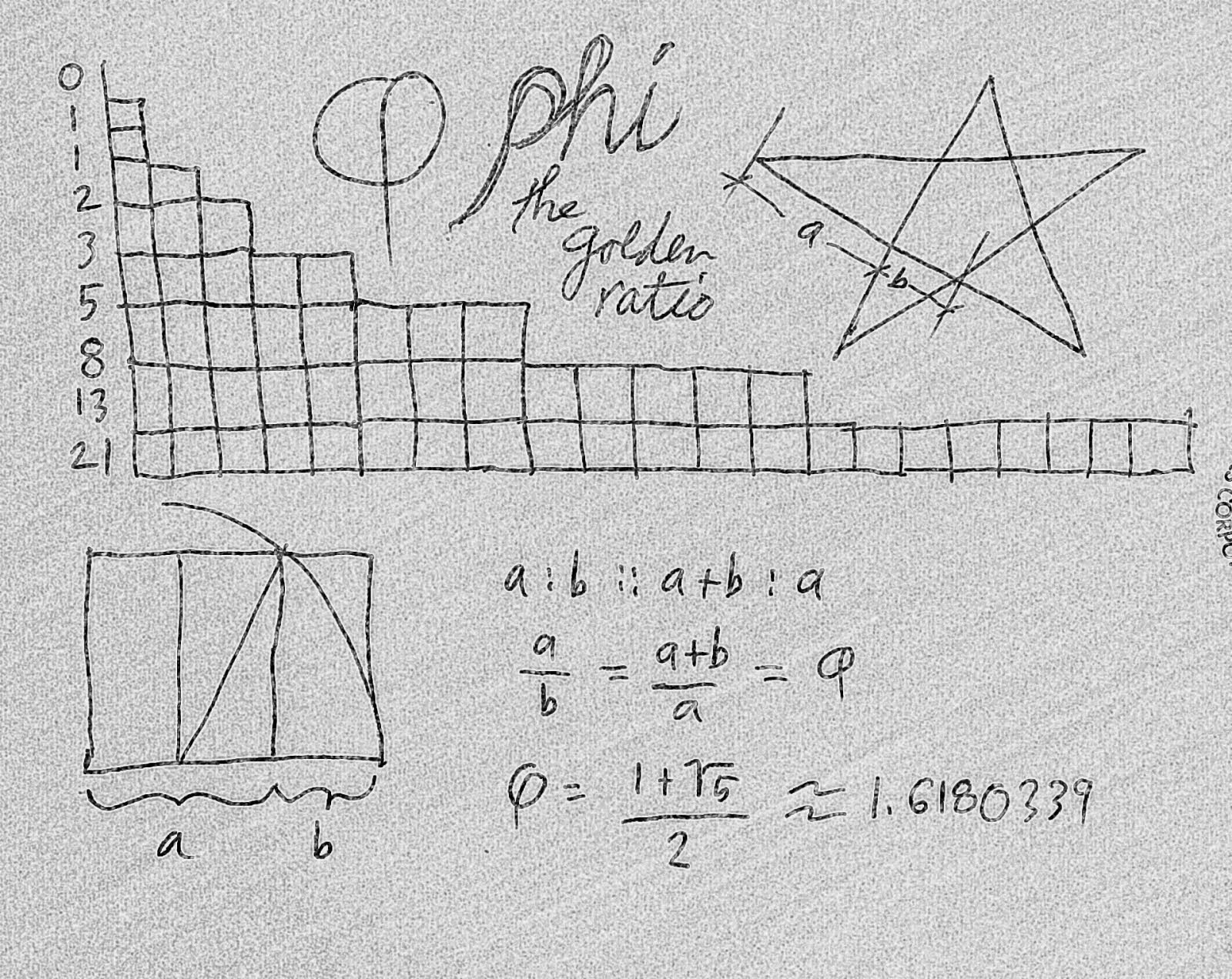
Today is also important because of Art. January 6th at 6:03 pm can be written as 1/6 18:03, and this series of numbers (more specifically 1.61803)  has been a very significant number in art and architecture since the time of ancient Greece. As a student of Architecture, I learned about the "ideal proportion" of 1.61803 to 1. This proportion has been called the Golden Ratio, the Golden Section, and the Golden Mean.

The Golden Ratio is often symbolized using the 21st letter of the Greek alphabet, phi, a circle with a vertical slash. The letter is similar to theta, a circle with an horizontal slash. Our words for Philosophy (philo-sophy or love of wisdom) and Theology (theo-logy or the study of God) come from Greek. People often use the Greek letters phi and theta to represent the subjects of Philosophy and Theology. If you look closely, you will probably find a letter phi on this page. It's part of my blog's name!

Love conquers all

Finally, today is important because of Love. January 6th, 2015 marks the one month anniversary of my brother's death. I miss him very much--so much so, that my emotions are still very close to the surface. My grief and sense of loss has been compounded by the holiday season and the expectation of Joy, Hope, Peace, and Love that crash hard against the stark reality of loves lost.

The great Christian apologist, C.S. Lewis remarked in the journal he wrote as he cared for his dying wife, A Grief Observed, that love is a form of torture for humans. He finally found the love of his life, only to have her taken away by a fatal disease. The depth of his profound grief was a testament to the heights of his magical love. He got a glimmer of ideal love, only to have it snatched away. December 2014 was rough like that for me, too.

Of course, our human attempts at the perfect love often fall short of ideal, even short of the proxy described by C.S. Lewis. We are casual when we should be closer, and we cling when we should give slack. Jealousy and disappointment occur when our egos get involved. Ideally, love transcends these human limitations. And by "ideally," I mean both the ideal we can imagine in our dreams, and the ideal that actually exists beyond human comprehension.

I do not see perfect love as a mutually exclusive, one-or-the-other, all-or-nothing deal. I am not threatened or diminished if the people who love me also love others--even if they love the others more than they love me. Similarly, I do not expect to find only one target for all of my expressions of love. When we are in a state of perfect love (i.e., when I see Todd again, as I promised him I would every time we said goodbye) I do not imagine there will be any quibbling or petty jealousy. Now that Todd is gone from this earth I will not see him again until I meet him in perfect love.

Lean into the mystery

Until then, the task of the living is to lean into each moment with openness to the possibilities and awareness of the eternal and universal power of Faith, Art, and Love. Dear reader, may you find that blend of Philosophy and Special Effects that transforms the ordinary into the extraordinary--and having found it, may you hold it, if only briefly, and having held it may you treasure it.

And so may we all.

January 6th, at 1803 (6:03 pm) is a most auspicious moment. Thank you for sharing it with me and helping me keep it sacred.


If you enjoyed this, please have a look at these related posts:
Comments are always welcome. 


Putting the Phi in PhilosFX

A quick sketch about the Golden Ratio

Even the most casual readers of PhilosFX will notice the Greek letter, phi, in the blog's masthead. Phi, the 21st letter of the Greek alphabet, is the first letter in our word, phi-losophy, and it is also the symbol associated with one of the most powerful and intriguing ratios known to man: the Golden Ratio.

If you cut a string into two unequal segments, such that the ratio of the length of the short segment to the length of the long segment is equal to the ratio of the long segment to the original, then you will have cut the string according to the Golden Ratio, which is expressed in digits as 1.61803.

This ancient proportioning system is powerful because the result is innately pleasing to the human eye. Our concept of beauty in nature and in the designs of art and architecture is heavily influenced by the effect this ratio has on our perceptions. The ancient Greeks used phi to design sculptures and temples. Renaissance artists and architects revived the ancient code and embedded it in countless examples of idealized beauty which survive to this day. Modern designers still use phi because the resulting proportions practically guarantee a pleasing effect.    

Why am I posting this today, January 6th? It's about numbers. Some folks celebrate the importance of pi (3.14) on March 14th. I like to call attention to phi (1.6) on January 6th. I have not decided how to celebrate the Fibonacci Sequence yet. Any suggestions? Please add them to the comments!  

To learn more about the Golden Ratio, lease enjoy this outstanding website, and consider signing up for updates from the Phi Guy! 


The First Day of Christmas? Part III

The First Day of Christmas? Part III of IV


Welcome to Part III of the First Day of Christmas, my stab at a definitive answer to these four perennial questions:


  • What is the first day of Christmas? In other words, on what day did the original singer's first present of a partridge in a pear tree arrive? (Answered in Part I.) 
  • What do we mean by the Christmas Season? I see that phrase interpreted so many ways. Does it have any definitive, commonly understood meaning? (Answered in Part II.) 
  • Thinking about the song and all the gifts on each of those days, how many presents arrive in all? Think about it for a second. Five golden rings on days 5 through 12 amounts to 40 rings!  
  • And speaking of gifts, is there any significance behind the seemingly random gift choices? This will be the subject of Part IV.


  • We tackled the second question in Part II of the series. Missed it? Get caught up HERE.


    And now, 
    tallying up the gifts 
    with Part III:


    If you read the lyric literally, the giver gives his true love lots of presents. On the first day, a partridge in a pear tree. On the second day. two turtle doves AND a partridge in a pear tree. So that is three things on day two and the cumulative total is two turtle doves and TWO partridges in pear trees.

    Now. let's review the shipment of gifts that arrives on the twelfth and final day:

    On the twelfth day of Christmas
    my true love gave to me:
    Twelve Drummers Drumming
    Eleven Pipers Piping
    Ten Lords a-Leaping
    Nine Ladies Dancing
    Eight Maids a-Milking
    Seven Swans a-Swimming
    Six Geese a-Laying
    Five Golden Rings
    Four Calling Birds
    Three French Hens
    Two Turtle Doves and
    a Partridge in a Pear Tree

    Read more: HERE


    The total on day 12 is a whopping 12+11+10+9+8+7+6+5+4+3+2+1=78 things! Is that surprising? Did you ever picture all that commotion when you sang the song? And where are all the "gifts" from days one through eleven? This is a strange love, indeed, is it not?

    I mean, if I wanted to demonstrate my true love in the same way, my lady would need a barn for all the cows, swans, geese, birds, hens, doves, and partridges! Not to mention a very large house and food budget for all the drummers, pipers, lords, ladies, and maids.... 

    If you do the math, as I have done, you will discover something else quite remarkable. Have a gander at the table below. 


    The total number of gifts given over twelve days is enough for one gift, be it a calling bird or a maid a-miking, per day for 364 days. Said another way, that's a gift per day from December 26th, the first day of Christmas, to December 24th of the following year--and the only day when there is not a gift is Christmas Day itself, the day God became flesh.

                                          And now you know...

    the rest of the story! 


    The First Day of Christmas? Part II

    Welcome to Part II of the First Day of Christmas, definitive answers to these four perennial questions inspired by the classic song, "The Twelve Days of Christmas:"


  • What is the first day of Christmas? In other words, on what day did the original singer's first present of a partridge in a pear tree arrive? Answer: December 26th!
  • What do we mean by the Christmas Season? I see that phrase interpreted so many ways. Does it have any definitive, commonly understood meaning? Or is it just a broad, sweepingly indistinct term? Is there value in defining the season, or should we let it be open to interpretation? 
  • Thinking about the song and all the gifts on each of those days, how many presents arrive in all? Think about it for a second. Five golden rings on days 5 through 12 amounts to 40 rings!  Coming soon in Part III
  • And speaking of gifts, is there any significance behind the seemingly random gift choices?  Coming soon in Part IV


  • We tackled the first question in Part I of the series. Missed it? Get caught up HERE.


    And now, 
    Onward and Upward 
    with Part II

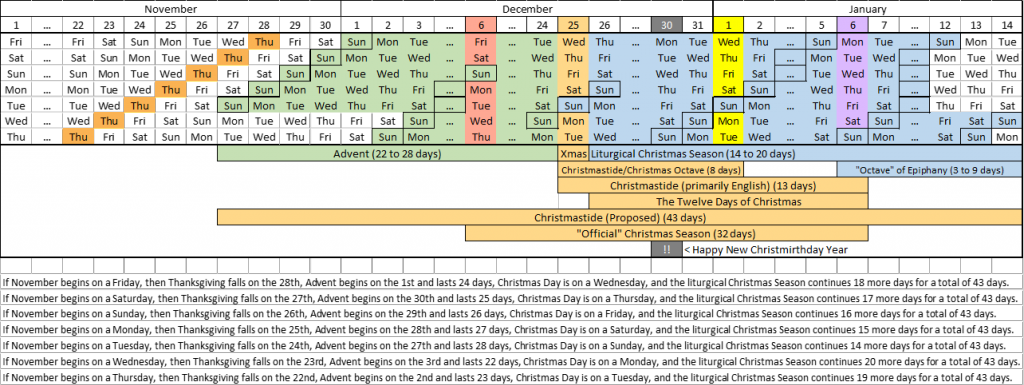
    What, exactly, do we mean by the Christmas Season? I know the answer (smile), but before I reveal it, let's discuss why there is even a question. Opinions vary, as they say. To understand the over-arching Christmas Season question a bit more deeply, let's list and define some distinct periods of time that take place within the season:
    • Advent: Interpreted on the liturgical calendar as 4 Sundays and weekdays before Christmas Eve. Each of the four weeks are often represented by a colored candle representing Advent themes of Hope, Love, Joy, and Peace, respectively. These colored candles surround a pure white Christ candle. Messages of Hope, Love, Joy, and Peace are discussed and celebrated in successive Sundays of Advent, and the Christ candle is lit on Christmas Eve. 
      • In 2014, the Advent Season was November 30 through December 24, or 25 days, inclusive. Advent can range from 22 to 28 days in length. 
      • However, if you buy an Advent Calendar, you'll see it usually includes the first 24 days of December, counting down the days to Christmas and, with treats of chocolate, building anticipation for the birth of the Savior. 
      • Of course, there is the coincidental fact that 24 is also the number of beers in a case of beer. and 24 different winter beers would make a wonderful adult Advent calendar!  
      • But, I digress...
    • Christmas Season
      • According to the liturgical calendar, Christmas Season begins after Advent, i.e., at midnight on Christmas Day, and continues for 3 Sundays and weekdays after. So for 2014, the Christmas Season is Thursday December 25 through Sunday January 11, 2015.
      • Some others say the Christmas Season begins with Black Friday sales on the day after Thanksgiving and ends when the last of the wrapping paper is wadded up in the trash, 
      • This year, for the first time, I saw Christmas decorations up in stores before Hallowe'en. Personally, I find that the crass commercialization of Christmas reflects poorly on our National values, but to each his own. Ayn Rand would say that the commercialization of Christmas reflects perfectly on our crass National values. 
      • But again, I digress.... Ayn Rand is the subject of a different blog post.
      • And can we please recycle the wrapping paper?
    • Christmas Octave: 8 days from December 25 to January 1, inclusive. I do not hear this one mentioned much except among musicians. (That was a joke.) Seriously, this is an archaic term, except without it we would never understand the next term... 
    • Octave of Epiphany: The period of time from Epiphany to the 3rd Sunday after Christmas, inclusive, is a period of about 8 (actually anywhere from 3 to 9) days depending on which day of the week Christmas lands on. The only reason the liturgical Christmas season runs past Epiphany is so that Advent plus Christmas Day plus Christmas Season gets us to 40-ish days (actually 43 days, regardless of which day of the week Christmas lands on. Of course 40-ish days is parallel to the 40-ish days of Lent and the 40 days Jesus spent in the wilderness.
    • Christmastide. Adding to confusion about the meaning and duration of the Christmas Season, we have a new term with even more variation around it. The dictionary compounds confusion with two different definitions of Christmastide
      • the festival season from Christmas to after New Year's Day. Note that this is the same period of time that has already been called the Christmas Octave.
      • the 14-day period from Christmas Eve to Epiphany, especially in England.
      • don't forget the so-called Twelve Days of Christmas which ends on Epiphany and so must begin on December 26
    • My birthday falls between Christmas and New Years Day. Growing up, I always felt that my birthday got lost in the seasonal sauce, There is a season of quiet reflection in the week between holidays. I call it Happy New Christmirthday Year.    

    To see this image full size, click HERE


    All of these different terms have meaning and value, even if they overlap or cause confusion. Here is the bottom line for me. Tradition. I celebrate Thanksgiving. Then a break in time happens and maybe a subtle hint of the Advent is detected. I finally get into the cookie-baking, package wrapping, tinsel-hanging, card-writing Christmas spirit with Saint Nick on December 6th. The anticipation builds until midnight between Christmas Eve and Christmas Day, or whenever the Christ Candle is lit, or whenever the baby Jesus is placed in the manger of the Nativity scene at home, or whenever the youngest person in the household places the Angel atop the Christmas tree. Christmas Day is quiet and holy with presents for everyone and plenty to eat. Then, the Twelve Days of Christmas begin on the 26th, but unlike the song we do not continue with gifts. Instead, the season of Christmas is extended past birthday and New Years to Epiphany with reflection about the year passed and plans for the year ahead. The fact that the season extends past Epiphany is usually lost on me. In Casa del Foam, my humble abode, the Christmas Season is the 32-day period from December 6th through January 6th, inclusive. 

    By tradition in my household, it is bad form to decorate for Christmas before December 6 or after January 6. I am fine with Advent calendars and of course Advent-themed worship services before December 6th. In fact, I am pretty much fine with the idea of celebrating Christmas and Christian ideals year-round. It's just that Christmas music and some of the decorations and list-making and shopping should begin no earlier than December 6th. This gives space around Thanksgiving, acknowledges the original "St Nick," and includes the celebration of Epiphany which is when the wise men following a celestial compass finally found the Christ child and offered Him gifts, according to the Gospel of Matthew (2:11).

    If I send or receive a Christmas card a few days after Christmas, I don't think it's "late." But a Christmas card before Dec 6 seems in poor form, even if Advent has already begun. The only Christmas cards I got before Dec 6 this year were from businesses and universities hoping to catch me in a giving mood. The timing caused the opposite reaction! And a card sent or received after Jan 6 reflects poorly on the management skills of the sender. For these reasons, I believe the world would be a better place if everyone Christmas year-round, but only decorated between Dec 6 and Jan 6.

    Recapping Parts I & II:
    • December 26 is the First Day of Christmas. The Twelve Days of Christmas conclude on Epiphany 
    • The "Official" Christmas Season begins on Saint Nicholas Day and ends on Epiphany. This 32-day period of time exists inside the 43-day liturgical events of Advent, Christmas Day, and the Christmas Season. But only a Cretin would send a Christmas Card before Dec 6 or after Jan 6! 
    Feel free to comment or share how your traditions are different! 


    Saturday, January 3, 2015

    The First Day of Christmas?

    We all know the song. Most of us have sung it many times and heard it sung at Christmas many times more. 


    On the first day of Christmas
    my true love gave to me:
    a Partridge in a Pear Tree


    But, have you ever really thought about the implications of this classic Christmas song? In the spirit of joy and in the quest for understanding, let us consider the following questions:
    • What is the first day of Christmas? In other words, on what day did the original singer's first present of a partridge in a pear tree arrive? Twelve days before Christmas? Beginning on Christmas Day (but then ending before Epiphany)? Beginning on the first day after Christmas and culminating on Epiphany, the day the magi found Jesus? 
    • What do we mean by the Christmas Season? I see that phrase interpreted so many ways. Does it have any definitive, commonly understood meaning? Or is it just a broad, sweepingly indistinct term? Is there value in defining the season, or should we let it be open to interpretation? 
    • Thinking about the song and all the gifts on each of those days, how many presents arrive in all? Think about it for a second. Five golden rings on days 5 through 12 amounts to 40 rings!  
    • And speaking of gifts, is there any significance behind the seemingly random gift choices? I mean, if I wanted to demonstrate my true love in the same way, my lady would need a barn for all the cows, swans, geese, birds, hens, doves, and partridges. Not to mention a very large house and food budget for all the drummers, pipers, lords, ladies, and maids. Why not sweaters, pajamas, and music CDs? Oh, wait, the song was written before CDs, or cassettes, or albums, or...
    The aim of this post is to provide some rational answers to these questions. That and to stretch the Christmas season out to its full extent. I want definitive answers, if possible, or at least answers that make sense to me. Inquiring minds want to know--and if knowing is not possible, pragmatic inquiring minds will take an answer that makes sense until a better one comes along.

    Here we go!

    December 26th, not the 14th and not the 25th, is the First Day of Christmas. If you are going to celebrate the Twelve Days of Christmas with, say, one new winter beer for twelve days in a row or a series of gifts for your true love, and if you want to follow the tradition, start on December 26th. How do I know this? Follow this logic trail: Advent culminates on Christmas Eve (more on that later). Advent is a time for preparation, not celebration. Christmas Day, when Jesus was born, is a holy day--a day of reverence and gratitude. Traditionally, the gift-giving and celebration commenced on the 26th with the first of twelve successive Days of Christmas. This party culminates on January 6th with the Feast of Epiphany. If you start the Twelve Days on the 25th, the Twelfth Night falls on January 5th. But January 6th must be included in the period of celebration, because that is the day that the magi found Jesus and gave him gifts. That the Twelve Days of Christmas is interpreted differently by many is due in part to the fact that so many time segments are contain in what we call the "Christmas Season." Which brings us to question number two.

    Hmmmm....   I just decided to turn this post into a series of posts. That move limits the individual posts to a readable length while furthering the goal of stretching the Christmas Season--whatever that means--to its fullest extent.

    We'll tackle the Christmas Season question in Part II of this series.

    Stay tuned! 

    Science Increasingly Makes the Case for God? A Look at Eric Metaxas' Recent WSJ Article

    Recently a friend posted an article by the evangelical author and Intelligent Design proponent, Eric Metaxas. In the article, published by the Wall Street Journal, Metaxas argues that scientists have determined that life is so improbable it must have been created.

    “Today there are more than 200 known parameters necessary for a planet to support life [and] every single one of which must be perfectly met, or the whole thing falls apart.”

    To which my friend, a fellow Christian, added, "Amen and Hallelujah." And that is the precise moment when the proverbial excrement hit the cosmic wind tunnel.


    First, if you are not already familiar with it, please follow this link and read the article:
    Eric Metaxas: Science Increasingly Makes the Case for God - WSJ:

    Next, please have a gander at the rebuttal which the WSJ wouldn't publish, but Richard Dawkins did:
    https://richarddawkins.net/2014/12/letter-to-the-editor/


    What follows below is a lightly edited transcript of an online conversation that broke out between my friend and fellow believer, I'll call him "PM," our mutual friend, a geophysicist and theology student I'll call "CW," a Christian apologist called "TMD," and the author of PhilosFX a.k.a. "PFX." I love this conversation so much that I wanted to share it. But if you don't have time to read the whole thing, the bottom line for me in all of this is that:


    The human race is dividing between those who trust science and those who hold a pre-Copernican view of life and death. Why must these camps be mutually exclusive? Why can't believers trust science? And why must scientists refuse to accept the possibility that the truth is bigger than our human powers of perception?


    A Friendly Discourse on Religion, Science, and God
    Inspired by a Recent WSJ Article

    CW: Nice column. Well, aside from the fact [Metaxas] significantly misinterprets both history and science. Two brief examples. First, the "parameters" debate over habitable planets has been around for decades. Even Sagan, along with Shklovskii co-wrote the technical book "Intelligent Life in the Universe" in the early 70's that discussed the range of probabilities and problems. As for "tuning" at the subatomic level, at the risk of over simplifying a mind-numbingly complex topic, that discussion is a bit ridiculous since we don't as of yet completely understand the relationship between the various "constants" in physics. The weak force and electromagnetic force are actually manifestations of the same thing, so to treat them as independent values as many ID proponents do is ignorant at best and intellectually dishonest at worst.

    Note that I am *not* arguing either for atheism or against religion at this point, only that the ID folks are stretching or outright misinterpreting the science. FWIW IMNSHO as a practicing scientist, the science at best only restricts the religions that are potentially true (which is, to be honest, most of them). However, science does not exclude *all* religions (including core Christianity), contrary to the assertions of atheists. But science itself is agnostic.


    TMD: Science is only agnostic if you isolate each scientific fact or line of reason. If you look at science as a whole, the overwhelming amount of evidence shows that there has to be a Creator.


    CW: Most Christians and Atheists fall into the same trap, starting with a conclusion then looking for evidence to support that conclusion at the exclusion of other possible theories. Your statement that "the overwhelming amount of evidence shows that there has to be a Creator" is one I strongly disagree with. In my field of expertise (geophysics/atmospheric science) I can state that as an "expert"(FWTW!) there is none. I am also unaware of any such evidence in any related fields about which I am knowledgeable enough to assert an opinion (physics, astrophysics). Not saying there is no God, just that there is no unambiguous evidence of one. As for Aquinas he certainly has been influential on Western theology - but is not accepted in the Orthodox Churches. His ethical views (slavery, inferiority of woman) could be argued to be a product of his time and forgiven, but his other views and strongly cataphatic theology, and his distinction between the natural and supernatural, are more problematic.


    PFX: We don't know that there is not life on other planets, only that we have not yet found what we are looking for, i.e., life that we recognize as more sophisticated than bacteria. I like science, AND I like God. I EVEN like logical attempts to connect the two. Aquinas' argument from design is a good case in point, but then again, I'll settle for Pascal's Wager. What I do NOT like is the assertion that by not finding life on other planets, "science increasingly makes the case for God." For one, science does not prove, science either rejects or fails to reject. Science is objective, agnostic, not interested in making a case. For another, what if we DID find life on other planets? How would that reject the hypothesis of God? Why can't a Creator start life on lots of planets? Bottom line, I am comfortable with my belief in God. That belief is based on faith which is outside the realm of science.


    CW: What PFX said (mostly). [W]hile I am a student of theology I'm far from an expert on it (I'm a lot more comfortable talking about quantum mechanics!), but here's an abbreviated try: The "Argument from Design" is essentially a version of the "God of the Gaps" theory, and suffers from the same fatal flaw: the more we understand, the narrower the "gaps" get until at some point they disappear. It is directly related to the cataphatic theology western theologians are so fond of because it essentially argues God's creation and interactions with nature are understandable and definable on a human level. A related aspect is that Aquinas' arguments (such as the division between natural and supernatural) and the legalistic theological worldview of the West set the stage for the Calvinistic perspective that creation is apart from the creator, and in the wider Protestant view "depraved", rather than merely fallen. (As an aside, the aphophatic theologies, and the distinction between essences and energies, prevalent in Eastern Christianity did not make those distinctions, and didn't end up in that trap.) Regarding ethics, as I said in the earlier post his views are simply a product of his time, but it is unfortunate and disturbing that so many Saints and Doctors Of The Church are ethically no more advanced than the societies in which they lived. The Christian argues they were just being human, but the Atheist uses that fact to say they are not better than the rest of humanity because there was no outside influence (e.g. God).


    TMD: Most geophysics/atmospheric science people fall into the same trap. They only believe in things that they can see and touch. If they are right that there is no God, then they are right. If they are wrong, it's a mistake with eternal consequences. Faith is believing without seeing. I have faith.


    PFX: What CW said (mostly, except the parts that I cannot claim because I do not understand them yet).


    CW: With respect, TMD, it isn't the same "trap." You are equating scientists with atheists, and drawing incorrect conclusions from that false equivalence. Science is entirely agnostic with respect to any religion or the existence of any particular God or Gods. It does, however, severely constrain which religions are rational, and which God(s) might exist. An atheist would argue that *all* God(s) that have been posited have been rationally excluded. They are wrong, because they do not understand (and in many cases don't want to understand) the God as defined by traditional Christianity. However, they are right in that many of the definitions of God as put forth by many Christian denominations (especially evangelical Protestants and their derivatives like Mormonism) are excluded by the evidence. The formal Catholic definition of God is in a little bit of trouble, largely due to recent innovations, but the traditional definitions still held by the Eastern Orthodox Churches are in pretty good shape.


    PM: Out of popcorn and out of energy to continue. Besides, we are now wandering dangerously close to a debate regarding the merits of cataphatic v. apophatic theology, and I will not willing enter that briar patch..... That is at least a 3-beer discussion. Now I'd love to have that conversation in person - you guys would make for a very lively & interesting discussion!


    PFX: I think TMD summed up Pascal's Wager nicely in his comment. I believe the fact that not all scientists are atheists is a nice summation of CW's last comment. But I believe PM has wisely directed us to curtail the conversation until we can meet in person--preferably over a beer or three. It's been fun!

    The End...?


    And now, these Wikipedia end-notes are for those of you who, like me, needed a refresher on cataphatic (positive) and apophatic (negative) theologies.

    Cataphatic (sometimes spelled kataphatic) theology is the expressing of God or the divine through positive terminology. This is in contrast to defining God or the divine in what God is not, which is referred to as negative or apophatic theology. The word cataphatic itself is formed from two Greek words, "cata" meaning to descend and "femi" meaning to speak. Thus, to combine them translates the word roughly as "to bring God down in such a way so as to speak of him."
    • God is omnipotent
    • God is omni-present
    • God is omniscient
    • God is light
    • God is love

    In Apophatic descriptions of God through negative theology, it is accepted that experience of the Divine is ineffable, an experience of the holy that can only be recognized or remembered abstractly. That is, human beings cannot describe in words the essence of the perfect good that is unique to the individual, nor can they define the Divine, in its immense complexity, related to the entire field of reality. As a result, all descriptions if attempted will be ultimately false and conceptualization should be avoided. In effect, divine experience eludes definition by definition:
    • Neither existence nor nonexistence as we understand it in the physical realm, applies to God; i.e., the Divine is abstract to the individual, beyond existing or not existing, and beyond conceptualization regarding the whole (one cannot say that God exists in the usual sense of the term; nor can we say that God is nonexistent). 
    • God is divinely simple (one should not claim that God is one, or three, or any type of being.) 
    • God is not ignorant (one should not say that God is wise since that word arrogantly implies we know what "wisdom" means on a divine scale, whereas we only know what wisdom is believed to mean in a confined cultural context). 
    • Likewise, God is not evil (to say that God can be described by the word 'good' limits God to what good behavior means to human beings individually and en masse). 
    • God is not a creation (but beyond that we cannot define how God exists or operates in relation to the whole of humanity). 
    • God is not conceptually defined in terms of space and location
    • God is not conceptually confined to assumptions based on time

    Even though the via negativa essentially rejects theological understanding in and of itself as a path to God, some have sought to make it into an intellectual exercise, by describing God only in terms of what God is not. One problem noted with this approach is that there seems to be no fixed basis on deciding what God is not, unless the Divine is understood as an abstract experience of full aliveness unique to each individual consciousness, and universally, the perfect goodness applicable to the whole field of reality. It should be noted however that since religious experience—or consciousness of the holy or sacred, is not reducible to other kinds of human experience, an abstract understanding of religious experience cannot be used as evidence or proof that religious discourse or praxis can have no meaning or value. In apophatic theology, the negation of theisms in the via negativa also requires the negation of their correlative atheisms if the dialectical method it employs is to maintain integrity.
    “God's existence is absolute and it includes no composition and we comprehend only the fact that He exists, not His essence. Consequently it is a false assumption to hold that He has any positive attribute... still less has He accidents (מקרה), which could be described by an attribute. Hence it is clear that He has no positive attribute however, the negative attributes are necessary to direct the mind to the truths which we must believe... When we say of this being, that it exists, we mean that its non-existence is impossible; it is living — it is not dead; ...it is the first — its existence is not due to any cause; it has power, wisdom, and will — it is not feeble or ignorant; He is One — there are not more Gods than one… Every attribute predicated of God denotes either the quality of an action, or, when the attribute is intended to convey some idea of the Divine Being itself — and not of His actions — the negation of the opposite. (The Guide for the Perplexed, 1:58.)”